- NEWS FEATURE
The new science of volcanoes harnesses AI, satellites and gas sensors to forecast eruptions

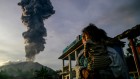
When Anak Krakatau in Indonesia erupted on 22 December 2018, part of the island collapsed into the ocean, causing a deadly tsunami. Credit: Nurul Hidayat/Antara Foto/Bisnis Indonesia via Reuters
Access options
Access Nature and 54 other Nature Portfolio journals
Get Nature+, our best-value online-access subscription
$32.99 / 30 days
cancel any time
Subscribe to this journal
Receive 51 print issues and online access
$199.00 per year
only $3.90 per issue
Rent or buy this article
Prices vary by article type
from$1.95
to$39.95
Prices may be subject to local taxes which are calculated during checkout
Nature 581, 256-259 (2020)
doi: https://doi.org/10.1038/d41586-020-01445-y
References
Aiuppa, A. et al. Geophys. Res. Lett. 37, L17303 (2010).
Ripepe, M. et al. J. Geophys. Res. Solid Earth 123, 9570–9585 (2018).
Walter, T. R. et al. Nature Commun. 10, 4339 (2019).
Reath, K. et al. J. Geophys. Res. Solid Earth 124, 195–218 (2018).
Anantrasirichai, N., Biggs, J., Albino, F. & Hill, P. J. Geophys. Res. Solid Earth 123, 6592–6606 (2018).
 Scientists fear major volcanic eruption in the Philippines
 Why deadly New Zealand volcano eruption was hard to predict
 Earth’s lost history of planet-altering eruptions revealed
 How AI and satellites could help predict volcanic eruptions