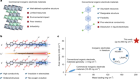
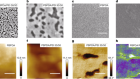
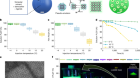
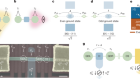
Quantum dots emit various wavelengths of light on the basis of their size. Credit: National Energy Technology Laboratory/US DEPARTMENT OF ENERGY/Science Photo Library
Access options
Access Nature and 54 other Nature Portfolio journals
Get Nature+, our best-value online-access subscription
$32.99 / 30 days
cancel any time
Subscribe to this journal
Receive 51 print issues and online access
$199.00 per year
only $3.90 per issue
Rent or buy this article
Prices vary by article type
from$1.95
to$39.95
Prices may be subject to local taxes which are calculated during checkout
Nature 622, 680-681 (2023)
doi: https://doi.org/10.1038/d41586-023-03179-z
Updates & Corrections
-
Correction 23 October 2023: An earlier version of this story said that the firm Lumicell makes quantum dots for tagging and lighting up cancer cells during surgery. It makes a fluorescence-based molecular system for lighting up the cells.
References
Murray, C. B., Norris, D. J. & Bawendi, M. G. J. Am. Chem. Soc. 115, 8706–8715 (1993).
Nirmal, M. et al. Phys. Rev. Lett. 75, 3728–3731 (1995).
Efros, A. L. & Brus, L. E. ACS Nano 15, 6192–6210 (2021).
 Tiny ‘quantum dot’ particles win chemistry Nobel
 Physicists who built ultrafast ‘attosecond’ lasers win Nobel Prize
 Pioneers of mRNA COVID vaccines win medicine Nobel
 Can AI predict who will win a Nobel Prize?