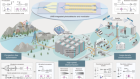
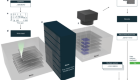
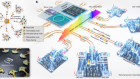
In the digital era, an individual can generate a library’s worth of data every day. Preserving this information in the long term remains a pressing challenge. Current long-term storage solutions, which encode data magnetically, are not built to endure: hard disks often fail in 5–10 years, and magnetic tapes generally degrade after around 30 years. A promising alternative is to use ultrashort, powerful laser pulses to inscribe data into a durable material such as glass. Past attempts have generally focused on improving performance metrics, such as the storage capacity, instead of delivering a complete, functional archival system
1–5. But now,
writing in Nature, the Microsoft Research Project Silica Team
6 reports an end-to-end laser-based system that writes and retrieves data reliably, offering a durable, high-capacity way to preserve them over time.



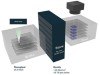 Read the paper: Laser writing in glass for dense, fast and efficient archival data storage
 Super-resolution spectroscopy with ‘spiky’ X-ray lasers
 Photonic chips provide a processing boost for AI