



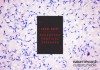
T. cruzi expressed in host vero cells, the green dots represent the amastigote stage, the mitochondria is red coloured, and the nucleus is blue.© Mizuki Hayashishita
Almost two billion people globally are affected by conditions such as Chagas disease, dengue fever, leishmaniasis, and schistosomiasis. These viral, bacterial and parasitic infections cause about 200,000 deaths annually, particularly in low-income nations in Africa, Asia and the Americas.
Despite their prevalence, these so-called neglected tropical diseases (NTDs) remain largely overlooked in the global health policy agenda. But at Nagasaki University’s Institute of Tropical Medicine (NEKKEN) in Japan, they have been under the spotlight for almost a century.
At the university’s research development stations across Asia, Africa and Latin America, researchers are collaborating with international partners to discover new ways to diagnose, control and treat neglected tropical diseases.
Decoding dengue
In Asia and Latin America, immunogeneticist, Kenji Hirayama, and his team are searching for the genetic factors that underpin the severity of dengue fever, a mosquito-borne viral illness that infects up to 400 million people each year.
While most people with dengue experience relatively mild symptoms, around 5% develop a severe version of the illness that can be fatal — severe dengue leads to serious bleeding, or dengue shock syndrome. “It’s so variable and diverse,” says Hirayama. “We are curious about the different types of reactions that happen across different groups.”
In 2020, Hirayama and an international team conducted a genome-wide association study on almost 7,500 people of Latin American, South Asian and Southeast Asian ancestries to pin down whether certain genetic variants make some people more susceptible to severe forms of dengue.
They found that participants who had contracted severe versions carried several genetic variations that were not present in the control group, or among those who had endured a regular dengue infection. This genetic susceptibility held up across all three ancestries, suggesting that it is universal rather than a unique feature of a population or region.1

Carlos Ramos, a member of the Nagasaki University team, talking to a member of the public at El Bajio Hospital in Santa Cruz, Bolivia.© Nagasaki University
No one left behind
Another infection in Hirayama’s sights is Chagas disease, which is caused by the protozoan parasite Trypanosoma cruzi. It affects as many as seven million people at any one time, mostly throughout Latin America, and can result in chronic Chagas characterized by heart problems and digestive issues. “In Central America, heart disease is common, but in South America digestive issues are dominant,” says Hirayama.
According to Hirayama’s research, the reason symptoms vary across regions is not due to differences among T. cruzi strains, but to genetic variations among patients. For instance, in a study the team conducted in Bolivia, human leukocyte antigens — a group of genes that play a role in the immune response — were found to be less common in Chagas disease patients with a dilated colon, also known as megacolon.2
Understanding the human genetics underpinning disease severity could hold the key to developing new treatment protocols and vaccines, particularly for chronically ill patients, says Hirayama.
Another approach involves improving diagnosis in remote, resource-limited regions. In 2020, Hirayama joined an international team of researchers and industry partners to evaluate whether a diagnostic test called loop-mediated isothermal amplification (LAMP) could be used to detect Chagas disease in newborn infants in maternity hospitals across Bolivia, Argentina and Paraguay. Developed by Japanese clinical diagnostics and equipment firm, Eiken Chemical, LAMP offers a low-cost, rapid, and highly specific alternative to current diagnostic methods, such as quantitative polymerase chain reaction (PCR). The project is funded by the Global Health Innovative Technology (GHIT) Fund, a Japan-based partnership of international public and private organizations, and Mundo Sano in Argentina.
In addition to diagnostics, the university is working on anti-Chagas drug development. This project is focussed on mitochondrial enzymes, and is led by Hirayama’s colleagues, Kiyoshi Kita and Daniel Ken Inaoka. Such collaborations between industry, government, and academia are key to bringing effective diagnostic tools and treatments to people who need them the most, says Hirayama.
Tracing the spread
Africa accounts for almost 40% of the global neglected tropical disease burden. Satoshi Kaneko and his team are working to improve diagnosis, treatment and monitoring for diseases afflicting the region, such as schistosomiasis and leishmaniasis.
Eumycetoma is another target for Kaneko. This is a chronic skin infection caused by a variety of soil fungi and bacteria, mainly in Sudan. “We know that many people in rural areas are suffering from infection, but we don’t know exactly how many,” says Kaneko. Using a grant from the Japan Agency for Medical Research and Development (AMED), Kaneko is developing point-of-care diagnostic tests that can be used in rural areas that lack access to medical services.
But the big picture goal is to develop a surveillance system that can monitor multiple neglected tropical diseases at once, helping researchers better track and control their spread through communities. Currently, numerous surveillance monitoring systems are used to track individual diseases, but this is costly and impractical, as several neglected tropical diseases overlap geographically, says Kaneko. “It would be easier to monitor them all at once with one system,” he says.
In 2014, Kaneko and colleagues developed a multiplex immunoassay system that could detect Immunoglobulin G antibodies to recombinant antigens derived from eight different pathogens, including Leishmania donovani — the parasite behind visceral leishmaniasis — in blood samples taken from communities in endemic areas. Now, the system has been expanded to detect between 10 and 20 infectious diseases in a single batch, allowing researchers to monitor infections in different locations, says Kaneko.3
More recently, a team led by Kaneko’s colleague, Shinjiro Hamano, has been homing in on schistosomiasis, another parasite infection that’s prevalent around Africa’s Lake Victoria. While the disease has been detected in young children and infants, they are trying to uncover the risk factors underlying infections in this age group.
Kaneko also leads the Japan Alliance on Global Neglected Tropical Diseases (JAGntd), a network that connects international organizations, companies, and researchers working to control neglected tropical diseases. The alliance aims to reach the targets outlined in the World Health Organization’s (WHO) Neglected Tropical Disease Roadmap, which seeks to prevent, control, and eradicate 20 diseases or disease groups by 2030.

The transition between the amastigote stage to the trypomastigote stage in T. cruzi expressed in host vero cells.© Mizuki Hayashishita
Applied research
Partnering with public and private sectors is key for ensuring that research results make an impact, particularly in remote regions, says Kaneko. “We have to ensure that our research can be applied, such as in the development of diagnostic kits and treatments,” says Kaneko.
To strengthen the university’s focus on NTDs, Nagasaki University has recently established ‘Dejima Tokku’ which it describes as an “autonomous free research development complex designed for global infection control”. A biosafety level 4 facility and a School of Tropical Medicine and Global Health (TMGH) are new additions to this complex and join already established basic and clinical research groups.
These activities are part of the vision of Shigeru Kohno, the president of Nagasaki University. He is expanding its health research community through the multi-disciplinary concept of “planetary health”. Nagasaki University plans to continue as a vibrant research hub in Japan, say Hirayama and Kaneko.
References
1. Pare, G. et al., eBioMedicine 51, 102584 (2020).
2. del Puerto, F. et al., PLoS Neglected Tropical Diseases 6, e1587 (2012).
3. Fujii, Y. et al., PLoS Neglected Tropical Diseases 8, e3040 (2014).
 Focal Point on Neglected Tropical Diseases