
Multimaterial Additive Manufacturing and Soft Electronics
- Submission status
- Closed
- Submission deadline
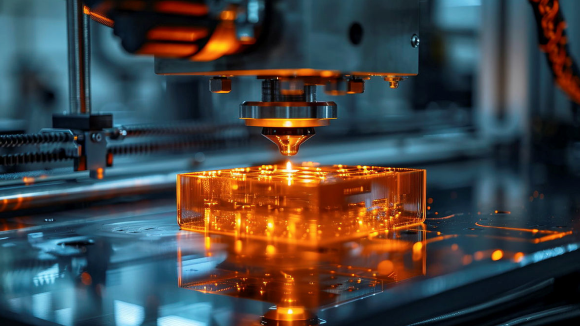
Multimaterial additive manufacturing (MMAM) refers to the process of 3D printing using two or more materials to create complex material architectures with tailored properties. This innovative approach has catalysed a transformative shift in the design and production of soft electronics, often drawing inspiration from the intricate structures and functions found in biological systems. This special Collection aims to explore the synergies between advanced multimaterial, multiscale 3D printing techniques and the development of soft electronic devices, which necessitate the integration of diverse materials to achieve desired functionalities.
Recent research has focused on enhancing the versatility of additive manufacturing techniques, such as Fused Deposition Modeling (FDM) and Stereolithography (SLA), to incorporate a wide range of materials, including polymers, metals, and ceramics. This technology has significant applications across industries such as aerospace, biomedical devices, and consumer electronics, facilitating the creation of lightweight, strong, and functional components. Soft electronics, characterized by their flexibility, stretchability, and lightweight nature, enable integration into unconventional surfaces and environments. Biological organisms exhibit remarkable capabilities for self-organization, assembling various components at the molecular level to create hierarchical structures with exceptional mechanical properties and multifunctionality. Such complexity in nature provides invaluable insights for material scientists aiming to design engineered materials that mirror these attributes. The integration of multiple materials—including conductors, insulators, and semiconductors—is essential for optimizing mechanical and electrical performance in soft electronic applications.
The key thematic focus of this special Collection includes, but is not limited to:
a) Advancements in 3D printing techniques: Exploration of cutting-edge methods such as inkjet printing, extrusion printing, material jetting, and two-photon and multi-photon lithography that enable the fabrication of multiscale and multimaterial architectures essential for soft electronics.
b) Challenges and innovations: Examination of current challenges in MMAM, including material compatibility, joining techniques, and post-processing issues, along with innovations in material processing and hardware improvements that enhance the effective integration of diverse materials.
c) Biomimetic designs: Investigation of biomimetic approaches in the design of soft electronics, leveraging nature’s strategies to create innovative solutions.
d) Applications in soft electronics: Applications of MMAM in developing soft electronic devices such as sensors, actuators, and wearable technologies, illustrating how tailored material properties, enabled by innovative printing techniques, can enhance device performance and functionality.
e) Sustainable functional materials: Exploration of sustainable materials and smart materials that contribute to the development of advanced soft electronic devices.
f) Future directions: Contributions that provide perspectives on future research directions, emphasizing the potential for integrating multiscale and multimaterial capabilities within 3D printing processes and exploring new materials and methods that can further push the boundaries of soft electronics.
As the field of multimaterial multiscale additive manufacturing continues to evolve, the potential for creating sophisticated soft electronic devices inspired by nature remains vast. This special Collection seeks to gather diverse perspectives and innovative research that will advance our understanding and application of MMAM in the realm of soft electronics, ultimately contributing to the development of next-generation functional materials and devices.
Editors
-
Kumar Shanmugam, PhD
University of Glasgow, UK
-
Woo Soo Kim, PhD
Simon Fraser University, Canada
-
William Boley, PhD
Boston University, USA


