
Thank you for visiting nature.com. You are using a browser version with limited support for CSS. To obtain
the best experience, we recommend you use a more up to date browser (or turn off compatibility mode in
Internet Explorer). In the meantime, to ensure continued support, we are displaying the site without styles
and JavaScript.
This Collection showcases several recent Reviews, Perspectives, Comments, research papers, and news articles discussing and reporting methods to study the complex biology of tumors.
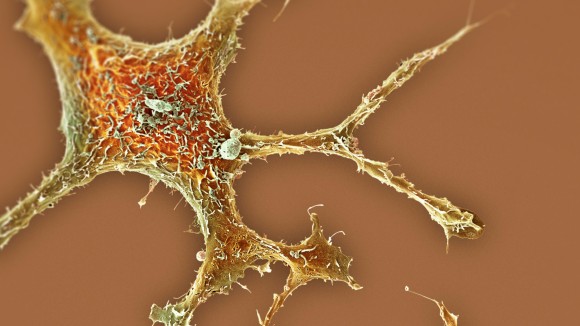
This Perspective outlines the datasets, access methods, data standards, infrastructure, governance and community-engagement strategies of the Human Tumor Atlas Network.
Spatial proteomics has transformed cancer research by providing unparalleled insights into the microenvironmental landscape of tumors. Here we discuss how these technologies have significantly advanced our understanding of cell–cell interactions, tissue organization and spatially coordinated mechanisms underlying antitumor immune responses, and will pave the way for emerging breakthroughs in cancer research.
Breakthroughs in AI and multimodal genomics are unlocking the ability to study the tumor microenvironment. We explore promising machine learning techniques to integrate and interpret high-dimensional data, examine cellular dynamics and unravel gene regulatory mechanisms, ultimately enhancing our understanding of tumor progression and resistance.
The development of mass spectrometry-based single-cell proteomics technologies opens unique opportunities to understand the functional crosstalk between cells that drive tumor development.
This Review describes spatial omics and multiplexed imaging technologies and their current and future impact in studying tumor heterogeneity and cancer biology.
SAVANA is a tool to detect somatic structural variants and copy number aberrations using long-read sequencing data, offering high sensitivity, specificity and compatibility with or without germline controls.
This work integrates duplex sequencing with cost-effective Ultima sequencing to enhance the accuracy of whole-genome circulating cell-free DNA profiling.
scAtlasVAE is a deep learning-based model for cross-atlas integration. Here it enables the development of a large-scale human CD8+ T cell atlas with integrated T cell receptor data.
This work presents CalicoST for inferring allele-specific copy numbers and reconstructing spatial tumor evolution by using spatial transcriptomics data.