Thank you for visiting nature.com. You are using a browser version with limited support for CSS. To obtain
the best experience, we recommend you use a more up to date browser (or turn off compatibility mode in
Internet Explorer). In the meantime, to ensure continued support, we are displaying the site without styles
and JavaScript.
A hallmark of cancer cells is their ability to prevent telomere shortening. Sometimes this is achieved without telomerase by a process known as alternative lengthening of telomeres (ALT). Recent progress has been made in understanding how ALT occurs.
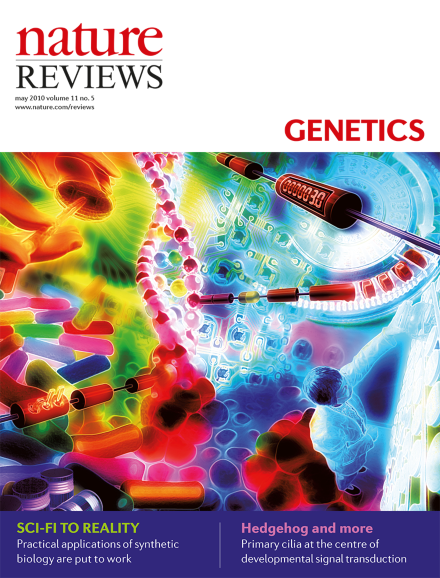
A view is emerging of the primary cilium as a nexus for developmental signalling pathways. Cilia seem to be specialized for hedgehog signal transduction, and their formation is regulated by other signalling pathways. These findings have implications for human diseases that involve cilia dysfunction.
The detailed characterization of the genomes and transcriptomes of diverse species has enabled advances in our understanding of how alternative splicing and alternatively spliced genes have evolved. Evolutionary studies are also contributing insights into how exons are defined and how splicing is regulated.
Most genome-wide association (GWA) studies have been performed in populations of European descent. This Review discusses the substantial potential and the challenges of extending consideration of GWA studies to diverse worldwide populations.
Advances in the synthetic biology field are allowing an expansion beyond small gene networks towards larger biological programs that hold promise for a wide range of applications, including biosensing, therapeutics and the production of biofuels, pharmaceuticals and biomaterials.
Four human disease geneticists express their views about the changing landscape of human disease studies and the impact of technological progress on establishing links between a pathogenic genomic variant and a disease phenotype.