- NEWS AND VIEWS
Large-scale early Maya sites in Mexico revealed by lidar mapping technology
Access options
Access Nature and 54 other Nature Portfolio journals
Get Nature+, our best-value online-access subscription
$32.99 / 30 days
cancel any time
Subscribe to this journal
Receive 52 print issues and online access
$199.00 per year
only $3.83 per issue
Rent or buy this article
Prices vary by article type
from$1.95
to$39.95
Prices may be subject to local taxes which are calculated during checkout
Nature 582, 490-492 (2020)
doi: https://doi.org/10.1038/d41586-020-01570-8
References
Chase, A. F., Chase, D. Z., Fisher, C. T., Leisz, S. J. & Weishampel, J. F. Proc. Natl Acad. Sci. USA 109, 12916–12921 (2012).
Inomata, T. et al. Nature 582, 530–533 (2020).
Evans, D. H. et al. Proc. Natl Acad. Sci. USA 110, 12595–12600 (2013).
Evans, D. J. Archaeol. Sci. 74, 164–175 (2016).
Canuto, M. A. et al. Science 361, eaau0137 (2018).
Hare, T., Masson, M. & Russell, B. Remote Sensing 6, 9064–9085 (2014).
Hutson, S. R., Kidder, B., Lamb, C., Vallejo-Cáliz, D. & Welch, J. Adv. Archaeol. Pract. 4, 268–283 (2016).
Magnoni, A. et al. Adv. Archaeol. Pract. 4, 232–248 (2016).
Stanton, T. W. et al. J. Archaeol. Sci. Rep. 29, 102178 (2020).
Friedel, D. A., Chase, A. F., Dowd, A. S. & Murdock, J. (eds) Maya E Groups: Calendars, Astronomy, and Urbanism in the Early Lowlands (Univ. Press Florida, 2017).
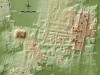 Read the paper: Monumental architecture at Aguada Fénix and the rise of Maya civilization
 Drought and the Maya
 Inequality has deep roots in Eurasia