Thank you for visiting nature.com. You are using a browser version with limited support for CSS. To obtain
the best experience, we recommend you use a more up to date browser (or turn off compatibility mode in
Internet Explorer). In the meantime, to ensure continued support, we are displaying the site without styles
and JavaScript.
David Ceperley is founder professor of physics at the University of Illinois at Urbana-Champaign. He worked with Berni Alder at Livermore from 1978 to 1987.
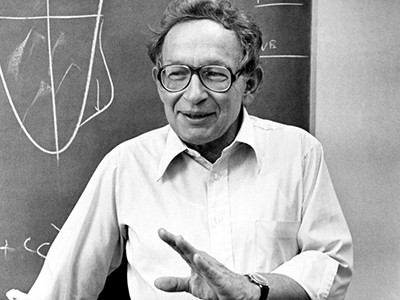
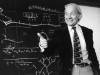
Berni Alder pioneered computer simulation, in particular of the dynamics of atoms and molecules in condensed matter. To answer fundamental questions, he encouraged the view that computer simulation was a new way of doing science, one that could connect theory with experiment. Alder’s vision transformed the field of statistical mechanics and many other areas of applied science.
Alder, who died on 7 September aged 95, was born in Duisburg, Germany. In 1933, as the Nazis came to power, his family moved to Zurich, Switzerland, and in 1941 to the United States. After wartime service in the US Navy, Alder obtained undergraduate and master’s degrees in chemistry from the University of California, Berkeley. While working for a PhD at the California Institute of Technology in Pasadena, under the physical chemist John Kirkwood, he began to use mechanical computers to explore how molecules in solids and liquids moved in relation to each other.
The question he set himself, which occupied him for the following two decades, was: “How does a system of hard spheres [representing molecules] behave under various conditions?” During his PhD, he and the computer scientist Stan Frankel developed an early Monte Carlo algorithm — one in which the spheres are given random displacements — to calculate the properties of the hard-sphere fluid. The advance was scooped by Nicholas Metropolis and his group at the Los Alamos National Laboratory in New Mexico.
After completing his PhD in 1951, Alder returned to Berkeley to teach chemistry. In 1953, he began working as a consultant at the University of California Radiation Laboratory at Livermore (later the Lawrence Livermore Laboratory), newly founded by nuclear physicists Edward Teller and Ernest Lawrence, and in 1955 he joined the staff. The laboratory was well funded as part of the US effort to promote innovation during the cold war. Alder and his group used the spare capacity of the increasingly powerful electronic computers that the lab deployed in the design of nuclear weapons.
Alder returned to his interest in the properties of systems of spheres. In the mid-1950s, in collaboration with his Livermore colleague Thomas Wainwright, he developed algorithms to simulate many-body systems. The technique they used, molecular dynamics, modelled a sequence of collisions in a system of spheres and followed the state of the system over time. They considered hard spheres because the dynamics could be exactly determined, silencing criticism that the results were the product of inaccurate computer arithmetic. The advantage of this technique over Monte Carlo methods was, as its name suggests, that it could address the dynamics of many-particle systems as well as their equilibrium properties.
The invention of molecular dynamics is Alder’s greatest legacy, and has led to applications in materials science, biochemistry and biophysics, as well as physics and chemistry. Two of his fundamental contributions to statistical mechanics stand out, and convinced the scientific community of the technique’s utility. Until he published his findings, solids were thought to exist as a result of attractive interactions between molecules: the regular arrangement of atoms in a crystal lattice is the configuration that minimizes their energy.
Alder and Wainwright (and others using Monte Carlo methods) showed in 1957 that as systems of hard spheres are compressed, they undergo a transition from liquid to solid. Since hard spheres do not have attractive interactions, freezing maximizes their entropy rather than minimizing their energy; the regular arrangement of spheres in a crystal allows more space for them to move than does a liquid.
Enjoying our latest content?
Log in or create an account to continue
Access the most recent journalism from Nature's award-winning team
Explore the latest features & opinion covering groundbreaking research




 Philip W. Anderson (1923–2020)
 Manfred Eigen (1927–2019)
 David J. Thouless (1934-2019)