- NEWS FEATURE
- Correction 04 June 2025
Brain drugs can now cross the once impenetrable blood–brain barrier

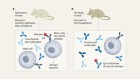
Illustration: Jasiek Krzysztofiak; photographs: Zephyr/SPL; Steve Gschmeissner/SPL; Living Art Enterprises/SPL
Access options
Access Nature and 54 other Nature Portfolio journals
Get Nature+, our best-value online-access subscription
$32.99 / 30 days
cancel any time
Subscribe to this journal
Receive 51 print issues and online access
$199.00 per year
only $3.90 per issue
Rent or buy this article
Prices vary by article type
from$1.95
to$39.95
Prices may be subject to local taxes which are calculated during checkout
Nature 641, 1086-1088 (2025)
doi: https://doi.org/10.1038/d41586-025-01569-z
Updates & Corrections
-
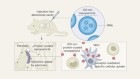
Correction 04 June 2025: An earlier version of this story mistakenly stated that cells direct therapeutic IDS to the lysosome as waste. Rather, they usually send the transferrin receptor to the lysosome for processing, which brings therapeutic IDS to where it is needed. The story also referred to an adeno-associated virus as a type of adenovirus. These are distinct classes of virus.
References
Khoury, N. et al. Nature Commun. 16, 1822 (2025).
Barker, S. J. et al. Sci. Transl. Med. https://doi.org/10.1126/scitranslmed.adi2245 (2024).
Huang, Q. et al. Science 384, 1220–1227 (2024).
Liang, X. et al. Nature Commun. 16, 4028 (2025).
 This key protein could be responsible for brain ageing
 ‘Big leap’ for Parkinson’s treatment: symptoms improve in stem-cells trials
 Engineered nose bacteria sneak drugs into the brain
 FedEx for your cells: this biological delivery service could treat disease
 Engineered antibodies cross blood–brain barrier