
Earthquake Rupture, Cascading Effects, and Multi-Hazard Consequences
- Submission status
- Open
- Submission deadline
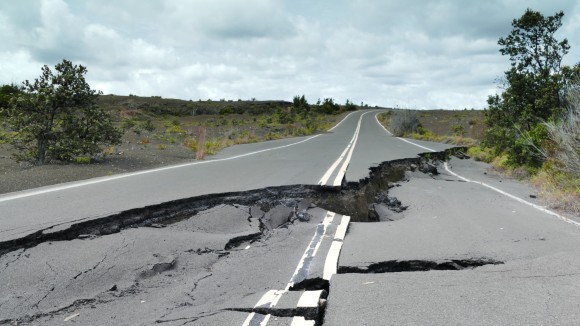
Earthquakes remain one of the most destructive natural hazards, yet their impacts extend far beyond ground shaking. Increasing evidence shows that earthquake rupture processes can trigger a series of cascading consequences, including co-seismic landslides, soil liquefaction, tsunami generation, surface deformation, hydrological responses, as well as secondary technological hazards. These complex interactions pose substantial challenges for hazard analysis, rapid assessment, emergency decision-making, and long-term resilience building. Advances in seismology, geodesy, remote sensing, numerical modeling, and multi-hazard risk science offer unprecedented opportunities to deepen our understanding of rupture dynamics and their compounding effects.
This Collection aims to bring together interdisciplinary research that investigates earthquake rupture processes, multi-hazard interactions, chain effects, and their implications for risk assessment and mitigation. We encourage contributions that advance mechanistic understanding, develop innovative observation and modeling techniques, and explore approaches to strengthen resilience in earthquake-prone regions.
Topics of interest include, but are not limited to:
- Physics of earthquake rupture, dynamic triggering, and stress transfer
- Near-source deformation, fault-zone processes, and surface rupture mapping
- Co-seismic and post-seismic landslides, rockfall, liquefaction, and other cascading geological hazards
- Earthquake-triggered tsunami generation and multi-hazard interactions
- Advances in real-time monitoring, rapid impact assessment, and early warning
- Integrated multi-hazard modeling and compound risk analysis
- Case studies from major earthquakes and lessons for resilience and recovery
Editors
-
Yingying Tian, PhD
Institute of Geology, China Earthquake Administration, Beijing, China


