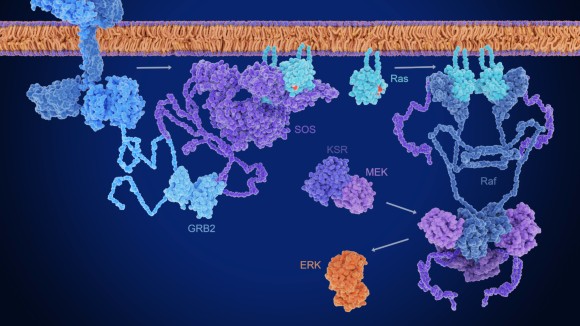
RAS cancer biology (mutations, signaling, etc.) plus emerging RAS-directed therapeutic advances and new horizons
- Submission status
- Open
- Submission deadline
The RAS family commonly drives the growth and survival of human cancers. Mutations in KRAS, NRAS, and HRAS occur in approximately 20% of all human cancers, including solid tumors, such as pancreatic, colorectal, and lung malignancies, and liquid tumors, such as leukemia. Despite decades of research, RAS proteins were long considered "undruggable" due to their structural complexity and high affinity for GTP. Recent breakthroughs—such as the identification of a binding pocket within the switch II region of RAS and the development of molecular glues that can bind to activated RAS—have the potential to transform the care of patients with RAS mutant cancers.
This Collection aims to showcase cutting-edge research that spans the full spectrum of RAS biology, from basic mechanistic insights to translational and clinical advances.
Topics of Interest Include (but are not limited to:
- Functional consequences of RAS mutations and isoform-specific signaling
- Structural biology and conformational dynamics of RAS proteins
- RAS-driven oncogenesis and tumor heterogeneity
- Crosstalk between RAS and other signaling pathways (e.g., PI3K, RAF/MEK/ERK)
- Mechanisms of resistance to RAS-targeted therapies
- Development and clinical evaluation of RAS inhibitors (e.g., G12C, G12D, pan-RAS)
- Synthetic lethality and combination strategies involving RAS
- RAS in the tumor microenvironment and immune modulation
- Novel technologies for RAS pathway interrogation (e.g., CRISPR, single-cell omics)
- RASopathies and germline RAS mutations in developmental disorders