
Biomimetic functional Materials, Devices and Systems
- Submission status
- Closed
- Submission deadline
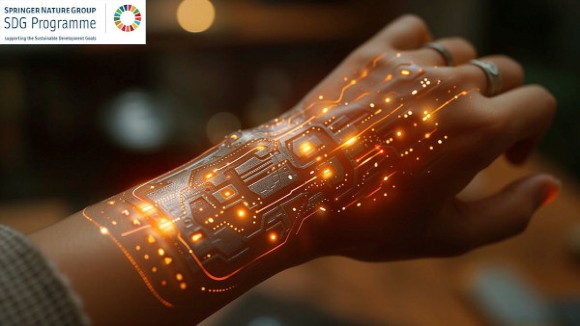
Nature features some of the most sophisticated, yet elegant and long-lasting mechanosensory systems. The materials and morphological form of these natural systems have evolved to perfection in attaining optimal functionality. Biomimetic functional materials, devices and systems take inspiration from nature to create innovative technologies with superior performance for real-life applications. Biomimetic materials and morphological structures such as spider silk-based fibers, lotus leaf inspired surfaces, gecko feet inspired adhesives, regenerative self-healing materials, and muscle-inspired actuators find applications in soft sensors, actuators and wearable technologies. Bio-inspired mechanosensors such as micro electromechanical systems (MEMS) devices and 3D printed electronic sensors inspired by neuromasts in fishes, whiskers in rats and seals and olfaction inspired chemical/gas sensors, not only facilitate the creation of ultra-sensitive high performance sensors but also deepen our comprehension of the fundamental relationship between form-functionality in these biological sensors. Beyond the development of materials, sensors and robotics, entire systems can be biologically inspired, such as multi-modal artificial skins, multi-functional sweat sensors, physicochemical and biosensors.
This Collection covers a wide range of topics within the scope of Biomimetic functional Materials, Devices and Systems such as:
- Biomimetic and Bioinspired MEMS, and 3D printed sensors
- Bio-inspired soft sensors and actuators
- Biomimetic self-healing materials and multimodal wearable physical and chemical sensors
- Printed flexible sensors, electronics and actuators using patterning techniques such as inkjet printing, aerosol jet printing, electro printing, electrospinning and lithography
- Bioinspired sensors and systems that explain the form-functionality relationship in biological sensors or show better functionality/sensing performance by imbibing a bioinspired design
This Collection supports and amplifies research related to SDG3.
Editors
-
Ajay Kottapalli, PhD
University of Groningen, the Netherlands
-
Virgilio Mattoli , PhD
Istituto Italiano di Tecnologia (IIT), Italy
-
Limei Tian, PhD
Texas A&M University, USA
Ajay Kottapalli, PhD, University of Groningen, the Netherland
 Ajay Kottapalli’s research group focuses on nature-inspired micro/nano sensors, biomimetic materials and sensors, micro/nano electro mechanical systems (MEMS/NEMS), nanofabrication, flexible electronics,biomedical sensors, 2D sensing materials, TENG/PENG energy harvesting etc. A key aspect of his research work is to develop MEMS/NEMS sensors with ultrahigh sensitivity and accuracy by imbibing designs of biological sensors in nature. We implement the biological sensory designs in artificial MEMS/NEMS sensors by mimicking the sensing principle, morphology, material properties and functionality to fabricate sensors with ultra-sensitive sensing abilities. Our research primarily aims to develop artificial nanosensors that integrate nature-inspired biological sensing phenomena with novel soft polymer materials and 2D sensing materials to achieve ultrasensitive sensors. Various applications of such sensors in biomedical sensing and healthcare devices are explored in a pursuit for preventive maintenance, bringing healthcare home and safe clinical practices.
Virgilio Mattoli, PhD, Istituto Italiano di Tecnologia (IIT), Italy
 Virgilio Mattoli received his Laurea degree in chemistry (with honours) from the University of Pisa and the Diploma in Chemistry from the Scuola Normale Superiore of Pisa in 2000. In 2005 he received his PhD in bio-engineering (with honours) from Scuola Superiore Sant’Anna, with a thesis focused on the control and integration of miniaturized devices for environmental application. In summer 2004 he was visiting researcher at the University of Stanford, Center for Design Research, working on sensors and controls modules for biomimetic robotics applications. In 2005 and 2008 he was a short term visiting researcher at Waseda University (Tokyo, Japan) working on a bio-inspired mini-robot and on development of ultrathin freestanding polymeric films. From June 2008 to October 2009 he obtained a temporary position of Assistant Professor of bioengineer engineering at the Scuola Superiore Sant’Anna (SSSA). From November 2009 to July 2015, he has been a Team Leader of the Smart Materials Platform in the Center for Micro-BioRobotics of the Italian Institute of Technology (IIT). In August 2015, he obtained a permanent position as Researcher Technologist at the same center (now Center for Materials Interfaces). His main research interests include: smart nano- and bio-inspired materials, micro/nano-fabrication, soft/tattoo electronics, sensors, and biorobotics. He is currently involved in several research projects on these topics, including the EU FET Project 5D NanoPrinting of which he is the coordinator. He is author or co-author of more than hundred fifty articles on international journals, of more than about thirty-five invited talks, and of several conferences communications/proceedings and deposited patents.
Limei Tian, PhD, Texas A&M University, USA
 Limei Tian is an Assistant Professor in the Department of Biomedical Engineering at Texas A&M University. Her research interests include the design, synthesis and fabrication of novel materials and devices, which can expand the fundamental understanding of biotic-abiotic interactions at various length scales and foster technologies that enable advanced health care, renewable energy, environmental monitoring and homeland security. She earned her Ph.D. from the Department of Mechanical Engineering and Materials Science at Washington University in St. Louis in 2014. Limei Tian was a Beckman Institute Postdoctoral Fellow at the University of Illinois at Urbana-Champaign from 2015 to 2018. She is the recipient of National Science Foundation summer institute fellowship (2011), Materials Research Society graduate student award (2013), Chinese Government Award for outstanding students abroad (2014) and Beckman Institute Postdoctoral Fellowship (2015).
