
The neuroimmune-axis and ageing in Parkinson’s Disease
- Submission status
- Open
- Submission deadline
 This Collection supports and amplifies research related to SDG 3.
Age is the greatest risk factor for Parkinson’s Disease (PD), yet the contribution of the aging immune system has arguably been underappreciated and understudied to date. Preclinical research has increasingly highlighted the neuroimmune axis as a critical mediator in the ageing-related vulnerability to PD. Ageing promotes a pro-inflammatory environment in the brain, characterized by microglial priming, increased cytokine release, and impaired resolution of inflammation, all of which exacerbate α-synuclein pathology and dopaminergic neuron loss in animal models. Moreover, peripheral immune changes such as increased monocyte infiltration and altered T cell responses further amplify neurodegeneration in the aged brain. These insights support the neuroimmune axis as both a contributor to and a potential therapeutic target for PD in the context of ageing.
This Collection will showcase research that brings additional knowledge to our current understanding of the age-related changes to the neuroimmune axis in the context of PD and how this knowledge may be leveraged for potential therapeutics. We particularly welcome submissions on topics such as:
- Mechanisms underlying age-dependent microglial reactivity and its role in α-synuclein aggregation.
- Mechanisms regulating peripheral immune cell trafficking into the aged brain during early PD pathology.
- The impact of age-related changes in adaptive immunity (e.g., T cell senescence) on neurodegeneration.
- Interactions between systemic inflammation, metabolic ageing, and central immune responses in PD.
- The development and use of peripheral immune signatures as biomarkers to monitor immune aging and disease risk.
- Inflammaging and how this may relate to disease progression and/or severity in PD.
- Sex and immune aging differences in PD and healthy aging.
- Imaging neuroinflammation and age-related changes in neuroinflammation in humans.

Editors
-
Muthuraman Muthuraman, PhD
Institute of Computer Science, Augsburg, Germany Universitätsklinikum Würzburg Department of Neurology, Germany
-
Rebecca Wallings, DPhil
Stark Neurosciences Research Institute, Department of Neurology, Indiana University, United States
 Muthuraman Muthuraman, PhD
Institute of Computer Science, Augsburg, Germany
Universitätsklinikum Würzburg Department of Neurology, Germany
Muthu's current research interests focus on movement disorder patients using computational methods for time series analysis and source analysis on oscillatory signals, function of oscillatory activity in central motor systems, biomedical statistics, connectivity analyses, multimodal signal processing and analyses of EEG, MEG, fMRI and EMG, structural and network analyses on anatomical MRI and DTI, machine learning and deep learning.
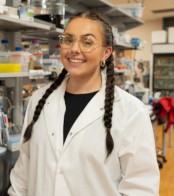 Rebecca Wallings, DPhil, Stark Neurosciences Research Institute, Department of Neurology, Indiana University, United States
Rebecca Wallings is a senior postdoctoral fellow in the lab of Professor Malu Tansey, Stark Neurosciences Research Institute, at Indiana University. Her research career began at University College London (UCL), where she completed her MSc in Clinical Neuroscience in 2017 which culminated in a research thesis investigating the effects of Parkinson’s Disease (PD) mutations in immune cells.
She then went on to complete her DPhil in Physiology, Anatomy and Genetics at the University of Oxford in 2018 under the supervision of Professor Richard Wade-Martins, Director of the Oxford Parkinson’s Disease Centre, and Dr. Natalie Connor-Robson. Her thesis focused on the role of LRRK2 in the autophagy pathway and identified a novel LRRK2-substrate, v-type H+ ATPase proton pump (vATPase a1), with LRRK2-mutations disrupting this interaction and causing lysosomal dysfunction in neurons.
Rebecca's post-doctoral research has focused on understanding the role of the lysosome in inflammation in models of PD and dementia, with a keen interest in the role of both LRRK2 and progranulin at the interface of lysosomal function and inflammation. During this time, she was awarded two postdoctoral fellowships from the Parkinson Foundation and Bright Focus Foundation, as well as various intramural grants. In most recent years, Rebecca has been at the forefront of neuroimmunological research in PD, identifying the novel role of immune cell exhaustion in PD.
In 2024, Rebecca was awarded the prestigious Parkinson Foundation Launch Award, a 4-year grant supporting her transition to independence. The overarching mission of her future independent research program is to understand how immune cell exhaustion and accelerated immune cell aging, specifically in peripheral immune cells, leads to neurodegeneration in the brain, and how this could be targeted for potential therapeutics.
