
Dust Hazards in a Changing Climate
- Submission status
- Open
- Submission deadline
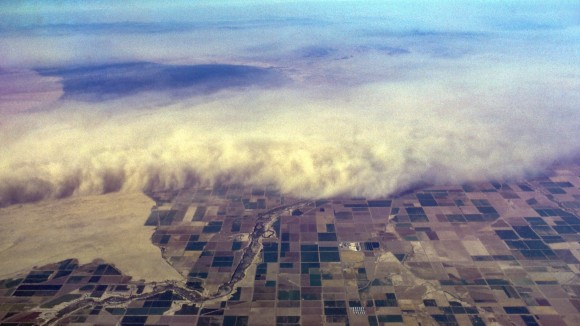
Dust hazards—including dust storms, sandstorms, long-range dust transport, volcanic ash-related dust, and saline dust events—are becoming increasingly prominent under climate change, land degradation, and intensifying drought. These hazards not only reduce visibility and threaten transportation and infrastructure, but also affect air quality, public health, agriculture, ecosystems, and regional climate processes. In many arid and semi-arid regions, dust generation is strongly linked to extreme weather, surface instability, vegetation decline, and soil drying. As dust storms become more frequent and severe, and transboundary dust transport gains global attention, improving our understanding of dust sources, triggering mechanisms, transport dynamics, and multi-hazard impacts is essential for advancing prediction and resilience.
This Collection aims to highlight interdisciplinary research that advances the observation, modeling, impact assessment, and risk reduction of dust-related natural hazards. Contributions addressing both natural and climate-enhanced drivers of dust hazards are welcome.
Topics of interest include, but are not limited to:
- Physical processes and triggering mechanisms of dust storms and sandstorms
- Remote sensing and multi-sensor detection of dust generation, transport, and deposition
- Impacts of dust hazards on air quality, transportation safety, agriculture, and public health
- Climate–dust interactions, drought-driven dust hazards, and land degradation feedbacks
- Transboundary dust transport and regional-to-global atmospheric effects
- Modeling dust emission, dispersion, and long-range transport
- Dust impacts on cascading hazards, such as post-fire dust events or dryland eco-instability
- Integrated approaches for forecasting, early warning, and risk mitigation
- Case studies from major dust-prone regions worldwide
Editors
-
Chong Xu, PhD
National Institute of Natural Hazards, Beijing, China

