
Advancing Tsunami Science and Risk Mitigation: From Mechanisms to Resilience
- Submission status
- Open
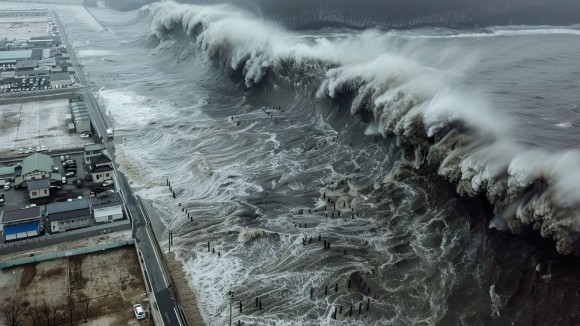
Tsunamis are among the most catastrophic natural hazards, triggered by seismic and non-seismic events, such as underwater earthquakes, landslides, volcanic eruptions, atmospheric disturbances, and meteorite impacts. Their devastating consequences are underscored by recent events, including the 2004 Indian Ocean tsunami, the 2011 Great East Japan tsunami, and the 2018 Sulawesi tsunami. These events caused extensive human casualty and economic loss as well as elucidated critical knowledge gaps in tsunami science and resilience planning.
While advances in scientific research have yielded remarkable progress in understanding tsunami dynamics, substantial challenges remain in accurately predicting their occurrence, modeling their propagation, assessing their risks, and formulating effective mitigation strategies. This Collection aims to facilitate a better understanding of how to minimize the impacts of future tsunami events on our societies and ecosystems.
This Collection welcomes Original Research articles as well as Reviews, Perspectives, and Comments to address the following specific areas of focus that include, but are not limited to:
- Seismic and non-seismic tsunami sources
- Tsunami modeling techniques and their applications
- Reconstruction of historical tsunami events
- Deterministic and probabilistic tsunami analyses as well as other statistical approaches
- Tsunami hazard and risk assessment as well as cascading effects
- Tsunami early warning
Editors
-
Chong Xu, PhD
National Institute of Natural Hazards, China


