Confined Plasmas and Nuclear Fusion
- Submission status
- Open
- Submission deadline
 This collection supports and amplifies research related to SDG 7 - Affordable and clean energy.
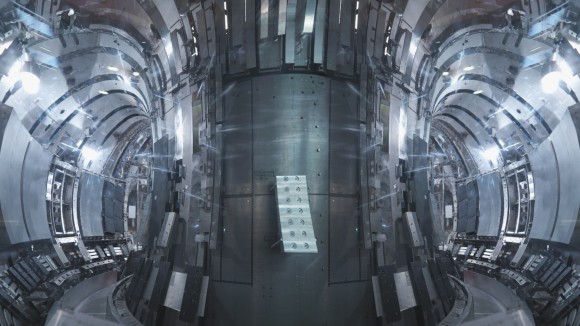
Nuclear fusion is the process powering stellar cores and providing a potential pathway towards meeting global energy demands in a sustainable way. As such, it strongly features among the agenda-setting technologies in the year 2026 [1]. Controlling fusion in a reactor requires stable confinement of plasmas at extremely high temperatures and densities, and for sufficiently long times, providing major technical and engineering challenges.
While recent studies have considerably advanced the performance of magnetic and inertial confinement techniques, plasma instabilities still provide significant disruptions. Emerging approaches in magnetic control, particularly those leveraging artificial intelligence, present exciting opportunities for enhancing plasma performance and stability. Further developments towards practical nuclear fusion thus crucially depend on the interplay of advanced theoretical modelling, experimental validation, and innovative engineering solutions.
This cross-journal collection involving Nature Communications, Communications Physics, Communications Engineering and Scientific Reports aims at exploring a wide range of topics in confined plasmas and nuclear fusion research and invites original research contributions from a variety of devices and laboratories, from tokamaks, stellarators and other compact geometries to world-leading laser and ignition facilities. We also encourage submissions of theoretical and experimental studies addressing plasma instabilities and their mitigation, AI-based approaches for real-time plasma control, and engineering innovations involving advanced materials and reactor design.
[1] Seven technologies to watch in 2026 (Technology feature, Nature, 2026)