
Bio-inspired Underwater Robots
- Submission status
- Closed
- Submission deadline
Bio-inspired underwater robots are engineered to replicate the morphology, movements, and behaviors of aquatic animals, which have evolved amazingly underwater mobility. This interdisciplinary field of research combines principles from biology, engineering, computer science, fluid dynamics, and robotics to develop efficient and adaptable underwater vehicles. Researchers have created various designs inspired by aquatic organisms such as fish, dolphins, and jellyfish. These bio-inspired robots are employed in a range of applications, including ocean exploration, environmental monitoring, and search and rescue operations. Their capability to navigate complex marine environments makes them invaluable tools for both researchers and industry professionals.
This Collection welcomes the following topics, including but not limited to:
- Bioinspired sensory systems for underwater robotics
- Bioinspired control systems for underwater robotics
- Bioinspired actuators for underwater robotics
- Bioinspired physical and embedded intelligence in underwater robotics
- Bioinspired underwater robotics for shallow and deep-water environments
- Swarm-based bioinspired underwater robotics
- Bioinspired underwater soft robotics
- Bioinspired underwater multi-modal robotics such as aerial-swimming robots, walking-swimming robots
- Bioinspired underwater robotics with integrated sensor systems
- Bioinspired underwater robotics with autonomous navigation capabilities
- Bioinspired underwater communication and networking technologies
- Bioinspired underwater robotics with AI
- Bioinspired underwater robotics for applications such as environmental monitoring and exploration for search and rescue operations
- Bioinspired underwater robotics for science
Editors
-
Liang Li, PhD
Universität Konstanz, Germany
-
Wei Wang, PhD
University of Wisconsin–Madison, USA
-
Nicole W. Xu, PhD
University of Colorado Boulder, USA
Liang Li, PhD, Universität Konstanz, Germany
 Dr Liang Li is a project leader (PI) at the University of Konstanz and the Max Planck Institute of Animal Behavior in Konstanz, Germany. I study collective motion in fish school by artificial tools, including robotic fish and virtual reality techniques. During my Ph. D, I focused on design, control, modeling and optimizing of carangiform robotic fish. Based on the robotic fish platform, energy saving mechanism in collective motion in fish school was systematically explored in both spatial and time scales. I will continue to test this hypothesis in the real fish system and explore further mechanisms in collective motion in fish school by projecting controllable virtual fish.
Wei Wang, PhD, University of Wisconsin–Madison, USA
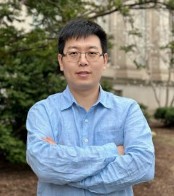 Wei Wang is an Assistant Professor of Mechanical Engineering at UW-Madison and Director of the Marine Robotics Lab. His research focuses on designing and controlling autonomous robots in complex environments, particularly aquatic systems. He explores unconventional designs and bio-inspired approaches to address key challenges in aquatic locomotion, sensing, control, and collective behavior. Additionally, he is passionate about developing advanced control and perception algorithms that enable robots to autonomously navigate challenging environments and collaborate when necessary. His long-term goal is to enable trustworthy and coordinated autonomy across a broad spectrum of robotics applications, including aquatic monitoring, ocean exploration, underwater construction, urban transportation, and climate change solutions.
Nicole W. Xu, PhD, University of Colorado Boulder, USA
 Dr. Xu is an Assistant Professor in the Paul M. Rady Department of Mechanical Engineering. Prior to her appointment, she was a National Research Council (NRC) Postdoctoral Research Associate in the Laboratories for Computational Physics & Fluid Dynamics at the U.S. Naval Research Laboratory (NRL) in Washington, D.C. She received her Ph.D. in Bioengineering from Stanford University, M.S. in Bioengineering from the California Institute of Technology, and B.S.E. in Bioengineering from the University of Pennsylvania. The Xu Lab is an interdisciplinary research group at the intersection of robotics, fluid dynamics, and biology. Our mission is to develop and deploy bioinspired aquatic robots for real-world applications using a combination of laboratory experiments, theoretical modeling, and field work. By combining features from both natural and engineered designs, we aim to create more energy-efficient, maneuverable, and robust robots and underwater vehicles to track climate change, observe natural phenomena in the ocean, and aid in environmental stewardship.
