
Collections
Filters
-
Collection Type
-
-
Collection |
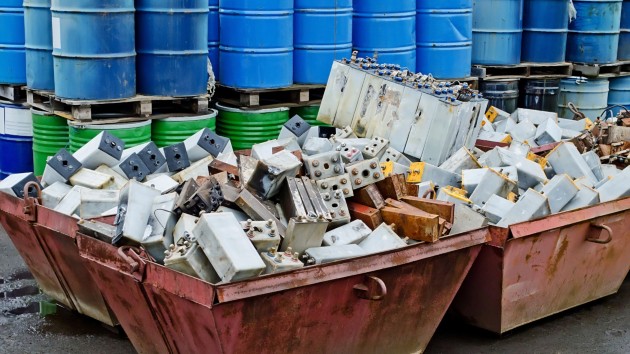 Materials and Processes for the Sustainable and Selective Separation and Recovery of Critical Metals
The collection aims to highlight the latest advances in the sustainable recovery of critical metals.
Image: © dmitrydesigner / Stock.adobe.com -
Collection |
 Molecular Motors and Machines
The structural design of molecular machines and motors endows them with externally controlled directional motion at the molecular scale. Their further incorporation into surfaces and interfaces leads to amplified directional molecular motion at the nanoscale which can be applied to control macroscopic material properties. Additionally, they can be organized into three dimensional materials to expand their functionality in the solid state and enrich their applicability.
Image: © [M] Sergey Nivens / Stock.adobe.com -
Collection |
 Next generation OLEDs
Organic light emitting diodes (OLEDs) have developed rapidly over the last few decades, from fluorescent emitters that relied on organic dyes, to modern devices based on thermally activated delayed fluorescence, and beyond. This Collection brings together the latest developments in OLEDs.
Image: © [M] alipko / Stock.adobe.comOpen for submissions -
Collection |
 Chemical Catalysis for Plastics Recycling and Upcycling
This collection invites submissions of original research articles focused on innovative catalyst design, in-depth fundamental understanding, or reaction engineering that are needed to overcome kinetic and thermodynamic limitations of plastics deconstruction. This is a collaborative effort between the Energy Materials team at Nature Communications and the journals Communications Chemistry, Communications Materials, and Scientific Reports. We seek studies spanning a broad range of topics related to catalyst-driven technologies for plastics deconstruction and upcycling. Submissions on other aspects of catalytic reaction engineering are also welcome.
Image: © [M] ArtMassa / Getty Images / iStock -
Collection |
 Machine learning for materials discovery and optimization
This Collection brings together the latest computational and experimental advances in artificial intelligence, machine learning and data-driven approaches to accelerate high-throughput prediction, synthesis, characterization, optimization, discovery, and understanding of new materials.
Image: © [M] metamorworks / Stock.adobe.comOpen for submissions -
Collection |
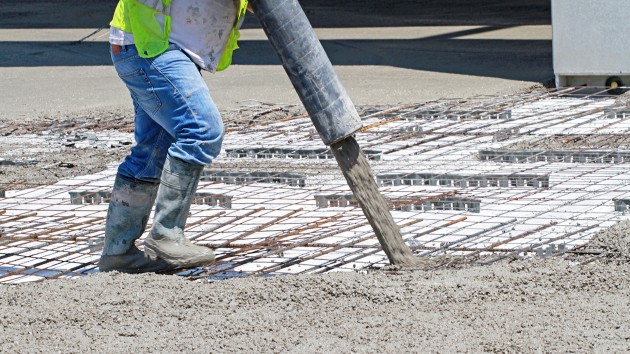 Cement and Concrete Innovation for Construction
Innovation in cement and concrete technologies plays a key role in tackling the modern challenges of the global construction industry. This collection highlights research that advances both sustainable development and application of cement and concrete for the building sector including low-carbon cement alternatives, recycling and reuse of concrete materials, 3D concrete printing, and other energy-efficient construction techniques.
Image: © [M] Kara / Fotolia -
Collection |
 Advancing lithium-sulfur batteries
This Collection will bring together the latest developments and understanding in lithium (and other metal ion) sulfur batteries towards new approaches, better performance, improved safety, and commercialization.
Image: © [M] repinanatoly / Getty Images / iStockOpen for submissions -
Collection |
 Multifunctional 2D optoelectronics
This cross-journal Collection between Communications Materials, Nature Communications, and Scientific Reports brings together the latest advances in fundamental and applied research on 2D materials with combined multiple optoelectronic functionalities.
Image: © [M] sakkmesterke / stock.adobe.com -
Collection |
 Thermoelectric materials for energy recovery
This cross-journal Collection between Nature Communications, Communications Materials and Scientific Reports brings together the latest advances in thermoelectric energy recovery, covering materials synthesis, device demonstrations, and analytical studies.
Image: © [M] Mel Stoutsenberger / Stock.adobe.com -
Collection |
 Controlling disorder in framework materials
This collection aims to highlight the importance of disorder in framework materials, including characterisation their structures and the types of disorder present, and the role of disorder in the materials’ properties and function.
Image: © [M] akinbostanci / Getty Images / iStock -
Collection |
 Smart Materials for Bioengineering and Biomedicine
In this cross-journal Collection at Nature Communications, Communications Biology, Communications Engineering, Communications Materials, Communications Medicine and Scientific Reports, we welcome submissions focusing on various aspects, from mechanistic understanding to clinical translation, of smart materials for applications in bioengineering and biomedicine, such as, drug delivery, biosensing, bioimaging and tissue engineering.
Image: © [M] Volodymyr Horbovyy / Getty Images / iStock
 Multifunctional hydrogels
