Volume 8
-
No. 12 December 2024
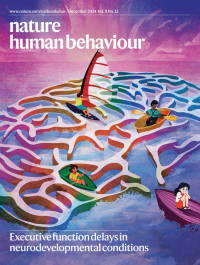
Executive function delays in neurodevelopmental conditionsExecutive function delays are common in childhood neurodevelopmental conditions, such as autism, attention deficit hyperactivity disorder and tic disorders. However, it has been unclear whether delays in executive function development are a transdiagnostic feature of these conditions. Sadozai and colleagues address this question through a systematic review and meta-analysis of 180 studies. They find that, although there are a few differences among conditions, executive function delays are a transdiagnostic marker for neurodevelopmental conditions.
See Sadozai et al.
-
No. 11 November 2024
Menstruation mattersMenstruation is part of human life but is stigmatized and rarely discussed openly, and this has far-reaching implications for health, poverty and gender inequity. It is time for this to change. This Focus throws light on some of the most important ways that menstruation shapes society, health and individual lives. With it, we hope to spark more open conversations about menstruation.
See Focus
-
No. 10 October 2024
Connecting humans and machinesThe ubiquity of human–machine interactions is an opportunity to explore, while being mindful of the risks. This issue features a Focus on the many ways in which humans interact and communicate with machines, which foregrounds the societal implications and ethical considerations of emerging technologies.
See Focus
-
No. 9 September 2024
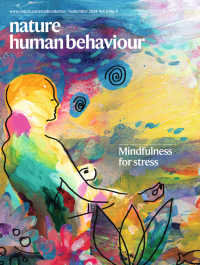
Mindfulness for stressDo self-administered mindfulness interventions actually work for reducing stress? Sparacio et al. examined the efficacy of four different mindfulness exercises (body scan, mindful breathing, mindful walking and loving kindness). They found that all four interventions reduced participants’ self-reported stress compared to listening to a story excerpt. Body scan was the exercise with the largest stress reduction effect.
See Sparacio et al.
-
No. 8 August 2024
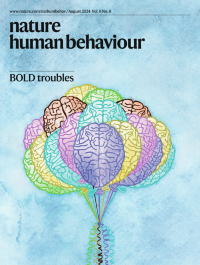
BOLD troublesFunctional magnetic resonance imaging (fMRI) is a key tool for understanding brain function. Korponay et al. show that the blood oxygenation level-dependent (BOLD) signal — which fMRI uses to measure brain activity — is susceptible to artefacts from low-frequency blood flow signals (sLFOs), which can produce false positives in functional connectivity. These artefacts, linked to changes in respiration and heart rate during scanning, distort connectivity measures. The authors develop a specialized sLFO denoising method, which improves the accuracy and reliability of functional connectivity findings.
See Korponay et al.
-
No. 7 July 2024
Making sense of goal persistenceTo attain goals, we frequently need to persevere. However, people sometimes show too much commitment to a goal, despite better alternatives — especially if they have invested a lot of time or money. Holton et al. use fMRI, lesion data and computational modelling to show that over-persistence with a chosen goal is driven by selective attention (mediated by the ventromedial prefrontal cortex ), which prioritizes information related to the current goal and reduces sensitivity to attractive alternatives.
See Holton et al.
-
No. 6 June 2024
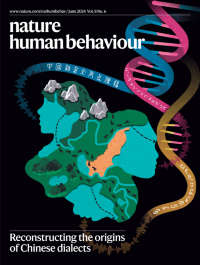
Reconstructing the origins of Chinese dialectsThe relative contribution of demographic versus cultural diffusion to the evolution of Han Chinese dialects has been unclear. By digitizing a large lexical dataset of Chinese dialects and comparing it to genetic profiles, Yang et al. reveal a hybrid model of language diffusion that consists of both population migrations and social learning across different regions of China.
See Yang et al. See also News & Views by Xu & Wang
-
No. 5 May 2024
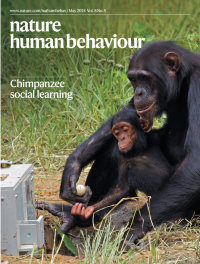
Chimpanzee social learningIs know-how copying a uniquely human capacity? Van Leeuwen and colleagues demonstrate that chimpanzees use social learning to acquire a skill that they failed to innovate, which suggests that chimpanzees — like humans — use know-how copying to expand their skill set.
See Van Leeuwen et al.
-
No. 4 April 2024
Unconditional child allowance and families’ spending behaviourIn 2021, the USA provided an unconditional child allowance to most families with children. Using anonymized mobile-location as well as debit and credit card data, Parolin et al. find that the allowance increased spending at childcare centres, health- and personal-care establishments, and grocery stores. On the other hand, there was no evidence that the allowance increased tobacco or alcohol purchases.
See Parolin et al.
-
No. 3 March 2024
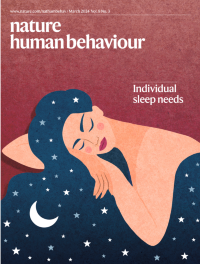
Individual sleep needsHow much sleep is necessary for optimal cognitive function and brain health? Human sleep deprivation experiments in the laboratory, observational studies and the behavioural ecology and evolution literature provide different answers to this question. Fjell and Walhovd adopt a transdisciplinary view of the evidence and argue that individual sleep need is highly flexible and affected by environmental factors, individual needs and motivation. This flexibility and broader context are frequently overlooked in laboratory-based sleep restriction studies and in sleep recommendations, but are important to take into account for a more ecologically valid view of human sleep needs.
See Fjell and Walhovd
-
No. 2 February 2024
3D shape perceptionRecent research has shown that people can perceive the shape of objects, even when the objects are not directly perceptible (for instance, when draped in cloth). These findings present a challenge to existing theories of shape perception, which are based on the use of surface cues alone. Yildirim et al. present a computational model of three-dimensional shape perception that integrates intuitive physics and analysis-by-synthesis to explain how shape can be inferred both when surface object cues are available and when they are not (as in cloth draping).
See Yildirim et al.
-
No. 1 January 2024
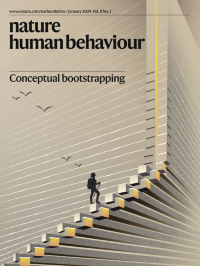
Conceptual bootstrappingHow does the mind bootstrap its way to complex concepts? Across four experiments, Zhao et al. show that a key feature of the acquisition of complex concepts is the incremental construction of compositional representations. The authors then develop a model of conceptual bootstrapping, which captures the process of learning complex concepts by recursively combining simpler concepts.
See Zhao et al.