
Thank you for visiting nature.com. You are using a browser version with limited support for CSS. To obtain the best experience, we recommend you use a more up to date browser (or turn off compatibility mode in Internet Explorer). In the meantime, to ensure continued support, we are displaying the site without styles and JavaScript.

Volume 8 Issue 11, November 2024

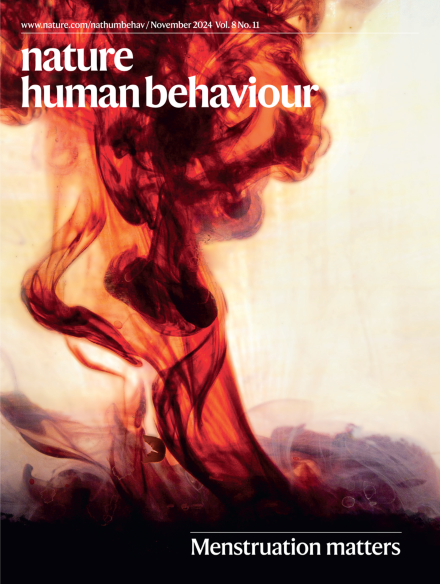
Menstruation matters

Menstruation is part of human life but is stigmatized and rarely discussed openly, and this has far-reaching implications for health, poverty and gender inequity. It is time for this to change. This Focus throws light on some of the most important ways that menstruation shapes society, health and individual lives. With it, we hope to spark more open conversations about menstruation.

See Focus

Image: andrew payne/Alamy Stock Photo. Cover design: Bethany Vukomanovic
Editorial

  • Menstruation is a natural part of life that has important health and societal implications, yet it remains rarely spoken about and stigmatized. Our November issue discusses why talking openly about menstruation matters and what to include in the conversation. A stigma-free and inclusive environment for discussion will help to address period poverty and gender inequity, and ensure health and dignity for all.

    Editorial

    Advertisement

Top of page ⤴

Correspondence

Top of page ⤴

Comment & Opinion

Top of page ⤴

Features

  • Myths about menstruation are pervasive and it is time to shatter them. We asked six scientists for their perspective on menstrual myths, including beliefs about food, mood, blood and pain. They highlight gaps between misconceptions, traditions and scientific understanding, and the hurt caused by our collective ignorance and persistent social norms.

    • Marni Sommer
    • Joan C. Chrisler
    • Natalie Brown
    Feature
Top of page ⤴

News & Views

  • Despite much anecdotal evidence, few studies show pervasive racial bias in promotion and tenure decisions. By analysing 1,571 real promotion and tenure cases across five US universities, Masters-Waage et al. find double standards negatively applied to scholars of colour, and especially women of colour, even after accounting for scholarly productivity.

    • Damani White-Lewis
    News & Views
  • Our ears are known for their ability to detect fine temporal features of sound. But what about our sense of smell? Yuli Wu and colleagues have discovered that humans can discriminate between odour sequences with an impressive temporal precision of 120 ms, which reveals an unprecedented temporal sensitivity in human olfaction.

    • Saeed Karimimehr
    • Dmitry Rinberg
    News & Views
Top of page ⤴

Research Briefings

  • We found that across a sample of 51 diverse languages, consonants at the beginning of words are on average 13 ms longer than their non-initial counterparts. Considering that this finding is robust across languages from all over the world, we argue that this effect helps to mark the boundaries of different words in the continuous stream of speech.

    Research Briefing
Top of page ⤴

Research

Top of page ⤴

Search

Quick links