Thank you for visiting nature.com. You are using a browser version with limited support for CSS. To obtain
the best experience, we recommend you use a more up to date browser (or turn off compatibility mode in
Internet Explorer). In the meantime, to ensure continued support, we are displaying the site without styles
and JavaScript.
In this Journal Club, Izumi Fukunaga discusses John Hopfield’s 1995 paper, which proposed a mechanism by which a continuously variable sensory stimulus can be transformed into a timing-based code.
The detection, discrimination and categorization of odours are essential for survival across the animal kingdom. In this Review, Datta and co-workers describe and compare the neural circuits that mediate the processing of olfactory information and the key principles of olfactory coding in insects and mammals.
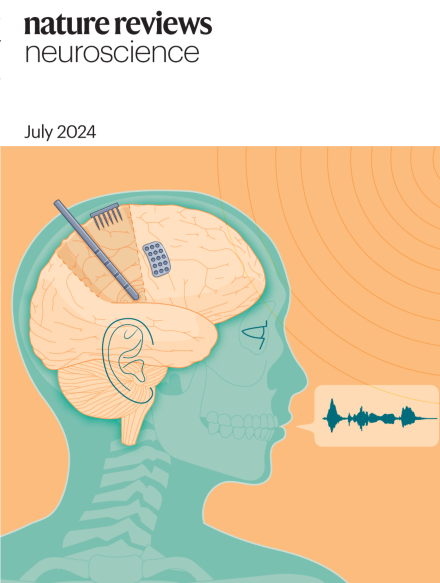
A clinically viable speech neuroprosthesis could restore natural speech to individuals with vocal-tract paralysis. In this Review, Silva et al. discuss rapid progress in neural interfaces and computational algorithms for decoding speech from cortical activity and propose evaluation metrics to help standardize speech neuroprostheses.
Slowing neurodegeneration is the most pressing clinical need for multiple sclerosis (MS). In this Review, Woo, Engler and Friese provide a neuron-centric view on inflammation-induced neurodegeneration in MS and discuss key pathways and molecules that can be therapeutically targeted.