Download the Nature Podcast 14 August 2024
In this episode:
00:48 The mystery of Stonehenge’s Altar Stone
Stonehenge’s central stone came from northern Scotland, more than 600 miles away from the monument, according to a new analysis of its geochemistry. It is commonly accepted that many of the rocks that make up the iconic neolithic monument came from Wales, 150 miles from the site. Previously, it had been thought that a central stone, called the Altar Stone, had also come from this area, known as the Preseli Hills. The new work suggests that the ancient Britons went much farther, perhaps ferrying the Altar Stone hundreds of miles, to place the rock at the centre of Stonehenge.
Research Article: Clarke et al.
News: Stonehenge’s enigmatic centre stone was hauled 800 kilometres from Scotland
12:12 Research Highlights
How a parasite could help scientists break through the blood–brain barrier, and the physics of skateboard moves.
Research Highlight: Engineered brain parasite ferries useful proteins into neurons
Research Highlight: How expert skateboarders use physics on the half-pipe
14:13 A new way to break bonds
Chemists have demonstrated a way to break selenium–selenium bonds unevenly, something they have been trying for decades. Chemical bonds have to be broken and reformed to create new compounds, but they often don’t break in a way that allows chemists to form new bonds in the ways they would like. Breaks are often ‘even’, with electrons shared equally between atoms. To prevent such an even split, a team used a specific solvent and a combination of light and heat to force the selenium bonds to break unevenly. This could potentially open up ways to create compounds that have never been made before.
Research Article: Tiefel et al.
News and Views: Innovative way to break chemical bonds broadens horizons for making molecules
Never miss an episode. Subscribe to the Nature Podcast on Apple Podcasts, Spotify, YouTube Music or your favourite podcast app. An RSS feed for the Nature Podcast is available too.
TRANSCRIPT
Nick Petrić Howe
Welcome back to the Nature Podcast, this time: the origin of Stonehenge’s mysterious Altar Stone…
Dan Fox
…and how chemists have found a new way to break chemical bonds. I’m Dan Fox.
Nick Petrić Howe
And I’m Nick Petrić Howe.
<music>
<mining sounds>
Nick Petrić Howe
Over 4,000 years ago, the ancient people of Britain took on a monumental task.
<mining sounds>
Nick Petrić Howe
They took stones weighing several tonnes hundreds of miles across Britain, from the Preseli Hills in South-West Wales all the way to Salisbury plain, to form part of what is now known as Stonehenge.
<music fades out>
Nick Petrić Howe
Why these ancient people went to such lengths for these stones is still unclear. But it turns out this probably isn’t even the farthest afield they went.
Anthony Clark
The most similar rock in the UK that it might come from was in northeast Scotland, the Orcadian basin.
Nick Petrić Howe
This is Anthony Clarke, from Curtin University in Australia, speaking about Stonehenge’s Altar Stone — a six-tonne stone that lies, somewhat buried, in the centre of the rock circles that make up the monument. The Altar Stone has been a puzzle for archaeologists for a long time. Despite its name, it’s unclear whether it was actually used as an altar. And while it now lies flat, with another stone fallen on top of it, it may have once stood upright. There’s a lot researchers don’t know about this stone, but it's bigger than many of the other stones and has a very central location which suggests that it was significant to the builders of Stonehenge. And another mystery surrounding this stone is where it has come from.
Anthony Clark
There's been a few ideas in the past decades. It was long thought to have come from the Preseli mountains in Wales. Recent work moved away from that interpretation towards a source from the Brecon Beacons, a bit closer to Stonehenge. But recent work comparing the chemistry of rocks in the Brecon Beacons to the Altar Stone has moved away from that so as of last year, the ultimate source of the Altar Stone really was an unknown question.
Nick Petrić Howe
Before we get to the new analysis of the Altar Stone, it’s maybe worth talking about Stonehenge in a little more detail.
<music>
Nick Petrić Howe
Around 10,000 years ago there’s evidence that Stonehenge was marked not with stone, but with wooden posts, perhaps indicating that this site was already important to the ancient peoples. Then around 6,000 years ago a circular ditch was constructed — the first signs of the familiar circular structure. It’s around this time that it’s thought a set of stones, known as the “bluestones” arrived at Stonehenge from the Preseli Hills in Wales — a journey of some 150 miles.
<music>
Nick Petrić Howe
These were eventually arranged to make an inner circle of stones, but it wasn’t until a few hundred years later that Stonehenge really started to take shape in the way that we know it today. That’s when the huge seven-metre-tall sarsen stones were brought to the site and raised up into the iconic circle of arches. It’s thought that these massive slabs came from quite close by, maybe from only 15 miles away.
<music>
Nick Petrić Howe
It’s not clear when the altar stone itself was brought to the site, with theories suggesting it arrived with the bluestones from Wales, or with the sarsens a few hundred years later. Last year, a detailed analysis ruled out a Welsh origin for the Altar Stone. So, until now its origin has remained a mystery.
<music>
Nick Petrić Howe
Anthony and a team of geologists and geochemists set out to solve this mystery and to discover where the altar stone is really from, something that's not easy for this kind of rock.
Anthony Clark
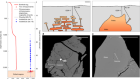
The altar stone is unique in terms of Stonehenge, in that it's made of a sandstone. So it's composed of lots of minute, microscopic grains, clumped together, cemented together to form a cohesive rock. The other bluestones are what we call igneous rocks. They form from cooling and crystallising magma. They're a bit more straightforward to kind of compare, because they will have one age, the age at which they froze to form the rock. But when a rock is made of lots of component parts, it definitely complicates implications
Nick Petrić Howe
But Anthony had a stroke of luck on his side: a rare opportunity to study a sample from the Altar Stone itself.
Anthony Clark
It's, uh, in many ways, it was quite a quite happy accident. I emailed a Welsh Professor at Aberystwyth University to work on some other rocks from Wales that he had some expertise on. And he suggested, ‘hey, we have this sample. We have these samples of the Altar Stone, and you have these amazing tools down under in Australia. Why not see what you can get from them, what information you can glean from these precious samples?’
Nick Petrić Howe
Nowadays, sampling from Stonehenge is impossible — it’s a protected monument — but it wasn’t always treated with so much reverence, and Richard Bevins, one of the other authors on the paper, had a sample taken from the altar stone back in 1844. He sent part of that sample to Anthony in Australia, where he could analyse the rock, grain by grain, with a specialised mineralogy tool and combine that with electron microscopy and mass spectroscopy to get a detailed analysis of the chemistry of the rock.
Anthony Clark
And from that chemistry, we can work out the ages and compare them to other source regions in the UK.
Nick Petrić Howe
So, with the chemistry of the rock in hand Anthony just had to go about the simple task of finding where — in the whole of Britain — were rocks that matched the Altar Stone.
Anthony Clark
The geology of Britain and Ireland is very complicated, given it's quite a small area. But when we work out the ages of grains within the Altar Stone, this gives us, in a way, a data set. It gives us a barcode of numbers, if you will. We can then take this unique fingerprint of the Altar Stone and compare it using statistics to other basins, other sedimentary rocks within the UK. And unfortunately, you can't say if something is like another thing. You can just say it's different using statistics. And when we did that, the most similar rock in the UK that it might come from was in Northeast Scotland, the Orcadian basin.
Nick Petrić Howe
The Orcadian basin is a region of sedimentary rock in the Northernmost part of Scotland, covering the island of Orkney, part of the Shetland islands, and the very tip of mainland Scotland — some 600 or so miles away from Stonehenge. David Nash, a researcher who has looked at the provenance of some of the other stones from Stonehenge, but who wasn’t involved in this work was quite surprised at how far it seems that the Altar Stone had travelled.
David Nash
The long-standing idea has been that the bluestones, including the Altar Stone probably came from somewhere in South Wales. Now, I've been following the various studies that have been looking at whereabouts the Altar Stone might come from pretty closely. And one of the more recent ones has kind of discounted that South Wales source. So I was kind of waiting for the next paper. I think what this study does really nicely is it does a good job of knocking out areas that the Altar couldn't come from.
Nick Petrić Howe
Now, whilst David agrees that, based on this analysis it seems like the Altar Stone came from Scotland, he doesn’t rule out the possibility that it may have made part of its journey without human intervention.
David Nash
The authors kind of discredit the idea that the stones might have been transported by glaciers. So, you know, one possibility is, maybe these are what we refer to as erratics. In other words, they're large blocks of stone that maybe were transported by ice. And certainly I agree with them that it's unlikely that stone from the Orkneys was transported all the way to Stonehenge by ice, but there's no reason why it may not have been transported part of the way by ice. So there's pretty good evidence of old red sand erratics in North Yorkshire, in the Holderness area, where they find them coming out of the cliffs there that are made up of glacial sediments. I've not seen any evidence from really big pieces of old red sandstone in that area, though, but I don't think you can entirely discount the idea that at least partially they may have been moved by ice at least a little way south.
Nick Petrić Howe
And whilst this paper focuses on the origin and geology of the rocks, it does raise a lot of questions about how connected the neolithic people were in the time of Stonehenge.
David Nash
So there's good evidence that things like cattle were transported. So I guess the argument is, why would they potentially not have also transported stone? Although this does seem like an incredibly long way, so you have to ask questions about why. What might have been the connection between the north of Scotland and the Stonehenge area?
Nick Petrić Howe
Anthony also has a lot of questions that he’d like to answer about the Altar Stone, but, for now, he’s got something else that’s a bit more immediate at hand.
Anthony Clark
I think I'm looking forward to finishing my PhD I submit next month. So, yeah, I get that out of the way, and then looking forward, I would really love to narrow down the source of the Altar Stone. We have this basin scale view. We know it came from the Orcadian basin, but where within this rather large area of Northeast Scotland, did it come from the mainland? Did it come from Orkney? There's lots of unknown questions, and it would be amazing to perhaps one day find the precise quarrying site or source or outcrop that the Altar Stone came from.
<music>
Nick Petrić Howe
One thing is for sure, though, this won’t be the end of the mysteries that Stonehenge holds.
<music>
Nick Petrić Howe
In this podcast piece, you heard from Anthony Clarke, from Curtin University in Australia and David Nash, from the University of Brighton here in the UK. For more on Stonehenge’s mysterious Altar Stone, check out the show notes for some links, including a link to a video we’ve been making — a nice way to also ‘see’ what the Altar Stone looks like.
Dan Fox
Coming up, breaking and making bonds is the business of chemistry and now chemists seem to have found a new way to do it. Right now, though, it’s the Research Highlights, with Emily Bates.
<music>
Emily Bates
A parasite that can be transmitted to humans through cat faeces or undercooked meat could be used to deliver complex proteins to the brain. Drugs made of large proteins, such as antibodies, cannot easily cross the blood-brain barrier, which limits their therapeutic effects. But Toxoplasma gondii naturally infiltrates the protective barrier to travel from the gut to the brain. Researchers engineered the parasite to produce therapeutic proteins of various sizes and found that these parasites could carry several large proteins at once into human neurons growing in laboratory dishes. It's possible these modified Toxoplasma gondii could improve the delivery of protein-based treatments, such as those designed to replace abnormal proteins that result from certain genetic diseases. Absorb the full paper in Nature Microbiology.
<music>
Emily Bates
The Olympics are over for another four years. But the science of sport continues as researchers have been discovering a skateboarder’s optimal movements. It's known that skateboarders gain extra speed by squatting and then standing up at the right time as they go up and down half-pipes – a movement known as ‘pumping’. So researchers created a computer model of these movements to identify the change in posture over time that provides the most acceleration. Corroborating their findings through observations of two skateboarders with different skill levels, the team found the ‘pumping’ technique of the more experienced individual aligned more closely with the optimal curve than that of the less experienced person. If you're interested in that paper, you can get on board at Physical Review Research.
<music>
Dan Fox
Next up, chemists have cracked breaking bonds in a way that they’ve been trying to do for decades. When chemists want to synthesise new molecules, they take their starting materials and react them together by a series of steps to create the target compound. Through this, specific bonds between atoms are broken, while others are left intact, so you only make bonds in the desired places. For example, when you burn a propane grill, bonds between carbon, hydrogen and oxygen are broken from the gas and the air, to end up with new compounds — carbon dioxide and water. Now chemical bonds are made by atoms sharing electrons, and when they’re broken they can split up the electrons evenly or unevenly between them. And sometimes they don’t end up sharing the electrons in ways that synthetic chemists like. Take Selenium-selenium bonds, these tend to break evenly, sharing their electrons in equal numbers. But really, a lot more chemical reactions would be available if they were to break a bit more unevenly. And the same goes for many other compounds. Now, though, a team in Nature has described an unconventional method for breaking Selenium-selenium bonds that allows them to split up unevenly, and so could open up new ways of creating molecules. Anand Jagatia spoke to author Alexander Breder about the work, and started by asking him what his approach was to break Selenium bonds unequally.
Alexander Breder
That's actually not so trivial, because physically, there is no driving force for this particular bond to split in that manner. So what we came up with is to let the bond split in its natural way, evenly, but make sure that the resulting fragments — these fragments we call radicals — remain in close contact to one another. So if you shine the light at one of those radicals, it gives away its electron to the other one.
Anand Jagatia
Okay, so it's kind of like a two-step process, but you end up at the end of it with this unequally broken bond essentially.
Alexander Breder
Exactly. This is something that has to take place in two individual steps. But in order for this to work, many important things need to basically come together and just act in concert for the success of the reaction.
Anand Jagatia
What was the secret to the success of this reaction, then? What were the conditions that meant that this process worked?
Alexander Breder
The success of the reaction was dependent on the solvent that we ran the reactions in that provided reaction products in very good yields. And so our starting hypothesis, which turned out to be sort of correct, was that in this solvent, the two radicals that are formed when the bond between the two Selenium atoms is evenly split. These radicals stay together for quite some time, and it's enough time for one of the two radicals to absorb light, and the solvent helps to not let these two radicals diffuse apart. That's one thing. The second reason why this solvent was so useful to us is that in the moment when the electron transfer takes place, we generate the pair of ionic species, one positively charged, one negatively charged. Under typical circumstances, if nothing else happens, these two differently charged species come back together and just form the starting material. However, in that solvent that we are using, the negatively charged species will receive a proton from the solvent, and therefore the recombination doesn't take place. And the positively charged species this will then live for a while in that solvent. It's stabilized in that solvent, which is the third aspect of the solvent that– that makes it so valuable to us, so that this positively charged species can then react with whatever we expose it to, and that we want it to react with.
Anand Jagatia
As a chemist, if you want to synthesize a molecule, there are all these steps. You have to make sure you cleave the right bond and then add it onto the right other thing. And you've only got these very tiny windows in which your species can react with something else. And normally, if bonds cleave in this equal way, it's not much use to you, whereas if you can force them to cleave in this unequal way and then stabilize the ions that are produced which either have two electrons or no electrons. That's great, that gives you an opportunity to then say, ah, we can now react that with something else and then, you know, create a new species.
Alexander Breder
Exactly, exactly. And there's one more aspect that makes it also, from an overarching perspective, very valuable. If you want to, let's say, make a bank transfer or something these days in order to make sure that nothing goes wrong with your bank transfer, there is something like a two-step security, and this makes sure that only you as the owner of your bank account can do the bank transfer right. And it's a little bit like this in our case as well. So what we want to do is address a specific bond. So this specific bond that we want to address needs to be susceptible to two different independent stimuli, one for the even cleavage of the particular bond, and the second one for the electron transfer. Not many bonds share all of these features at the same time. So by the combination of these two stimulations, we can make sure that pretty much only the one desired bond will react in the manner that we intend.
Anand Jagatia
And if you think of a chemical synthesis as like a long series of steps, like a kind of a pathway through molecular space. Actually, this kind of gives you access to new routes through that space. And actually you can do reaction combinations that you couldn't do before, and in theory, synthesize molecules that we aren't able to currently synthesize.
Alexander Breder
This is what we envision as a long-term perspective. I mean, what we basically accomplished right now was just to show that there is the possibility of making it, and now one has to think of how to implement it into synthetic strategies. And here I'm very much hoping for the chemical community to look at our concept and maybe implement it into their strategies.
Anand Jagatia
I know this was just a sort of proof of concept, really. You wanted to see whether it was even possible to break bonds in this way. You've shown that in the paper, but what's sort of next? So what are some of maybe the limitations of this specific approach, and how are you hoping to tweak it in the future, to sort of streamline it and– and make it better?
Alexander Breder
So from what we can tell as of now, this seems not necessarily limited to just Selenium-selenium bonds, or even Carbon-selenium bonds. Probably this can be applied to a whole array of different element-element combinations, as long as they have a bond that is, for instance, symmetric and that can be split in an equal manner, and then will be susceptible to photo excitation. So carbon or silicon, or maybe for Copper-copper bonds or nickel, or anything else interesting from the periodic table that we can get our hands on. And then, in a very long-term approach, we would also be interested in looking at whether this can be inverted. So can you just choose which of the two fragments will receive both of the electrons simply by choosing, let's say, the wavelength you use to shine the light, those questions would be really interesting and would have a severe impact on the way we do synthesis.
Dan Fox
That was Anand Jagatia speaking to Alexander Breder, from the University of Regensburg in Germany. For more on that story, check out the show notes for some links.
Nick Petrić Howe
That’s all for this week. We’ll be back again next week with more news from the world of science.
Dan Fox
In the meantime, you can keep in touch with us on X, we’re @NaturePodcast, or send an email to podcast@nature.com. I’m Dan Fox.
Nick Petrić Howe
And I'm Nick Petrić Howe. Thanks for listening.
 Sifting through half a million years of human history
 Oldest stone tools in Europe hint at ancient humans’ route there
 Ancient stone tools hint at settlers’ epic trek to North America
 Physics, complexity and causality
 A receptor that lets dementia-associated tau proteins into neurons
 Close-up with a parasite that can blind
 The RNA and protein landscape that could bring precision medicine to more people
 Seven chemical separations to change the world
 A radical way to forge carbon–carbon bonds