In Senegal, the sound of the waves shapes daily life. From our canoes, small-scale fishers like me supply local markets with a steady source of food, in a context in which more than 282 million Africans face severe food insecurity. Globally, small-scale fishing supports about 500 million people.
We do not seek to dominate the seas. We seek to coexist. Small-scale fishing, with its low ecological impact, selective methods and knowledge passed down through generations, is a model of sustainability. This is a ‘blue economy’ that respects life.
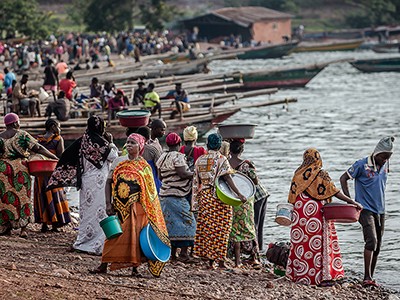
In Senegal, fishers have voluntarily closed certain fisheries to preserve species. Fishers in Nianing stop catching octopuses for part of the year and immerse clay and shell pots in the sea to help the creatures to reproduce. Others are experimenting with community-led tracing systems. Identifying which canoes have fished, where they have fished and the species caught adds value to local products for consumers.
But our future is under threat. Industrial overfishing scrapes our sea beds; coastal urbanization eats away at our workspaces; plastic pollution invades our nets; climate change alters fish-migration routes, erodes beaches through rising seas and destroys fishing nets in storms.
Women are the heart of the sector: they process and sell the catch. Without them, there are no fish on the table. Yet, they remain invisible in public policy.
I did not learn about these problems from books. I’ve lived them. I have seen canoes banned from beaches where they have historically been based. I have seen women excluded from their fish-processing sites. I have seen young people leave the trade because it lacked prospects. But I have also seen success stories: villages creating their own community fishing zones, women innovating in fish processing and young people developing mobile applications for tracking catches and fish sales.
Sustainable small-scale fisheries can help people and the planet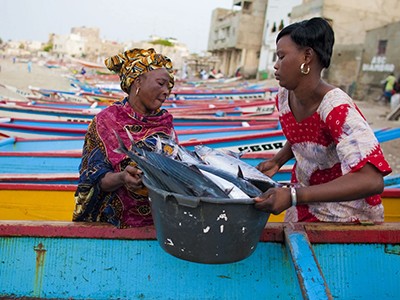
Every bit of aquatic space, every fish, every right, matters. That’s why, for more than 30 years, I have worked to defend the rights and improve the living conditions of those who rely on the sea to survive. Today, I am president of the African Confederation of Professional Organizations of Artisanal Fisheries, based in Mbour, Senegal, which links 27 organizations from 29 African countries. I also coordinate a network of small-scale fishing and aquaculture representatives — the Pan African Platform of Non-State Actors in Fisheries and Aquaculture, which is a partner in the African Union. And I lead the Association for the Promotion and Empowerment of Marine Small-Scale Fisheries Actors.
I speak here not as a technocrat, but as a witness. If the world wants to build a sustainable blue economy, small-scale fisheries must be at its heart. And as the third United Nations Ocean Conference (UNOC) convenes next week in Nice, France, it is essential that our voice is heard. The blue economy is often built without us, even against us. When it comes to developing tourist ports or oil industries, our fisheries are displaced, ignored or erased. At the second UNOC in Lisbon in 2022, our presence was marginal. In 2025, that cannot happen again.
In Nice, each African delegation must ensure that small-scale fisheries are mentioned, protected and funded. Not as an exception, but as a strategic pillar. Our communities need a clear legal framework to access resources. This includes recognition of our land and maritime rights. We demand a seat at the decision-making table. This means co-managing marine protected areas, using traditional ecological knowledge and creating mediation mechanisms with industrial stakeholders. Our realities require flexible, accessible, sustainable and targeted financing: microcredit for women who process fish, sustainable equipment for young people and training in innovation and traceability.
Why we should protect the high seas from all extraction, forever
Political momentum is building. In October 2024, at a meeting in Tangier, Morocco, African countries spoke with one voice on ocean matters. This meeting was part of the Blue Belt Initiative, which seeks integrated, sustainable and inclusive governance of African seas. It promotes local value chains, protects ecosystems and acknowledges the central role of coastal communities. It aligns with the African Union’s Agenda 2063 and the UN Sustainable Development Goals, and paves the way towards a blue economy in which our knowledge and practices are resources, not relics.
Adopted in January, the African Union’s Kampala declaration reaffirms that fishing is a strategic lever for Africa: to feed, employ and innovate. It calls for the integration of women and young people into sustainable food systems.
Since 2022, my colleagues and I have championed a call to action from small-scale fishers, inspired by similar guidelines from the Food and Agriculture Organization of the UN, and developed with our members and fishers from around the world. Our five priorities are to: ensure preferential access and effective co-management of coastal zones; guarantee full participation of women in fisheries; protect small-scale fisheries from competing sectors; promote transparency in resource management; and strengthen the climate resilience of our communities, including the youth.
I carry this collective voice. It is strong, and it is ready. I fight so that small-scale fishers are finally recognized for their true role: feeding Africa, preserving our oceans and sustaining our communities.
 Small-scale fisheries
 Sustainable small-scale fisheries can help people and the planet
 Why we should protect the high seas from all extraction, forever
 Five priorities for a sustainable ocean economy
 To save the high seas, plan for climate change