Thank you for visiting nature.com. You are using a browser version with limited support for CSS. To obtain
the best experience, we recommend you use a more up to date browser (or turn off compatibility mode in
Internet Explorer). In the meantime, to ensure continued support, we are displaying the site without styles
and JavaScript.
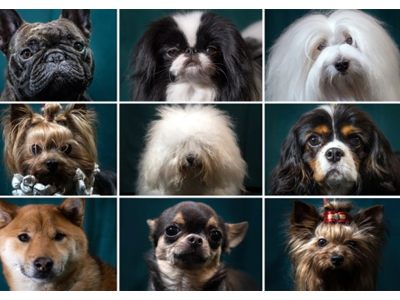
Evolution and breeding have wrought a wide variety of ear lengths in our canine companions.Credit: Getty
A gene that is important for human hearing could determine whether a dog’s ears are pendulous like a basset hound’s or stubby like a rottweiler’s, according to a genetic analysis of more than 3,000 dogs, wolves and coyotes.
The study, presented on 11 January at the Plant and Animal Genome Conference in San Diego, California, found that DNA variants near a gene called MSRB3 are linked to ear length in dogs. The results were also published last December in Scientific Reports1.
Scratching an itch
The project was inspired by Cobain, a gregarious, nine-year-old American cocker spaniel whose hobbies include morning swims in a local creek and following people from room to room. One day, Anna Ramey, an undergraduate working in a canine genetics laboratory at the University of Georgia in Athens, gazed at her dog Cobain’s long, floppy ears and wondered: why?
She took the question to her colleagues, and the project was born. “We realized that people had studied ear carriage before — like pointy, erect ears versus floppy, dropped ears,” says Tori Rudolph, a geneticist at the lab. “But no one had looked at ear length in dogs.”
The length and carriage of dog ears vary widely from breed to breed. Some of this evolved naturally: short, upright ears are thought to lose less heat than long, droopy ones, and canines from cold climates tend to have smaller ears than do those that hail from warm regions.
But selective breeding has also shaped dog ears. The basset hound’s long ears are said to boost its hunting acuity by sweeping scents towards its nose, whereas a German shepherd’s upright ears might slightly enhance its hearing.
Enjoying our latest content?
Log in or create an account to continue
Access the most recent journalism from Nature's award-winning team
Explore the latest features & opinion covering groundbreaking research
Join us to pioneer solutions for global environmental & energy challenges at a world-class institute in China‘s innovation hub, Shenzhen.
Peking University Shenzhen Graduate School in the heart of the Guangdong-Hong Kong-Macao Greater Bay Area, China’s most dynamic economic and innovation region.
School of Environment and Energy (SEE), Peking University Shenzhen Graduate School




 This company claimed to ‘de-extinct’ dire wolves. Then the fighting started
 The science of puppy dog eyes
 Big dog, little dog: mutation explains range of canine sizes
 Why do some dogs chase squirrels? Study finds genetic links to canine quirks