- TECHNOLOGY FEATURE
How pollutants and poo paint a picture of past civilizations

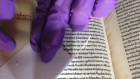
A sediment core that was extracted about 11 kilometres from Mount Hora in Malawi, a site with a rich history of human occupation. Credit: David K. Wright/University of Oslo
Access options
Access Nature and 54 other Nature Portfolio journals
Get Nature+, our best-value online-access subscription
$32.99 / 30 days
cancel any time
Subscribe to this journal
Receive 51 print issues and online access
$199.00 per year
only $3.90 per issue
Rent or buy this article
Prices vary by article type
from$1.95
to$39.95
Prices may be subject to local taxes which are calculated during checkout
Nature 651, 545-548 (2026)
doi: https://doi.org/10.1038/d41586-026-00705-7
References
Wright, D. K. et al. Front. Environ. Archaeol. 2, 1250871 (2024).
Lyons, R. P. et al. Proc. Natl Acad. Sci. USA 112, 15568–15573 (2015).
Zhao, B. et al. Sci. Adv. 8, eabm4346 (2022).
Davis, R. et al. Nature 649, 631–637 (2026).
Ter Schure, A. T. M. et al. J. Hum. Evol. 172, 103258 (2022).
Möller, P. et al. Geoarchaeology 40, e22030 (2025).
Slon, V. et al. Science 356, 605–608 (2017).
Vernot, B. et al. Science 372, eabf1667 (2021).
Bauch, M. & Büntgen, U. Commun. Earth Environ. 6, 986 (2025).
 Neanderthals mastered fire — 400,000 years ago
 Oldest DNA reveals 2-million-year-old ecosystem
 First known Neanderthal family discovered in Siberian cave
 Geneticist who unmasked lives of ancient humans wins medicine Nobel
 NatureTech hub