Thank you for visiting nature.com. You are using a browser version with limited support for CSS. To obtain
the best experience, we recommend you use a more up to date browser (or turn off compatibility mode in
Internet Explorer). In the meantime, to ensure continued support, we are displaying the site without styles
and JavaScript.
Endurance and muscle strength might be improved by one function of B cells, which are an important component of the immune system.Credit: Hinterhaus Productions/Getty
Immune cells that help to fight off foreign invaders in the body also provide crucial support for muscles during exercise, suggests a mouse study published in Cell on 17 April1.
B cells are the ‘security guards’ of the immune system, identifying harmful pathogens and actively producing antibodies to target them, says Peng Jiang, an immunologist at Tsinghua University in Beijing and a co-author on the study. But until now, the cells’ role in metabolism had not been observed. Jiang says this is the first time that a function for these cells that is not associated with the immune system has been described — “a finding completely beyond our initial expectations”, he says.
Carolin Daniel, the director of the Helmholtz Munich Institute for Metabolism and Immunology in Munich, Germany, says that there is increasing interest in studying the functions of B and T cells beyond the immune system. The finding that B cells can be crucial intermediaries between the immune system and the organs involved in exercise is an important conceptual advance, she adds.
Run, run, run
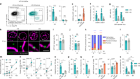
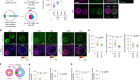
Jiang and his team studied whether there was a connection between the immune system and exercise performance. They tested the endurance of mice that had been genetically modified to have a low B-cell count by getting them to run on a treadmill. The researchers increased the speed at predetermined intervals over a period of about 15 minutes, stopping when the mice became exhausted.
They repeated the experiment with another group of mice that they treated with an antibody therapy, which is used in humans to target cancer-causing B cells. The antibodies destroy any B cells that they come across.
Enjoying our latest content?
Log in or create an account to continue
Access the most recent journalism from Nature's award-winning team
Explore the latest features & opinion covering groundbreaking research



 The surprisingly big health benefits of just a little exercise
 How much exercise do you really need?
 Can Diet and Exercise Really Prevent Alzheimer’s?
 Can a pill replace exercise? Swigging this molecule gives mice benefits of working out
 Why is exercise good for you? Scientists are finding answers in our cells