
Abstract
Background
Pesticide exposures disrupt biological functions in humans, raising concerns about potential effects on newborn health and development.
Objective
To analyze associations of preconception and prenatal exposures to carbamate, organophosphate, and pyrethroid pesticide classes and 25 individual active ingredients with newborn Apgar scores to evaluate the relationship between these exposures and neonatal health.
Methods
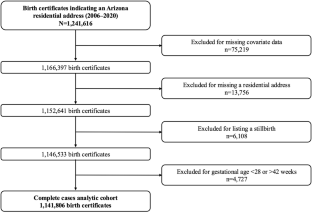
We used pesticide use registry and birth certificate data from 2006 to 2020, linked as part of the Arizona Pregnant Women’s Environmental and Reproductive Outcomes Study (Az-PEARS). Exposures were measured as binary variables and defined as living within 500 m of an agricultural pesticide application during preconception (T0, 90 days before conception) and each trimester (T1–T3). Five-minute Apgar scores (low: <8, high: ≥8) were analyzed using log-binomial regression and a meta-analytic approach to estimate adjusted odds ratios (aOR) and 95% confidence intervals (CI), adjusting for newborn and maternal demographics.
Results
Approximately half of the newborns were male, and the majority were born at ≥38 weeks of gestation. Mothers were predominantly 20–35 years old and non-Hispanic white. Exposure to several pesticide active ingredients at any point during preconception and/or pregnancy were associated with increased odds of low Apgar scores (aOR [95% CI]): the carbamates carbaryl (2.07 [1.45, 2.96]) and formetanate hydrochloride (3.50 [1.55, 7.89]); the organophosphates diazinon (1.67 [1.25, 2.22]) and tribufos (1.39 [1.02, 1.90]); and the pyrethroid cypermethrin (1.49 [1.03, 2.15]). Consistent effect estimates were seen across trimesters. Additional positive associations included ethephon, phorate, and beta-cyfluthrin during T0, methomyl during T1, and esfenvalerate and fenpropathrin during T2.
Significance
Prenatal exposure to certain carbamates, organophosphates, and pyrethroids had increased odds of low Apgar scores. We identified the preconception period as a possible sensitive exposure window for additional ingredients. These findings suggest that interventions aimed at mitigating maternal agricultural pesticide exposures may improve newborn health.
Impact
Few studies have investigated how ambient preconception and prenatal exposures to pesticide active ingredients affect neonatal health, despite the importance of studying sensitive windows of exposure. Using pesticide use registry and birth certificate data from the state of Arizona, we report that residential proximity to agricultural pesticide exposures of several pesticide active ingredients belonging to the carbamate, organophosphate, and pyrethroid classes during the preconception period and throughout pregnancy is associated with low Apgar scores. This research suggests that maternal pesticide exposures may adversely impact newborn health and emphasizes the importance of mitigating these exposures.
This is a preview of subscription content, access via your institution
Access options
Subscribe to this journal
Receive 6 print issues and online access
$259.00 per year
only $43.17 per issue
Buy this article
- Purchase on SpringerLink
- Instant access to the full article PDF.
USD 39.95
Prices may be subject to local taxes which are calculated during checkout

Data availability
The datasets generated during and/or analyzed during the current study are available from the corresponding author on reasonable request.
References
Nagy K, Duca RC, Lovas S, Creta M, Scheepers PTJ, Godderis L, et al. Systematic review of comparative studies assessing the toxicity of pesticide active ingredients and their product formulations. Environ Res. 2020;181:108926.
Mnif W, Hassine AIH, Bouaziz A, Bartegi A, Thomas O, Roig B. Effect of endocrine disruptor pesticides: a review. IJERPH. 2011;8:2265–303.
Richardson JR, Fitsanakis V, Westerink RHS, Kanthasamy AG. Neurotoxicity of pesticides. Acta Neuropathol. 2019;138:343–62.
Cestonaro LV, Macedo SMD, Piton YV, Garcia SC, Arbo MD. Toxic effects of pesticides on cellular and humoral immunity: an overview. Immunopharmacol Immunotoxicol. 2022;44:816–31.
Cavalier H, Trasande L, Porta M. Exposures to pesticides and risk of cancer: evaluation of recent epidemiological evidence in humans and paths forward. Int J Cancer. 2023;152:879–912.
Abdel Rasoul GM, Abou Salem ME, Mechael AA, Hendy OM, Rohlman DS, Ismail AA. Effects of occupational pesticide exposure on children applying pesticides. NeuroToxicology. 2008;29:833–8.
Roberts JR, Karr CJ, Paulson JA, Brock-Utne AC, Brumberg HL, Campbell CC, et al. Pesticide exposure in children. Pediatrics. 2012;130:e1765–88.
Simon LV, Shah M, Bragg BN. APGAR score. In: StatPearls. Treasure Island (FL): StatPearls Publishing; 2025. http://www.ncbi.nlm.nih.gov/books/NBK470569/
Forsblad K, Källén K, Maršál K, Hellström-Westas L. Apgar score predicts short-term outcome in infants born at 25 gestational weeks. Acta Paediatr. 2007;96:166–71.
Li F, Wu T, Lei X, Zhang H, Mao M, Zhang J. The Apgar score and infant mortality. PLoS One. 2013;8:e69072.
Weinberger B, Anwar M, Hegyi T, Hiatt M, Koons A, Paneth N. Antecedents and neonatal consequences of low Apgar Scores in preterm newborns: a population study. Arch Pediatr Adolesc Med. 2000;154:294.
The American College of Obstetricians and Gynecologists. The Apgar score. 2025. https://www.acog.org/clinical/clinical-guidance/committee-opinion/articles/2015/10/the-apgar-score
Eun S, Lee JM, Yi DY, Lee NM, Kim H, Yun SW, et al. Assessment of the association between Apgar scores and seizures in infants less than 1 year old. Seizure Eur J Epilepsy. 2016;37:48–54.
Razaz N, Cnattingius S, Joseph K. Association between Apgar scores of 7 to 9 and neonatal mortality and morbidity: population based cohort study of term infants in Sweden. BMJ. 2019;365:l1656.
Chong DSY, Karlberg J. Refining the Apgar score cut-off point for newborns at risk. Acta Paediatr. 2004;93:53–9.
Lassi ZS, Imam AM, Dean SV, Bhutta ZA. Preconception care: caffeine, smoking, alcohol, drugs and other environmental chemical/radiation exposure. Reprod Health. 2014;11:S6.
Louis GMB, Cooney MA, Lynch CD, Handal A. Periconception window: advising the pregnancy-planning couple. Fertil Steril. 2008;89:e119–21.
Llop S, Murcia M, Iñiguez C, Roca M, González L, Yusà V, et al. Distributions and determinants of urinary biomarkers of organophosphate pesticide exposure in a prospective Spanish birth cohort study. Environ Health. 2017;16:46.
Wang A, Wan Y, Qi W, Mahai G, Qian X, Zheng T, et al. Urinary biomarkers of exposure to organophosphate, pyrethroid, neonicotinoid insecticides and oxidative stress: a repeated measurement analysis among pregnant women. Sci Total Environ. 2024;912:169565.
Dalmolin SP, Dreon DB, Thiesen FV, Dallegrave E. Biomarkers of occupational exposure to pesticides: systematic review of insecticides. Environ Toxicol Pharmacol. 2020;75:103304.
Sobus JR, Morgan MK, Pleil JD, Barr DB. Chapter 45 - Biomonitoring: uses and considerations for assessing nonoccupational human exposure to pesticides. In: Krieger R, editor. Hayes’ Handbook of Pesticide Toxicology, 3rd ed. New York: Academic Press; 2010, p. 1021–36. https://www.sciencedirect.com/science/article/pii/B9780123743671000458
Furlong MA, Paul KC, Parra KL, Fournier AJ, Ellsworth PC, Cockburn MG, et al. Preconception and first trimester exposure to pesticides and associations with stillbirth. Am J Epidemiol. 2025;194:44–55.
USDA. CropScape - Cropland Data Layer. U.S. Department of Agriculture; 2015, https://agdatacommons.nal.usda.gov/articles/dataset/CropScape_-_Cropland_Data_Layer/24660315/1
U.S. Department of the Interior Bureau of Land Management. Mineral & Land Records System. 2025. About the Public Land Survey System. https://mlrs.blm.gov/s/article/PLSS-Information
Ritz B, Rull RP. Assessment of environmental exposures from agricultural pesticides in childhood leukaemia studies: challenges and opportunities. Radiat Prot Dosim. 2008;132:148–55.
Parra KL, Harris RB, Farland LV, Beamer P, Furlong M. Associations of prenatal agricultural farm work with fetal overgrowth and pregnancy complications in state of Arizona birth records. J Occup Environ Med. 2023;65:635–42.
Parra KL, Farland LV, Harris RB, Toro M, Furlong M. Neighbourhood deprivation and gestational Diabetes Mellitus in Arizona from the AzPEARS study. Paediatric Perinatal Epid. 2025;39:336–45.
Razaz N, Cnattingius S, Persson M, Tedroff K, Lisonkova S, Joseph KS. One-minute and five-minute Apgar scores and child developmental health at 5 years of age: a population-based cohort study in British Columbia, Canada. BMJ Open. 2019;9:e027655.
Lipsitch M, Tchetgen Tchetgen E, Cohen T. Negative controls: a tool for detecting confounding and bias in observational studies. Epidemiology. 2010;21:383.
Lipsitch M, Tchetgen Tchetgen E, Cohen T. Negative control exposures in epidemiologic studies. Epidemiology. 2012;23:351.
Flanders WD, Klein M, Darrow LA, Strickland MJ, Sarnat SE, Sarnat JA, et al. A method to detect residual confounding in spatial and other observational studies. Epidemiology. 2011;22:823–6.
Flanders WD, Strickland MJ, Klein M. A new method for partial correction of residual confounding in time-series and other observational studies. Am J Epidemiol. 2017;185:941–9.
Weisskopf MG, Webster TF. Trade-offs of personal versus more proxy exposure measures in environmental epidemiology. Epidemiology. 2017;28:635–43.
Catlin EA, Carpenter MW, Brann BS, Mayfield SR, Shaul PW, Goldstein M, et al. The Apgar score revisited: Influence of gestational age. J Pediatr. 1986;109:865–8.
DerSimonian R, Laird N. Meta-analysis in clinical trials. Controlled Clin Trials. 1986;7:177–88.
RStudio Team. RStudio: Integrated Development for R. Boston, MA: R Studio, PBC; 2020. http://www.rstudio.com/
Roberts EM, English PB, Grether JK, Windham GC, Somberg L, Wolff C. Maternal residence near agricultural pesticide applications and autism spectrum disorders among children in the California Central Valley. Environ Health Perspect. 2007;115:1482–9.
Shelton JF, Geraghty EM, Tancredi DJ, Delwiche LD, Schmidt RJ, Ritz B, et al. Neurodevelopmental disorders and prenatal residential proximity to agricultural pesticides: the CHARGE study. Environ Health Perspect. 2014;122:1103–9.
Bretveld RW, Thomas CM, Scheepers PT, Zielhuis GA, Roeleveld N. Pesticide exposure: the hormonal function of the female reproductive system disrupted? Reprod Biol Endocrinol. 2006;4:30.
Gilbert ME, Rovet J, Chen Z, Koibuchi N. Developmental thyroid hormone disruption: prevalence, environmental contaminants and neurodevelopmental consequences. NeuroToxicology. 2012;33:842–52.
Miranda A, Sousa N. Maternal hormonal milieu influence on fetal brain development. Brain Behav. 2018;8:e00920.
Razaz N, Boyce WT, Brownell M, Jutte D, Tremlett H, Marrie RA, et al. Five-minute Apgar score as a marker for developmental vulnerability at 5 years of age. Arch Dis Child Fetal Neonatal Ed. 2016;101:F114–20.
Nuseir KQ, Tahaineh L, Al-Mehaisen LM, Al-Kuran O, Ayoub NM, Mukattash TL, et al. Organophosphate pesticide exposure prenatally influence on pregnancy outcomes. J Matern Fetal Neonatal Med. 2022;35:4841–6.
Suwannakul B, Sapbamrer R, Wiwattanadittakul N, Hongsibsong S. Prenatal organophosphate exposure can cause adverse birth outcomes to humans. Environ Sci Pollut Res. 2021;28:45064–74.
Chambers JE, Dail MB, Meek EC. Oxime-mediated reactivation of organophosphate-inhibited acetylcholinesterase with emphasis on centrally-active oximes. Neuropharmacology. 2020;175:108201.
Lenina OA, Zueva IV, Zobov VV, Semenov VE, Masson P, Petrov KA. Slow-binding reversible inhibitor of acetylcholinesterase with long-lasting action for prophylaxis of organophosphate poisoning. Sci Rep. 2020;10:16611.
Trang A, Khandhar PB. Physiology, Acetylcholinesterase. In: StatPearls. Treasure Island (FL): StatPearls Publishing; 2025. http://www.ncbi.nlm.nih.gov/books/NBK539735/
El-Dabah FH, El-Khaleegy HA, Radi IR. Organophosphate pesticide exposure and neonatal outcome. EJFSAT. 2013;13:131–9.
Hassen TA, Chojenta C, Egan N, Loxton D. The association between the five-minute Apgar score and neurodevelopmental outcomes among children aged 8−66 months in Australia. IJERPH. 2021;18:6450.
Persson M, Razaz N, Tedroff K, Joseph KS, Cnattingius S. Five and 10 min Apgar scores and risks of cerebral palsy and epilepsy: population based cohort study in Sweden. BMJ. 2018;360:k207.
Yisma E, Mol BW, Lynch JW, Mittinty MN, Smithers LG. Associations between Apgar scores and children’s educational outcomes at eight years of age. Aust NZ J Obst Gynaeco. 2021;61:35–41.
An S, Rauch SA, Maphula A, Obida M, Kogut K, Bornman R, et al. In-utero exposure to DDT and pyrethroids and child behavioral and emotional problems at 2 years of age in the VHEMBE cohort, South Africa. Chemosphere. 2022;306:135569.
Furlong MA, Barr DB, Wolff MS, Engel SM. Prenatal exposure to pyrethroid pesticides and childhood behavior and executive functioning. NeuroToxicology. 2017;62:231–8.
Furlong MA, Paul KC, Cockburn M, Bronstein J, Keener A, Rosario ID, et al. Ambient pyrethroid pesticide exposures in adult life and depression in older residents of California’s Central Valley. Environ Epidemiol. 2020;4:e123.
Qi Z, Song X, Xiao X, Loo KK, Wang MC, Xu Q, et al. Effects of prenatal exposure to pyrethroid pesticides on neurodevelopment of 1-year- old children: a birth cohort study in China. Ecotoxicol Environ Saf. 2022;234:113384.
Von Ehrenstein OS, Ling C, Cui X, Cockburn M, Park AS, Yu F, et al. Prenatal and infant exposure to ambient pesticides and autism spectrum disorder in children: population based case-control study. BMJ. 2019;364:l962.
Gunier RB, Bradman A, Harley KG, Kogut K, Eskenazi B. Prenatal residential proximity to agricultural pesticide use and IQ in 7-year-old children. Environ Health Perspect. 2017;125:057002.
Engel SM, Bradman A, Wolff MS, Rauh VA, Harley KG, Yang JH, et al. Prenatal organophosphorus pesticide exposure and child neurodevelopment at 24 months: an analysis of four birth cohorts. Environ Health Perspect. 2016;124:822–30.
Eskenazi B, Kogut K, Huen K, Harley KG, Bouchard M, Bradman A, et al. Organophosphate pesticide exposure, PON1, and neurodevelopment in school-age children from the CHAMACOS study. Environ Res. 2014;134:149–57.
Furlong MA, Engel SM, Barr DB, Wolff MS. Prenatal exposure to organophosphate pesticides and reciprocal social behavior in childhood. Environ Int. 2014;70:125–31.
Furlong MA, Herring A, Buckley JP, Goldman BD, Daniels JL, Engel LS, et al. Prenatal exposure to organophosphorus pesticides and childhood neurodevelopmental phenotypes. Environ Res. 2017;158:737–47.
Sagiv SK, Kogut K, Harley K, Bradman A, Morga N, Eskenazi B. Gestational exposure to organophosphate pesticides and longitudinally assessed behaviors related to attention-deficit/hyperactivity disorder and executive function. Am J Epidemiol. 2021;190:2420–31.
Beauvais SL, Jones SB, Parris JT, Brewer SK, Little EE. Cholinergic and Behavioral Neurotoxicity of Carbaryl and Cadmium to Larval Rainbow Trout (Oncorhynchus mykiss). Ecotoxicol Environ Saf. 2001;49:84–90.
Wang H, Liang Y, Sun Y, Hou W, Chen J, Long D, et al. Subchronic neurotoxicity of chlorpyrifos, carbaryl, and their combination in rats. Environ Toxicol. 2014;29:1193–200.
Lee I, Eriksson P, Fredriksson A, Buratovic S, Viberg H. Developmental neurotoxic effects of two pesticides: behavior and biomolecular studies on chlorpyrifos and carbaryl. Toxicol Appl Pharmacol. 2015;288:429–38.
Seleem AA. Teratogenicity and neurotoxicity effects induced by methomyl insecticide on the developmental stages of Bufo arabicus. Neurotoxicol Teratol. 2019;72:1–9.
Habotta OA, Elbahnaswy S, Ibrahim I. Neurotoxicity of singular and combined exposure of Oreochromis niloticus to methomyl and copper sulphate at environmentally relevant levels: assessment of neurotransmitters, neural stress, oxidative injury and histopathological changes. Environ Toxicol Pharmacol. 2022;94:103935.
Savy CY, Fitchett AE, Blain PG, Morris CM, Judge SJ. Gene expression analysis reveals chronic low level exposure to the pesticide diazinon affects psychological disorders gene sets in the adult rat. Toxicology. 2018;393:90–101.
Slotkin TA, Seidler FJ, Fumagalli F. Exposure to organophosphates reduces the expression of neurotrophic factors in neonatal rat brain regions: similarities and differences in the effects of Chlorpyrifos and Diazinon on the fibroblast growth factor superfamily. Environ Health Perspect. 2007;115:909–16.
Hawkey A, Pippen E, White H, Kim J, Greengrove E, Kenou B, et al. Gestational and perinatal exposure to diazinon causes long-lasting neurobehavioral consequences in the rat. Toxicology. 2020;429:152327.
Timofeeva OA, Roegge CS, Seidler FJ, Slotkin TA, Levin ED. Persistent cognitive alterations in rats after early postnatal exposure to low doses of the organophosphate pesticide, diazinon. Neurotoxicol Teratol. 2008;30:38–45.
Ehrenstein V, Pedersen L, Grijota M, Nielsen GL, Rothman KJ, Sørensen HT. Association of Apgar score at five minutes with long-term neurologic disability and cognitive function in a prevalence study of Danish conscripts. BMC Pregnancy Childbirth. 2009;9:14.
Bell ML, Belanger K. Review of research on residential mobility during pregnancy: consequences for assessment of prenatal environmental exposures. J Expo Sci Environ Epidemiol. 2012;22:429–38.
Chen L, Bell EM, Caton AR, Druschel CM, Lin S. Residential mobility during pregnancy and the potential for ambient air pollution exposure misclassification. Environ Res. 2010;110:162–8.
Northam S, Knapp TR. The reliability and validity of birth certificates. J Obstet Gynecol Neonatal Nurs. 2006;35:3–12.
Funding
This work was supported by the National Institutes of Health (grant number R00ES028743).
Author information
Authors and Affiliations
Contributions
ARY contributed to data analysis and manuscript writing. KLP contributed to manuscript writing and provided feedback. KCP contributed to manuscript writing and provided feedback. EJB contributed to manuscript writing and provided feedback. BR contributed to manuscript writing and provided feedback. PIB contributed to manuscript writing and provided feedback. MAF contributed to data extraction, data analysis, manuscript writing, and provided feedback.
Corresponding author
Ethics declarations
Competing interests
The authors declare no competing interests.
Ethical approval
Study protocols and data procedures were approved by the University of Arizona’s Institutional Review Board (IRB #1806679925). We received a waiver for informed consent. All methods were performed in accordance with the relevant guidelines and regulations.
Additional information
Publisher’s note Springer Nature remains neutral with regard to jurisdictional claims in published maps and institutional affiliations.
Supplementary information
Rights and permissions
Springer Nature or its licensor (e.g. a society or other partner) holds exclusive rights to this article under a publishing agreement with the author(s) or other rightsholder(s); author self-archiving of the accepted manuscript version of this article is solely governed by the terms of such publishing agreement and applicable law.
About this article

Cite this article
Yang, A.R., Parra, K.L., Paul, K.C. et al. Residential proximity to agricultural pesticide exposures during preconception and pregnancy and associations with Apgar scores in the Az-PEAR study (2006–2020). J Expo Sci Environ Epidemiol (2026). https://doi.org/10.1038/s41370-026-00849-8
Received:
Revised:
Accepted:
Published:
Version of record:
DOI: https://doi.org/10.1038/s41370-026-00849-8
