
Abstract
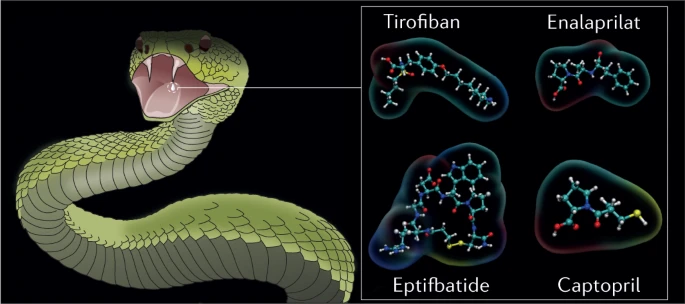
The fascination and fear of snakes dates back to time immemorial, with the first scientific treatise on snakebite envenoming, the Brooklyn Medical Papyrus, dating from ancient Egypt. Owing to their lethality, snakes have often been associated with images of perfidy, treachery and death. However, snakes did not always have such negative connotations. The curative capacity of venom has been known since antiquity, also making the snake a symbol of pharmacy and medicine. Today, there is renewed interest in pursuing snake-venom-based therapies. This Review focuses on the chemistry of snake venom and the potential for venom to be exploited for medicinal purposes in the development of drugs. The mixture of toxins that constitute snake venom is examined, focusing on the molecular structure, chemical reactivity and target recognition of the most bioactive toxins, from which bioactive drugs might be developed. The design and working mechanisms of snake-venom-derived drugs are illustrated, and the strategies by which toxins are transformed into therapeutics are analysed. Finally, the challenges in realizing the immense curative potential of snake venom are discussed, and chemical strategies by which a plethora of new drugs could be derived from snake venom are proposed.
This is a preview of subscription content, access via your institution
Access options
Access Nature and 54 other Nature Portfolio journals
Get Nature+, our best-value online-access subscription
$32.99 / 30 days
cancel any time
Subscribe to this journal
Receive 12 digital issues and online access to articles
$119.00 per year
only $9.92 per issue
Buy this article
- Purchase on SpringerLink
- Instant access to the full article PDF.
USD 39.95
Prices may be subject to local taxes which are calculated during checkout


References
Holford, M., Daly, M., King, G. F. & Norton, R. S. Venoms to the rescue. Science 361, 842–844 (2018).
Casewell, N. R., Wüster, W., Vonk, F. J., Harrison, R. A. & Fry, B. G. Complex cocktails: the evolutionary novelty of venoms. Trends Ecol. Evol. 28, 219–229 (2013). A review of the natural history of venoms and mechanisms of venom evolution.
King, G. F. Venoms as a platform for human drugs: translating toxins into therapeutics. Expert Opin. Biol. Ther. 11, 1469–1484 (2011). This review covers all stages of the development of drugs based on animal venoms.
Herzig, V. et al. Animal toxins — nature’s evolutionary-refined toolkit for basic research and drug discovery. Biochem. Pharmacol. 181, 114096 (2020).
Pineda, S. S. et al. Structural venomics reveals evolution of a complex venom by duplication and diversification of an ancient peptide-encoding gene. Proc. Natl Acad. Sci. USA 117, 11399–11408 (2020).
Cid-Uribe, J. I., Veytia-Bucheli, J. I., Romero-Gutierrez, T., Ortiz, E. & Possani, L. D. Scorpion venomics: a 2019 overview. Expert Rev. Proteom. 17, 67–83 (2020).
Tasoulis, T. & Isbister, G. K. A review and database of snake venom proteomes. Toxins 9, 290 (2017). An analysis of the composition and diversity of snake venom.
Casewell, N. R. et al. Medically important differences in snake venom composition are dictated by distinct postgenomic mechanisms. Proc. Natl Acad. Sci. USA 111, 9205–9210 (2014).
Massey, D. J. et al. Venom variability and envenoming severity outcomes of the Crotalus scutulatus scutulatus (Mojave rattlesnake) from southern Arizona. J. Proteom. 75, 2576–87 (2012).
Casewell, N. R., Jackson, T. N. W., Laustsen, A. H. & Sunagar, K. Causes and consequences of snake venom variation. Trends Pharmacol. Sci. 41, 570–581 (2020).
Durban, J. et al. Integrated venomics and venom gland transcriptome analysis of juvenile and adult Mexican rattlesnakes Crotalus simus, C. tzabcan, and C. culminatus revealed miRNA-modulated ontogenetic shifts. J. Proteome Res. 16, 3370–3390 (2017).
Pla, D. et al. Phylovenomics of Daboia russelii across the Indian subcontinent. Bioactivities and comparative in vivo neutralization and in vitro third-generation antivenomics of antivenoms against venoms from India, Bangladesh and Sri Lanka. J. Proteom. 207, 103443 (2019).
Senji Laxme, R. R. et al. Beyond the ‘big four’: venom profiling of the medically important yet neglected Indian snakes reveals disturbing antivenom deficiencies. PLoS Negl. Trop. Dis. 13, e0007899 (2019).
Chanda, A., Kalita, B., Patra, A., Senevirathne, W. D. S. T. & Mukherjee, A. K. Proteomic analysis and antivenomics study of Western India Naja naja venom: correlation between venom composition and clinical manifestations of cobra bite in this region. Expert Rev. Proteom. 16, 171–184 (2018).
Tasoulis, T., Pukala, T. L. & Isbister, G. K. Investigating toxin diversity and abundance in snake venom proteomes. Front. Pharmacol. (2022). A review of the proteomic methods used to separate and quantify snake venom toxins, comparing their merits and limitations.
Editorial. Snake-bite envenoming: a priority neglected tropical disease. Lancet 390, 2 (2017).
Gutierrez, J. M. et al. Snakebite envenoming. Nat. Rev. Dis. Primers 3, 17063 (2017). A review on the pathophysiology and treatment of snakebite envenoming.
Williams, D. The Global Snake Bite Initiative: an antidote for snake bite. Lancet 375, 89–91 (2010).
Kasturiratne, A. et al. The global burden of snakebite: a literature analysis and modelling based on regional estimates of envenoming and deaths. PLoS Med. 5, 1591–1604 (2008).
McDermott, A. Venom back in vogue as a wellspring for drug candidates. Proc. Natl Acad. Sci. USA 117, 10100–10104 (2020).
Bordon, K. et al. From animal poisons and venoms to medicines: achievements, challenges and perspectives in drug discovery. Front. Pharmacol. 11, 1132 (2020).
Almeida, J. R. R. et al. Snake venom peptides and low mass proteins: molecular tools and therapeutic agents. Curr. Med. Chem. 24, 3254–3282 (2017).
Fry, B. G. From genome to “venome”: molecular origin and evolution of the snake venom proteome inferred from phylogenetic analysis of toxin sequences and related body proteins. Genome Res. 15, 403–420 (2005).
Ojeda, P. G. et al. Computational studies of snake venom toxins. Toxins 10, 8 (2018).
Calvete, J. J., Sanz, L., Angulo, Y., Lomonte, B. & Gutiérrez, J. M. Venoms, venomics, antivenomics. FEBS Lett. 583, 1736–1743 (2009).
Modahl, C. M., Brahma, R. K., Koh, C. Y., Shioi, N. & Kini, R. M. Omics technologies for profiling toxin diversity and evolution in snake venom: impacts on the discovery of therapeutic and diagnostic agents. Annu. Rev. Anim. Biosci. 8, 91–116 (2020).
The Uniprot Consortium. UniProt: the universal protein knowledgebase in 2021. Nucleic Acids Res. 49, 480–489 (2021).
Simoes-Silva, R. et al. Snake venom, a natural library of new potential therapeutic molecules: challenges and current perspectives. Curr. Pharm. Biotechnol. 19, 308–335 (2018).
Calvete, J. J. Next-generation snake venomics: protein-locus resolution through venom proteome decomplexation. Expert Rev. Proteom. 11, 315–329 (2014).
Brahma, R. K., McCleary, R. J. R., Kini, R. M. & Doley, R. Venom gland transcriptomics for identifying, cataloging, and characterizing venom proteins in snakes. Toxicon 93, 1–10 (2015).
Liu, L. Comparison of next-generation sequencing systems. J. Biomed. Biotechnol. 2012, 251364 (2012).
Gutiérrez, J. M. & Lomonte, B. Phospholipases A2: unveiling the secrets of a functionally versatile group of snake venom toxins. Toxicon 62, 27–39 (2013). A review of the structure and function of the central PLA2 toxin family.
Dennis, E. A., Cao, J., Hsu, Y. H., Magrioti, V. & Kokotos, G. Phospholipase A2 enzymes: physical structure, biological function, disease implication, chemical inhibition, and therapeutic intervention. Chem. Rev. 111, 6130–6185 (2011).
Kang, T. S. et al. Enzymatic toxins from snake venom: structural characterization and mechanism of catalysis. FEBS J. 278, 4544–4576 (2011). A paper focusing on the structure and reaction mechanisms of the most prominent snake venom enzymatic toxins.
Schaloske, R. H. & Dennis, E. A. The phospholipase A2 superfamily and its group numbering system. Biochim. Biophys. Acta 1761, 1246–59 (2006).
Ferraz, C. R. et al. Multifunctional toxins in snake venoms and therapeutic implications: from pain to hemorrhage and necrosis. Front. Ecol. Evol. 7, 218 (2019).
Kini, R. M. & Koh, C. Y. Snake venom three-finger toxins and their potential in drug development targeting cardiovascular diseases. Biochem. Pharmacol. 181, 114105 (2020). A review of the family of 3FTxs and their potential medicinal applications for cardiovascular diseases.
Fry, B. G. et al. Molecular evolution and phylogeny of elapid snake venom three-finger toxins. J. Mol. Evol. 57, 110–129 (2003).
Kini, R. M. & Doley, R. Structure, function and evolution of three-finger toxins: mini proteins with multiple targets. Toxicon 56, 855–867 (2010).
Olaoba, O. T., Karina dos Santos, P., Selistre-de-Araujo, H. S. & Ferreira de Souza, D. H. Snake venom metalloproteinases (SVMPs): a structure–function update. Toxicon X 7, 100052 (2020). A review of the large and complex family of SVMP toxins.
Gutiérrez, J. M., Escalante, T., Rucavado, A. & Herrera, C. Hemorrhage caused by snake venom metalloproteinases: a journey of discovery and understanding. Toxins 8, 93 (2016).
Takeda, S. ADAM and ADAMTS family proteins and snake venom metalloproteinases: a structural overview. Toxins 8, 155 (2016).
Ullah, A. et al. Thrombin-like enzymes from snake venom: structural characterization and mechanism of action. Int. J. Biol. Macromol. 114, 788–811 (2018).
Hiu, J. J. & Yap, M. K. K. Cytotoxicity of snake venom enzymatic toxins: phospholipase A(2) and l-amino acid oxidase. Biochem. Soc. Trans. 48, 719–731 (2020).
Tan, K. K., Bay, B. H. & Gopalakrishnakone, P. l-amino acid oxidase from snake venom and its anticancer potential. Toxicon 144, 7–13 (2018).
Paloschi, M. V. An update on potential molecular mechanisms underlying the actions of snake venom l-amino acid oxidases (LAAOs). Curr. Med. Chem. 25, 2520–2530 (2018).
Ullah, A. Structure–function studies and mechanism of action of snake venom l-amino acid oxidases. Front. Pharmacol. 11, 110 (2020).
Inagaki, H. in Snake Venoms (eds Gopalakrishnakone, P., Inagaki, H., Vogel, C.-V., Mukherjee, A. K. & Rashed Rahmy, T.) (Springer, 2017).
Markland, F. S. & Swenson, S. Snake venom metalloproteinases. Toxicon 62, 3–18 (2013).
Serrano, S. M. & Maroun, R. C. Snake venom serine proteinases: sequence homology vs. substrate specificity, a paradox to be solved. Toxicon 45, 1115–1132 (2005).
Serrano, S. M. The long road of research on snake venom serine proteinases. Toxicon 62, 19–26 (2013).
Arlinghaus, F. T. & Eble, J. A. C-type lectin-like proteins from snake venoms. Toxicon 60, 512–519 (2012).
Morita, T. Structures and functions of snake venom CLPs (C-type lectin-like proteins) with anticoagulant-, procoagulant-, and platelet-modulating activities. Toxicon 45, 1099–1114 (2005).
Lu, Q., Navdaev, A., Clemetson, J. M. & Clemetson, K. J. Snake venom C-type lectins interacting with platelet receptors. Structure–function relationships and effects on haemostasis. Toxicon 45, 1089–1098 (2005).
Vink, S. Natriuretic peptide drug leads from snake venom. Toxicon 59, 434–445 (2012).
Sridharan, S., Kini, R. M. & Richards, A. M. Venom natriuretic peptides guide the design of heart failure therapeutics. Pharmacol. Res. 155, 104687 (2020). This review examines the structure–function relationships of venom natriuretic peptides, and discusses peptide engineering strategies for creating therapeutic natriuretic peptide analogues.
Munawar, A. Snake venom peptides: tools of biodiscovery. Toxins 10, 474 (2018).
Laustsen, A. H., Lomonte, B., Lohse, B., Fernández, J. & Gutiérrez, J. M. Unveiling the nature of black mamba (Dendroaspis polylepis) venom through venomics and antivenom immunoprofiling: identification of key toxin targets for antivenom development. J. Proteom. 119, 126–142 (2015).
Damm, M., Hempel, B. F., Nalbantsoy, A. & Süssmuth, R. D. Comprehensive snake venomics of the Okinawa Habu pit viper, Protobothrops flavoviridis, by complementary mass spectrometry-guided approaches. Molecules 23, 1893 (2018).
Coronado, M. A. et al. Structure of the polypeptide crotamine from the Brazilian rattlesnake Crotalus durissus terrificus. Acta Crystallogr. D 69, 1958–1964 (2013).
Falcao, C. B. & Radis-Baptista, G. Crotamine and crotalicidin, membrane active peptides from Crotalus durissus terrificus rattlesnake venom, and their structurally-minimized fragments for applications in medicine and biotechnology. Peptides 126, 170234 (2020).
Slotta, K. H. & Fraenkel-Conrat, H. Two active proteins from rattlesnake venom. Nature 13, 213–213 (1938).
Berg, O. G., Gelb, M. H., Tsai, M. D. & Jain, M. K. Interfacial enzymology: the secreted phospholipase A(2)-paradigm. Chem. Rev. 101, 2613–54 (2001).
Tsai, Y. C., Yu, B. Z., Wang, Y. Z., Chen, J. & Jain, M. K. Desolvation map of the i-face of phospholipase A2. Biochim. Biophys. Acta 1758, 653–665 (2006).
Bahnson, B. J. Structure, function and interfacial allosterism in phospholipase A2: insight from the anion-assisted dimer. Arch. Biochem. Biophys. 433, 96–106 (2005).
Scott, D. L. et al. Interfacial catalysis: the mechanism of phospholipase A2. Science 250, 1541–1546 (1990).
Sérgio, S., Ramos, M. J., Lim, C. & Fernandes, P. A. Relationship between enzyme/substrate properties and enzyme efficiency in hydrolases. ACS Catal. 5, 5877–5887 (2015).
Sousa, S. F. et al. Activation free energy, substrate binding free energy, and enzyme efficiency fall in a very narrow range of values for most enzymes. ACS Catal. 10, 8444–8453 (2020).
Resende, L. M. et al. Structural, enzymatic and pharmacological profiles of AplTX-II — a basic sPLA2 (D49) isolated from the Agkistrodon piscivorus leucostoma snake venom. Int. J. Biol. Macromol. 175, 572–585 (2021).
Lomonte, B. & Rangel, J. Snake venom Lys49 myotoxins: from phospholipases A(2) to non-enzymatic membrane disruptors. Toxicon 60, 520–30 (2012).
Fernández, J. et al. Muscle phospholipid hydrolysis by Bothrops asper Asp49 and Lys49 phospholipase A2 myotoxins — distinct mechanisms of action. FEBS J. 280, 3878–3886 (2013).
Almeida, J. R. et al. CoaTx-II, a new dimeric Lys49 phospholipase A2 from Crotalus oreganus abyssus snake venom with bactericidal potential: insights into its structure and biological roles. Toxicon 120, 147–58 (2016).
Almeida, J. R. et al. Harnessing snake venom phospholipases A(2) to novel approaches for overcoming antibiotic resistance. Drug Dev. Res. 80, 68–85 (2019).
Almeida, J. R. et al. A novel synthetic peptide inspired on Lys49 phospholipase A2 from Crotalus oreganus abyssus snake venom active against multidrug-resistant clinical isolates. Eur. J. Med. Chem. 149, 248–256 (2018).
Kwong, P. D., McDonald, N. Q., Sigler, P. B. & Hendrickson, W. A. Structure of β2-bungarotoxin — potassium channel binding by kunitz modules and targeted phospholipase action. Structure 3, 1109–1119 (1995).
Rowan, E. G. What does β-bungarotoxin do at the neuromuscular junction? Toxicon 39, 107–118 (2001).
Doley, R. & Kini, R. M. Protein complexes in snake venom. Cell. Mol. Life Sci. 66, 2851–2871 (2009).
Kini, R. M. & Koh, C. Y. Metalloproteases affecting blood coagulation, fibrinolysis and platelet aggregation from snake venoms: definition and nomenclature of interaction sites. Toxins 8, 284 (2016).
Sanchez, E. F., Flores-Ortiz, R. J., Alvarenga, V. G. & Eble, J. A. Direct fibrinolytic snake venom metalloproteinases affecting hemostasis: structural, biochemical features and therapeutic potential. Toxins 9, 392 (2017).
Bledzka, K., Smyth, S. S. & Plow, E. F. Integrin αIIbβ3 from discovery to efficacious therapeutic target. Circ. Res. 112, 1189–1200 (2013).
Takeda, S., Igarashi, T. & Mori, H. Crystal structure of RVV-X: an example of evolutionary gain of specificity by ADAM proteinases. FEBS Lett. 581, 5859–5864 (2007).
Lingott, T., Schleberger, C., Gutiérrez, J. M. & Merfort, I. High-resolution crystal structure of the snake venom metalloproteinase BaP1 complexed with a peptidomimetic: Insight into inhibitor binding. Biochemistry 48, 6166–6174 (2009).
Akao, P. K. et al. Structural studies of BmooMPα-I, a non-hemorrhagic metalloproteinase from Bothrops moojeni venom. Toxicon 55, 361–368 (2010).
Boldrini-França, J. et al. Beyond hemostasis: a snake venom serine protease with potassium channel blocking and potential antitumor activities. Sci. Rep. 10, 4476 (2020).
Mackessy, S. P. in Toxins and Hemostasis (eds Kini, R., Clemetson, K., Markland, F., McLane, M. & Morita, T.) 519–557 (Springer, 2010).
Vaiyapuri, S., Thiyagarajan, N., Hutchinson, E. G. & Gibbins, J. M. Sequence and phylogenetic analysis of viper venom serine proteases. Bioinformation 8, 763–772 2012).
Kurtović, T. et al. VaSP1, catalytically active serine proteinase from Vipera ammodytes ammodytes venom with unconventional active site triad. Toxicon 77, 93–104 (2014).
Sousa, S. F. et al. Application of quantum mechanics/molecular mechanics methods in the study of enzymatic reaction mechanisms. Wiley Interdisc. Rev. Mol. Sci. 7, 1281 (2017). A review of the computational methods being used to elucidate the snake venom enzymatic reactivity.
Chung, L. W. et al. The ONIOM method and its applications. Chem. Rev. 115, 5678–5796 (2015).
Amaro, R. E. & Mulholland, A. J. Multiscale methods in drug design bridge chemical and biological complexity in the search for cures. Nat. Rev. Chem. 2, 148 (2018).
Himo, F. Recent trends in quantum chemical modeling of enzymatic reactions. J. Am. Chem. Soc. 139, 6780–6786 (2017).
Estevão-Costa, M. I., Sanz-Soler, R., Johanningmeier, B. & Eble, J. A. Snake venom components in medicine: from the symbolic rod of Asclepius to tangible medical research and application. Int. J. Biochem. Cell Biol. 104, 94–113 (2018). This review describes the application of snake venoms in drug discovery.
Marsh, N. A. Diagnostic uses of snake venom. Haemostasis 31, 211–217 (2001).
Francischetti, I. M. B. & Gil, M. R. in Transfusion Medicine and Hemostasis (eds Shaz, B. H., Hillyer, C. D. & Reyes Gil, M.) 969–975 (Elsevier, 2019).
Schmidtko, A., Lötsch, J., Freynhagen, R. & Geisslinger, G. Ziconotide for treatment of severe chronic pain. Lancet 375, 1569–1577 (2010).
Miljanich, G. P. Ziconotide: neuronal calcium channel blocker for treating severe chronic pain. Curr. Med. Chem. 11, 3029–3040 (2004).
Rocha, E. S. M., Beraldo, W. T. & Rosenfeld, G. Bradykinin, a hypotensive and smooth muscle stimulating factor released from plasma globulin by snake venoms and by trypsin. Am. J. Physiol. 156, 261–273 (1949).
Ferreira, S. H. A bradykinin-potentiating factor (BPF) present in the venom of Bothrops jararaca. Br. J. Pharmacol. Chemother. 24, 163–169 (1965).
Ferreira, S. H., Bartelt, D. C. & Greene, L. J. Isolation of bradykinin-potentiating peptides from Bothrops jararaca venom. Biochemistry 9, 2583–2593 (1970).
McCleary, R. J. R. & Kini, R. M. Non-enzymatic proteins from snake venoms: a gold mine of pharmacological tools and drug leads. Toxicon 62, 56–74 (2013).
Ferreira, S. H., Greene, L. J., Alabaster, V. A., Bakhle, Y. S. & Vane, J. R. Activity of various fractions of bradykinin potentiating factor against angiotensin-I converting enzyme. Nature 225, 379–380 (1970).
Cushman, D. W. & Ondetti, M. A. History of the design of captopril and related inhibitors of angiotensin converting enzyme. Hypertension 17, 589–592 (1991).
Bryan, J. From snake venom to ACE inhibitor — the discovery and rise of captopril. Pharm. J. 282, 455–456 (2009).
Patchett, A. A. The chemistry of enalapril. Br. J. Clin. Pharmacol. 18, 201–207 (1984).
Acharya, K. R., Sturrock, E. D., Riordan, J. F. & Ehlers, M. R. W. ACE revisited: a new target for structure-based drug design. Nat. Rev. Drug Discov. 2, 891–902 (2003).
Acharya, G., Wang, W., Vavilala, D. T., Mukherji, M. & Lee, C. H. in Advanced Drug Delivery (eds Mitra, A. K., Lee, C. H. & Cheng, K.) 341–364 (Wiley, 2014).
Lazarovici, P., Marcinkiewicz, C. & Lelkes, P. I. From snake venom’s disintegrins and C-type lectins to anti-platelet drugs. Toxins 11, 303 (2019).
Topol, E. J., Byzova, T. V. & Plow, E. F. Platelet GPIIb-IIIa blockers. Lancet 353, 227–231 (1999).
Lang, S. H. et al. Treatment with tirofiban for acute coronary syndrome (ACS): a systematic review and network analysis. Curr. Med. Res. Opin. 28, 351–370 (2012).
Barrett, J. S. et al. Pharmacokinetics and pharmacodynamics of MK-383, a selective nonpeptide platelet glycoprotein-IIb/IIIa receptor antagonist, in healthy men. Clin. Pharmacol. Ther. 56, 377–388 (1994).
Gan, Z. R., Gould, R. J., Jacobs, J. W., Friedman, P. A. & Polokoff, M. A. Echistatin — a potent platelet-aggregation inhibitor from the venom of the viper Echis carinatus. J. Biol. Chem. 263, 19827–19832 (1988).
Hartman, G. D. Non-peptide fibrinogen receptor antagonists. 1. Discovery and design of exosite inhibitors. J. Med. Chem. 35, 4640–4642 (1992).
Van Drie, J. H. Computer-aided drug design: the next 20 years. J. Comput. Aided Mol. Des. 21, 591–601 (2007).
Scarborough, R. M. et al. Design of potent and specific integrin antagonists — peptide antagonists with high specificity for glycoprotein-IIb–IIIa. J. Biol. Chem. 268, 1066–1073 (1993).
Scarborough, R. M. et al. Barbourin — a GPIIb–IIIa-specific integrin antagonist from the venom of Sistrurus m. barbouri. J. Biol. Chem. 266, 9359–9362 (1991).
Scarborough, R. M. Development of eptifibatide. Am. Heart J. 138, 1093–1104 (1999).
O’Shea, J. C. & Tcheng, J. E. Eptifibatide: a potent inhibitor of the platelet receptor integrin glycoprotein IIb/IIIa. Expert Opin. Pharmacother. 3, 1199–1210 (2002).
Masuda, H. Batroxobin accelerated tissue repair via neutrophil extracellular trap regulation and defibrinogenation in a murine ischemic hindlimb model. PLoS ONE 14, e0220898 (2019).
Vu, T. T. Batroxobin binds fibrin with higher affinity and promotes clot expansion to a greater extent than thrombin. J. Biol. Chem. 288, 16862–16871 (2013).
Waheed, H., Moin, S. F. & Choudhary, M. I. Snake venom: from deadly toxins to life-saving therapeutics. Curr. Med. Chem. 24, 1874–1891 (2017).
Gazerani, P. & Cairns, B. E. Venom-based biotoxins as potential analgesics. Expert Rev. Neurother. 14, 1261–1274 (2014).
Lin, F., Reid, P. F. & Qin, Z.-H. Cobrotoxin could be an effective therapeutic for COVID-19. Acta Pharmacol. Sin. 41, 1258–1260 (2020).
Pérez-Peinado, C. et al. Hitchhiking with nature: snake venom peptides to fight cancer and superbugs. Toxins 12, 255 (2020). This review describes the application of snake venoms to treat cancer and infection by antibiotic-resistant microorganisms.
Li, B. X. et al. In vitro assessment and phase I randomized clinical trial of anfibatide, a snake-venom-derived anti-thrombotic agent targeting human platelet GPIbα. Sci. Rep. 11, 11663 (2021).
Gao, Y. et al. Crystal structure of agkisacucetin, a GPIb-binding snake C-type lectin that inhibits platelet adhesion and aggregation. Proteins 80, 1707–1711 (2012).
Jackson, S. P. The growing complexity of platelet aggregation. Blood 109, 5087–5095 (2007).
Guo, Y. et al. Balancing the expression and production of a heterodimeric protein: recombinant agkisacutacin as a novel antithrombotic drug candidate. Sci. Rep. 5, 11730 (2015).
Tasima, L. J. et al. Crotamine in Crotalus durissus: distribution according to subspecies and geographic origin, in captivity or nature. J. Venom. Anim. Toxins Incl. Trop. Dis. 26, 20190053 (2020).
Moreira, L. A. et al. Acute toxicity, antinociceptive, and anti-inflammatory activities of the orally administered crotamine in mice. Naunyn Schmiedebergs Arch. Pharmacol. 394, 1703–1711 (2021).
Nicastro, G. et al. Solution structure of crotamine, a Na+ channel affecting toxin from Crotalus durissus terrificus venom. Eur. J. Biochem. 270, 1969–1979 (2003).
Kerkis, A. et al. Crotamine is a novel cell-penetrating protein from the venom of rattlesnake Crotalus durissus terrificus. FASEB J. 18, 1407–1409 (2004).
Hayashi, M. A. F. et al. Cytotoxic effects of crotamine are mediated through lysosomal membrane permeabilization. Toxicon 52, 508–517 (2008).
Kerkis, A., Hayashi, M. A. F., Yamane, T. & Kerkis, I. Properties of cell penetrating peptides (CPPs). IUBMB Life 58, 7–13 (2006).
Pereira, A. et al. Crotamine toxicity and efficacy in mouse models of melanoma. Expert Opin. Investig. Drugs 20, 1189–1200 (2011).
Campeiro, J. D. et al. Oral treatment with a rattlesnake native polypeptide crotamine efficiently inhibits the tumor growth with no potential toxicity for the host animal and with suggestive positive effects on animal metabolic profile. Amino Acids 50, 267–278 (2018). This study demonstrates the promising antitumoral activity of crotamine through oral administration.
Mancin, A. C. et al. The analgesic activity of crotamine, a neurotoxin from Crotalus durissus terrificus (South American rattlesnake) venom: a biochemical and pharmacological study. Toxicon 36, 1927–37 (1998).
de Carvalho Porta, L. et al. Biophysical and pharmacological characterization of a full-length synthetic analog of the antitumor polypeptide crotamine. J. Mol. Med. 98, 1561–1571 (2020).
Mambelli-Lisboa, N. C., Sciani, J. M., Silva, A. R. B. P. D. & Kerkis, I. Co-localization of crotamine with internal membranes and accentuated accumulation in tumor cells. Molecules 23, 968 (2018).
Park, J. Y. et al. Antinociceptive and anti-inflammatory effects of recombinant crotamine in mouse models of pain. Toxins 13, 707 (2021). An in vivo study of the antinociceptive and anti-inflammatory activity of crotamine.
Schweitz, H., Vigne, P., Moinier, D., Frelin, C. & Lazdunski, M. A new member of the natriuretic peptide family is present in the venom of the green mamba (Dendroaspis angusticeps). J. Biol. Chem. 267, 13928–13932 (1992).
Volpe, M., Rubattu, S. & Burnett, J. Natriuretic peptides in cardiovascular diseases: current use and perspectives. Eur. Heart J. 35, 419–425 (2014).
O’Connor, C. M. M. et al. Effect of nesiritide in patients with acute decompensated heart failure. N. Engl. J. Med. 365, 32–43 (2011).
Matsue, Y. et al. Carperitide is associated with increased in-hospital mortality in acute heart failure: a propensity score-matched analysis. J. Card. Fail. 21, 859–864 (2015).
Ichiki, T., Dzhoyashvili, N. & Burnett, J. C. Jr Natriuretic peptide based therapeutics for heart failure: cenderitide. A novel first-in-class designer natriuretic peptide. Int. J. Cardiol. 281, 166–171 (2019).
Kawakami, R. et al. A human study to evaluate safety, tolerability, and cyclic GMP activating properties of cenderitide in subjects with stable chronic heart failure. Clin. Pharmacol. Ther. 104, 546–552 (2018).
Diochot, S. et al. Black mamba venom peptides target acid-sensing ion channels to abolish pain. Nature 490, 552–557 (2012). This paper reports the discovery of a black mamba 3FTx that targets acid-sensing ion channels with potent analgesic activity.
Yoder, N., Yoshioka, C. & Gouaux, E. Gating mechanisms of acid-sensing ion channels. Nature 555, 397–401 (2018).
Wemmie, J. A., Taugher, R. J. & Kreple, C. J. Acid-sensing ion channels in pain and disease. Nat. Rev. Neurosci. 14, 461–471 (2013).
Schroeder, C. I. et al. Chemical synthesis, 3D structure, and ASIC binding site of the toxin mambalgin-2. Angew. Chem. Int. Ed. 53, 1017–1020 (2014).
Mourier, G. et al. Mambalgin-1 pain-relieving peptide, stepwise solid-phase synthesis, crystal structure, and functional domain for acid-sensing ion channel 1a Inhibition. J. Biol. Chem. 291, 2616–2629 (2015).
Diochot, S. et al. Analgesic effects of mambalgin peptide inhibitors of acid-sensing ion channels in inflammatory and neuropathic pain. Pain 157, 552–559 (2016).
Verkest, C. et al. Effects of systemic inhibitors of acid-sensing ion channels 1 (ASIC1) against acute and chronic mechanical allodynia in a rodent model of migraine. Br. J. Pharmacol. 175, 4154–4166 (2018).
Sun, D. M. et al. Structural insights into human acid-sensing ion channel 1a inhibition by snake toxin mambalgin1. eLife 9, 57096 (2020). This paper reports structural details of the working mechanism of the analgesic mambalgin-1 in blocking the acid-sensing ion channel 1a.
Salinas, M. et al. Mambalgin-1 pain-relieving peptide locks the hinge between α4 and α5 helices to inhibit rat acid-sensing ion channel 1a. Neuropharmacology 185, 108453 (2021).
Yacoub, T. Antimicrobials from venomous animals: an overview. Molecules 25, 2402 (2020).
Siniavin, A. E. et al. Snake venom phospholipase A2s exhibit strong virucidal activity against SARS-CoV-2 and inhibit the viral spike glycoprotein interaction with ACE2. Cell Mol. Life Sci. 78, 7777–7794 (2021).
Santos-Filho, N. A. et al. Antibacterial activity of the non-cytotoxic peptide (p-BthTX-I)2 and its serum degradation product against multidrug-resistant bacteria. Molecules 22, 1898 (2017).
Freire, M. C. L. C. et al. Non-toxic dimeric peptides derived from the bothropstoxin-I are potent SARS-CoV-2 and papain-like protease inhibitors. Molecules 26, 4896 (2021). A report of snake venom peptides with antiviral activity towards SARS-CoV-2.
Domling, A. & Gao, L. Chemistry and biology of SARS-CoV-2. Chem 6, 1283–1295 (2020).
Yang, J. et al. Freely accessible chemical database resources of compounds for in silico drug discovery. Curr. Med. Chem. 26, 7581–7597 (2019).
Mendez, D. et al. ChEMBL: towards direct deposition of bioassay data. Nucleic Acids Res. 47, 930–940 (2019).
Sterling, T. & Irwin, J. J. ZINC 15-ligand discovery for everyone. J. Chem. Inf. Model. 55, 2324–2337 (2015).
van Hilten, N. et al. Virtual compound libraries in computer-assisted drug discovery. J. Chem. Inf. Model. 59, 644–651 (2019).
Schneider, G. Automating drug discovery. Nat. Rev. Drug Discov. 17, 97–113 (2018).
Warkentin, T. E., Greinacher, A. & Koster, A. Bivalirudin. Thromb. Haemost. 99, 830–9 (2008).
Barnett, A. Exenatide. Expert Opin. Pharmacother. 8, 2593–2608 (2007).
King, G. F. in Venoms to Drugs: Venom as a Source for the Development of Human Therapeutics (ed. King, G. F.) 37–79 (Royal Society of Chemistry, 2015).
Kini, R. M. Toxins in thrombosis and haemostasis: potential beyond imagination. J. Thromb. Haemost. 9, 195–208 (2011).
Santos, R. et al. A comprehensive map of molecular drug targets. Nat. Rev. Drug Discov. 16, 19–34 (2017).
Kini, R. M. & Evans, H. J. A model to explain the pharmacological effects of snake venom phospholipases A2. Toxicon 27, 613–35 (1989).
Kini, R. M. Excitement ahead: structure, function and mechanism of snake venom phospholipase A2 enzymes. Toxicon 42, 827–840 (2003).
Croll, T. I., Sammito, M. D., Kryshtafovych, A. & Read, R. J. Evaluation of template-based modeling in CASP13. Proteins Struct. Funct. Bioinform. 87, 1113–1127 (2019).
Alford, R. F. et al. The Rosetta all-atom energy function for macromolecular modeling and design. J. Chem. Theory Comput. 13, 3031–3048 (2017).
Das, R. & Baker, D. Macromolecular modeling with Rosetta. Annu. Rev. Biochem. 77, 363–382 (2008).
Wang, Y., Virtanen, J., Xue, Z. & Zhang, Y. I-TASSER-MR: automated molecular replacement for distant-homology proteins using iterative fragment assembly and progressive sequence truncation. Nucleic Acids Res. 45, 429–434 (2017).
Webb, B. & Sali, A. Comparative protein structure modeling using MODELLER. Curr. Protoc. Bioinformatics 54, 5.6.1–5.6.37 (2020).
Jumper, J. et al. Highly accurate protein structure prediction with AlphaFold. Nature 596, 583–589 (2021).
Lensink, M. F., Nadzirin, N., Velankar, S. & Wodak, S. J. Modeling protein–protein, protein–peptide, and protein–oligosaccharide complexes: CAPRI. Proteins 88, 916–938 (2020).
Moreira, I. S., Fernandes, P. A. & Ramos, M. J. Protein–protein docking dealing with the unknown. J. Comput. Chem. 31, 317–342 (2010).
Simões, I. C. M. et al. Properties that rank protein–protein docking poses with high accuracy. Phys. Chem. Chem. Phys. 20, 20927–20942 (2018). A promising computational method to predict toxin–target complexation structures.
Moreira, I. S., Martins, J. M., Coimbra, J. T. S., Ramos, M. J. & Fernandes, P. A. A new scoring function for protein–protein docking that identifies native structures with unprecedented accuracy. Phys. Chem. Chem. Phys. 17, 2378–2387 (2015).
Quignot, C. et al. InterEvDock2: an expanded server for protein docking using evolutionary and biological information from homology models and multimeric inputs. Nucleic Acids Res. 46, 408–416 (2018).
Kozakov, D. et al. The ClusPro web server for protein-protein docking. Nat. Protoc. 12, 255–278 (2017).
Park, T., Baek, M., Lee, H. & Seok, C. GalaxyTongDock: symmetric and asymmetric ab initio protein–protein docking web server with improved energy parameters. J. Comput. Chem. 40, 2413–2417 (2019).
Zundert, G. C. P. et al. The HADDOCK2.2 web server: user-friendly integrative modeling of biomolecular complexes. J. Mol. Biol. 428, 720–725 (2016).
Moreira, I. S., Fernandes, P. A. & Ramos, M. J. Hot spots — a review of the protein–protein interface determinant amino-acid residues. Proteins Struct. Funct. Bioinform. 68, 803–812 (2007).
Martins, S. A. et al. Computational alanine scanning mutagenesis: MM-PBSA vs TI. J. Chem. Theory Comput. 9, 1311–1319 (2013).
Simões, I. C. M., Costa, I. P. D., Coimbra, J. T. S., Ramos, M. J. & Fernandes, P. A. New parameters for higher accuracy in the computation of binding free energy differences upon alanine scanning mutagenesis on protein–protein interfaces. J. Chem. Inf. Model. 57, 60–72 (2017). An accurate computational method to identify toxin–target binding regions and binding epitopes.
Geng, C., Xue, L. C., Roel-Touris, J. & Bonvin, A. M. J. J. Finding the ΔΔG spot: are predictors of binding affinity changes upon mutations in protein–protein interactions ready for it? Wiley Interdiscip. Rev. Mol. Sci. 9, 1410 (2019).
Barlow, K. A. et al. Flex ddG: Rosetta ensemble-based estimation of changes in protein–protein binding affinity upon mutation. J. Phys. Chem. B 122, 5389–5399 (2018).
Kortemme, T. & Baker, D. A simple physical model for binding energy hot spots in protein–protein complexes. Proc. Natl Acad. Sci. USA 99, 14116–21 (2002).
Sribar, J. et al. The neurotoxic secreted phospholipase A2 from the Vipera a. ammodytes venom targets cytochrome c oxidase in neuronal mitochondria. Sci. Rep. 9, 283 (2019).
Meenakshisundaram, R., Sweni, S. & Thirumalaikolundusubramanian, P. Hypothesis of snake and insect venoms against human immunodeficiency virus: a review. AIDS Res. Ther. 6, 25 (2009).
Fenard, D. et al. Secreted phospholipases A2, a new class of HIV inhibitors that block virus entry into host cells. J. Clin. Invest. 104, 611–618 (1999).
Muller, V. D. M. et al. Crotoxin and phospholipases A2 from Crotalus durissus terrificus showed antiviral activity against dengue and yellow fever viruses. Toxicon 59, 507–15 (2012).
Ahmed, N. K., Tennant, K. D., Markland, F. S. & LACZ, J. P. Biochemical characteristics of fibrolase, a fibrinolytic protease from snake venom. Haemostasis 20, 147–154 (1990).
Boldrini-Franca, J., Pinheiro-Junior, E. L. & Arantes, E. C. Functional and biological insights of rCollinein-1, a recombinant serine protease from Crotalus durissus collilineatus. J. Venom. Anim. Toxins Incl. Trop. Dis. 25, 147118 (2019).
Funk, C., Gmür, J., Herold, R. & Straub, P. W. Reptilase-R — a new reagent in blood coagulation. Br. J. Haematol. 21, 43–52 (1971).
Graziano, F. et al. Autologous fibrin sealant (Vivostat(R)) in the neurosurgical practice. Part I: intracranial surgical procedure. Surg. Neurol. Int. 6, 77 (2015).
Graziano, F., Maugeri, R., Basile, L., Meccio, F. & Iacopino, D. G. Aulogous fibrin sealant (Vivostat(R)) in the neurosurgical practice. Part II: vertebro-spinal procedures. Surg. Neurol. Int. 7, 77–82 (2016).
Koivula, K., Rondinelli, S. & Nasman, J. The three-finger toxin MTα is a selective α2B-adrenoceptor antagonist. Toxicon 56, 440–447 (2010).
Barnwal, B. et al. Ringhalexin from Hemachatus haemachatus: a novel inhibitor of extrinsic tenase complex. Sci. Rep. 6, 25935 (2016).
Banerjee, Y. et al. Biophysical characterization of anticoagulant hemextin AB complex from the venom of snake Hemachatus haemachatus. Biophys. J. 93, 3963–76 (2007).
Chanda, C., Sarkar, A., Sistla, S. & Chakrabarty, D. Anti-platelet activity of a three-finger toxin (3FTx) from Indian monocled cobra (Naja kaouthia) venom. Biochem. Biophys. Res. Commun. 441, 550–554 (2013).
Fernandez-Gomez, R. et al. Growth inhibition of Trypanosoma cruzi and Leishmania donovani infantum by different snake venoms — preliminary identification of proteins from Cerastes cerastes venom which interact with the parasites. Toxicon 32, 875–882 (1994).
Costa Torres, A. F. et al. Antibacterial and antiparasitic effects of Bothrops marajoensis venom and its fractions: phospholipase A2 and l-amino acid oxidase. Toxicon 55, 795–804 (2010).
Sakurai, Y. et al. Anticoagulant activity of M-LAO, l-amino acid oxidase purified from Agkistrodon halys blomhoffii, through selective inhibition of factor IX. Biochim. Biophys. Acta 1649, 51–57 (2003).
Adade, C. M. et al. Crovirin, a snake venom cysteine-rich secretory protein (CRISP) with promising activity against trypanosomes and Leishmania. PLoS Negl. Trop. Dis. 8, 3252 (2014).
Badari, J. C., Díaz-Roa, A., Rocha, M. M. T., Mendonça, R. Z. & Silva Junior, P. I. D. Patagonin-CRISP: antimicrobial activity and source of antimicrobial molecules in Duvernoy’s gland secretion (Philodryas patagoniensis snake). Front. Pharmacol. 11, 586705 (2021).
Tadokoro, T., Modahl, C. M., Maenaka, K. & Aoki-Shioi, N. Cysteine-rich secretory proteins (CRISPs) from venomous snakes: an overview of the functional diversity in a large and underappreciated superfamily. Toxins 12, 175 (2020).
Assafim, M. et al. Exploiting the antithrombotic effect of the (pro)thrombin inhibitor bothrojaracin. Toxicon 119, 46–51 (2016).
Shen, D.-K. et al. Ca2+-induced binding of anticoagulation factor II from the venom of Agkistrodon acutus with factor IX. Biopolymers 97, 818–824 (2012).
Zhang, Y. et al. Anticoagulation factor I, a snaclec (snake C-type lectin) from Agkistrodon acutus venom binds to FIX as well as FX: Ca2+ induced binding data. Toxicon 59, 718–723 (2012).
Rabelo, L. F. G. et al. Alternagin-C, a disintegrin-like protein from Bothrops alternatus venom, attenuates inflammation and angiogenesis and stimulates collagen deposition of sponge-induced fibrovascular tissue in mice. Int. J. Biol. Macromol. 140, 653–660 (2019).
Gilchrist, I. C. Platelet glycoprotein IIb/IIIa inhibitors in percutaneous coronary intervention: focus on the pharmacokinetic–pharmacodynamic relationships of eptifibatide. Clin. Pharmacokinet. 42, 703–720 (2003).
Lucena, S. E. et al. Anti-invasive and anti-adhesive activities of a recombinant disintegrin, r-viridistatin 2, derived from the Prairie rattlesnake (Crotalus viridis viridis). Toxicon 60, 31–9 (2012).
Kuo, Y. J., Chung, C. H. & Huang, T. F. From discovery of snake venom disintegrins to a safer therapeutic antithrombotic agent. Toxins 11, 372 (2019).
Cesar, P. H. S., Braga, M. A., Trento, M. V. C., Menaldo, D. L. & Marcussi, S. Snake venom disintegrins: an overview of their interaction with integrins. Curr. Drug Targets 20, 465–477 (2019).
Calvete, J. J. The continuing saga of snake venom disintegrins. Toxicon 62, 40–49 (2013).
Ciolek, J. et al. Green mamba peptide targets type-2 vasopressin receptor against polycystic kidney disease. Proc. Natl Acad. Sci. USA 114, 7154–7159 (2017).
Colombo, A. L. et al. Effects of the natural peptide crotamine from a South American rattlesnake on Candida auris, an emergent multidrug antifungal resistant human pathogen. Biomolecules 9, 205 (2019).
El Chamy Maluf, S. et al. Inhibition of malaria parasite Plasmodium falciparum development by crotamine, a cell penetrating peptide from the snake venom. Peptides 78, 11–16 (2016).
Dal Mas, C. et al. Anthelmintic effects of a cationic toxin from a South American rattlesnake venom. Toxicon 116, 49–55 (2016).
Macedo, S. R. A. et al. Biodegradable microparticles containing crotamine isolated from Crotalus durissus terrificus display antileishmanial activity in vitro. Pharmacology 95, 78–86 (2015).
Mackessy S. P. (ed.) Handbook of Venoms and Toxins of Reptiles (CRC, 2021). This book describes the composition, bioactivity, pathophysiology and medicinal applications of snake venom.
Salvador, G. H. M., dos Santos, J. I., Lomonte, B. & Fontes, M. R. M. Crystal structure of a phospholipase A2 from Bothrops asper venom: insights into a new putative “myotoxic cluster”. Biochimie 133, 95–102 (2017).
Murakami, M. T. et al. Inhibition of myotoxic activity of Bothrops asper myotoxin II by the anti-trypanosomal drug suramin. J. Mol. Biol. 350, 416–426 (2005).
Kalita, B., Mackessy, S. P. & Mukherjee, A. K. Proteomic analysis reveals geographic variation in venom composition of Russell’s viper in the Indian subcontinent: implications for clinical manifestations post-envenomation and antivenom treatment. Expert Rev. Proteomics 15, 837–849 (2018).
Favaloro, E. J. The Russell viper venom time (RVVT) test for investigation of lupus anticoagulant (LA). Am. J. Hematol. 94, 1290–1296 (2019).
Chen, H.-S., Tsai, H.-Y., Wang, Y.-M. & Tsai, I.-H. P-III hemorrhagic metalloproteinases from Russell’s viper venom: cloning, characterization, phylogenetic and functional site analyses. Biochimie 90, 1486–1498 (2008).
Nakayama, D., Ben Ammar, Y., Miyata, T. & Takeda, S. Structural basis of coagulation factor V recognition for cleavage by RVV-V. FEBS Lett. 585, 3020–3025 (2011).
You, W.-K. et al. Functional characterization of recombinant batroxobin, a snake venom thrombin-like enzyme, expressed from Pichia pastoris. FEBS Lett. 571, 67–73 (2004).
Sousa, L. F. et al. Functional proteomic analyses of Bothrops atrox venom reveals phenotypes associated with habitat variation in the Amazon. J. Proteom. 159, 32–46 (2017).
Núñez, V. et al. Snake venomics and antivenomics of Bothrops atrox venoms from Colombia and the Amazon regions of Brazil, Perú and Ecuador suggest the occurrence of geographic variation of venom phenotype by a trend towards paedomorphism. J. Proteom. 73, 57–78 (2009).
Calvete, J. J. et al. Snake population venomics and antivenomics of Bothrops atrox: paedomorphism along its transamazonian dispersal and implications of geographic venom variability on snakebite management. J. Proteom. 74, 510–527 (2011).
Kohlhoff, M. et al. Exploring the proteomes of the venoms of the Peruvian pit vipers Bothrops atrox, B. barnetti and B. pictus. J. Proteom. 75, 2181–2195 (2012).
Hatakeyama, D. M. et al. Venom complexity of Bothrops atrox (common lancehead) siblings. J. Venom. Anim. Toxins Incl. Trop. Dis. 26, 20200018 (2020).
Wallnoefer, H. G., Lingott, T., Gutiérrez, J. M., Merfort, I. & Liedl, K. R. Backbone flexibility controls the activity and specificity of a protein–protein interface: specificity in snake venom metalloproteases. J. Am. Chem. Soc. 132, 10330–10337 (2010).
Camacho, E., Escalante, T., Remans, K., Gutiérrez, J. M. & Rucavado, A. Site mutation of residues in a loop surrounding the active site of a PI snake venom metalloproteinase abrogates its hemorrhagic activity. Biochem. Biophys. Res. Commun. 512, 859–863 (2019). This study provides insight into the molecular-level mechanism of physiological substrate recognition by SVMPs.
Acknowledgements
The authors acknowledge financial support from FCT/MCTES — the Portuguese Foundation for Science and Technology — through project PTDC/QUI-OUT/1401/2020 and from the Associate Laboratory for Green Chemistry (LAQV), which is financed by FCT/MCTES within the scope of project UIDB/50006/2020. M.F.V. acknowledges FCT/MCTES for PhD grant SFRH/BD/119206/2016. The authors thank the technological platforms network of the Oswaldo Cruz Foundation (FIOCRUZ) for the support and financing of the services provided by the Flow Cytometry and the Bioprospection and Molecular Interaction facilities/FIOCRUZ Rondônia and o Programa de Excelência em Pesquisa (PROEP) da FIOCRUZ Rondônia. The authors also thank the Conselho Nacional de Desenvolvimento Científico e Tecnológico (CNPq), Coordenação de Aperfeiçoamento de Pessoal de Nível Superior (CAPES), Fundação de Amparo à Pesquisa do Estado de Rondônia (FAPERO) and Instituto Nacional de Ciência e Tecnologia em Epidemiologia da Amazônia Ocidental (INCT-EpiAmO) from Brazil for financial support.
Author information
Authors and Affiliations
Contributions
All authors contributed to the discussion of content and edited the article prior to submission. P.A.F., A.L.O., M.F.V. and M.J.R. also researched the data and contributed to the writing of the article.
Corresponding author
Ethics declarations
Competing interests
The authors declare no competing interests.
Peer review
Peer review information
Nature Reviews Chemistry thanks Juan J. Calvete and the other, anonymous, reviewer(s) for their contribution to the peer review of this work.
Additional information
Publisher’s note
Springer Nature remains neutral with regard to jurisdictional claims in published maps and institutional affiliations.
Related links
The Reptile Database: http://www.reptile-database.org/
Supplementary information
Glossary
- Neurotoxicity
-
The ability of a substance to negatively affect the structure or function of the central or peripheral nervous system.
- Haemotoxicity
-
The ability of a substance to negatively affect the cardiovascular system or disrupt haemostasis.
- Cytotoxicity
-
The ability of a substance to negatively affect the structure or function of cells.
- Toxins
-
Toxic compounds produced by a living organism or a virus.
- Elapidae
-
Family of >300 venomous snakes with fixed front fangs. Their venom is often neurotoxic. This family includes the mambas, cobras, coral snakes and most Australian snakes, among others.
- Viperidae
-
Family of >300 venomous heavy-body snakes with long, retractable front fangs. Their venom is frequently haemotoxic and cytotoxic. This family includes Old World vipers, rattlesnakes and lanceheads, among others.
- Medically important snakes
-
Snake species that cause notable morbidity and mortality. This classification depends on the venom toxicity, the frequency of snake–human interactions, the aggressiveness of the snake and the health-care facilities.
- Myotoxicity
-
Cytotoxicity specifically directed to myocytes (muscle cells).
- C-type lectins
-
Superfamily of >1,000 proteins, most of which bind carbohydrates in a Ca2+-dependent manner. The proteins share a C-type lectin-like domain in their carbohydrate-binding region. In snake venoms, they are haemotoxic.
- C-type lectin-like proteins
-
A protein family whose members feature a domain with the C-type lectin fold, which lacks critical structural elements to recognize and bind sugars. In snake venoms, these proteins are haemotoxic.
- Sarcolemma
-
Specialized type of cell plasma membrane that surrounds muscle cells. It is frequently the target of snake venom myotoxins.
- Lysosomes
-
Membrane-bound organelle containing digestive, hydrolytic enzymes whose function is primarily the degradation of macromolecules, old cell parts and microorganisms. Lysosomes represent the waste disposal of a cell.
- Neuromuscular junction
-
A specialized synapse established between a motor neuron and a muscle fibre through which signals for muscle contraction are transmitted.
- Fibrinogen
-
A protein complex in the plasma of vertebrates that is enzymatically and sequentially converted into fibrin and a fibrin-based blood clot. Fibrinogen is responsible for stopping bleeding from blood vessels.
- Intrathecal administration
-
Invasive drug administration by injection through the skull or the spine, allowing the drug to reach the cerebrospinal fluid, and thus the brain, without crossing the blood–brain barrier.
- Natriuresis
-
The process of excretion of sodium in the urine.
Rights and permissions
About this article

Cite this article
Oliveira, A.L., Viegas, M.F., da Silva, S.L. et al. The chemistry of snake venom and its medicinal potential. Nat Rev Chem 6, 451–469 (2022). https://doi.org/10.1038/s41570-022-00393-7
Accepted:
Published:
Version of record:
Issue date:
DOI: https://doi.org/10.1038/s41570-022-00393-7
This article is cited by
-
Peptidomics and pharmacological profiling of Odontobuthus doriae (Buthidae) scorpion venom at the kappa opioid receptor
Scientific Reports (2026)
-
Lipidomics of Bothrops atrox and Crotalus durissus ruruima venoms, the two major viperids involved in human envenomings in the Brazilian Amazon
Archives of Toxicology (2026)
-
Forensic identification of Agkistrodon halys bite by the combination of ELISA and immunohistochemistry: a case report and literature review
Forensic Science, Medicine and Pathology (2026)
-
The gene regulatory mechanisms shaping the heterogeneity of venom production in the Cape coral snake
Genome Biology (2025)
-
Exploiting exopolysaccharides from microalgae to block the toxic in vitro effects of Bothrops sp. venom
Scientific Reports (2025)

