Volume 26 Issue 5, May 2019
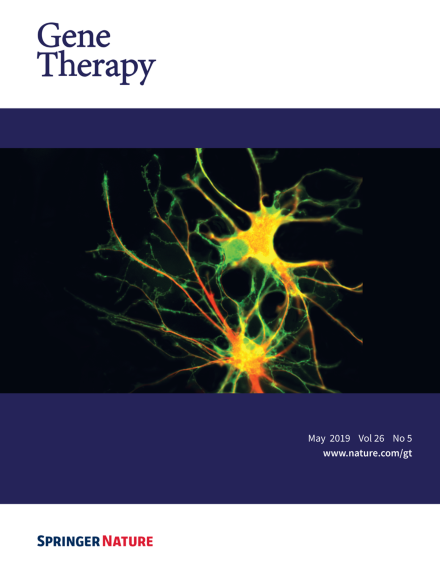
Astrocytes play a critical role in the on-going secondary damage in spinal cord injury, and an adeno-associated viral (AAV) vector that targets astrocytes could show benefit as a potential treatment. Robust, astrocyte-selective transgene expression by AAV vectors in the spinal cord was achieved by utilising a full-length glial fibrillary acidic protein (GFAP), or a truncated GfaABC1D promoter to drive destabilised yellow fluorescent protein (dYFP) transgene expression. The image shows the colocalisation (yellow) of dYFP to GFAP immunofluorescence within astrocytes in the rat spinal cord. See paper by Griffin et al. in this issue of Gene Therapy.