
Focus |
Collections
-
-
Focus |
 Science and Art
In this Focus issue, researchers from Sorbonne Université in Paris and the British Museum in London discuss the contribution of material scientists in understanding the techniques and materials used by painters, sculptors and other artists, and in developing effective strategies to preserve our heritage.
Image: Granger Historical Picture Archive/Alamy Stock Photo -
Focus |
 Mechanobiology
This focus issue brings together recent developments in mechanobiology with comments and research that highlight fundamental processes such as integrin-mediated cell adhesion in response to mechanical loads and also how biophysical cues can regulate stemness, matrix deposition and disease progression.
Image: Science History Images / Alamy Stock Photo -
Insight |
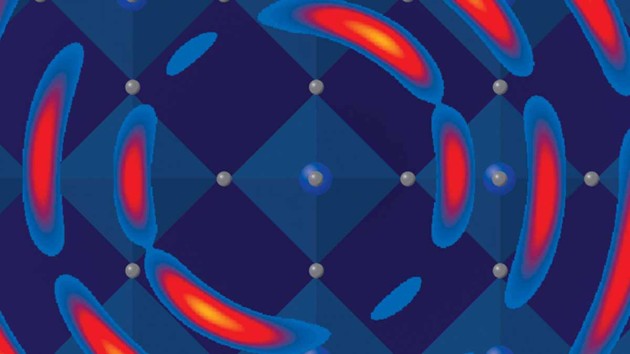 Quantum materials
This joint Nature Physics and Nature Materials Insight explores the physics of quantum materials, their synthesis and design, the control over their properties, and the functionality that emerges from these properties. Produced with the support of the Gordon & Betty Moore Foundation and the Simons Foundation.
Image: Hsieh lab -
Focus |
 Sustainable materials
To ensure the sustainable development of our planet, we need to consider the implications of the materials we use on the ecosystem and society. This Focus discusses strategies to assess the life-cycle environmental impact of materials and make the production of key commodities more sustainable.
Image: Getty Images/Cultura RF -
Focus |
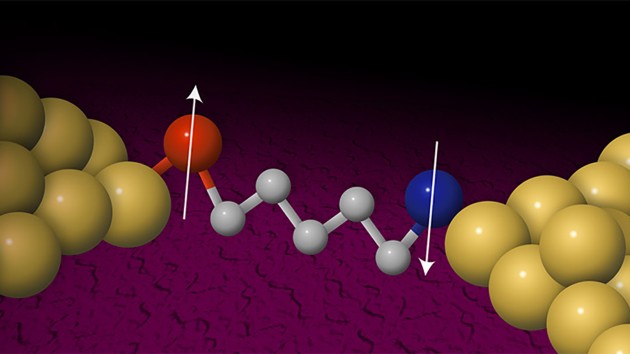 Molecular spintronics
Molecular spintronics may allow the development of nanoscale devices with improved performance or new functionalities. This Focus issue highlights its interdisciplinary nature at the intersection of organic spintronics, molecular magnetism and molecular quantum technologies.
-
Focus |
 Membrane materials for separations
Membrane materials offer many practical advantages for purification and separation applications. In this Focus issue we highlight the most promising new membrane materials that offer competitive performance capabilities, and discuss how to transfer such materials and processes to industry.
Image: 4X-image/E+/Getty -
Focus |
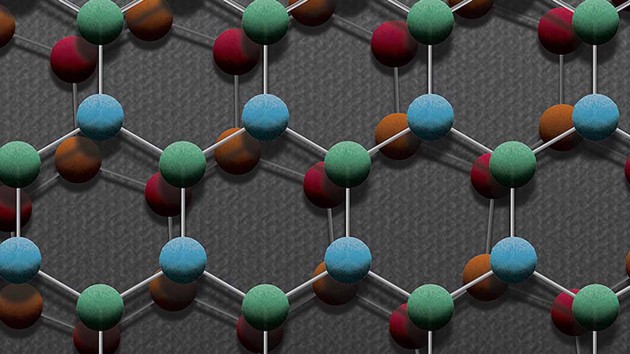 2D materials beyond graphene
Transition metal dichalcogenides and Xenes have been recently added to the family of 2D materials. This Focus issue highlights the intriguing fundamental properties that these 2D materials and their combination in van der Waals heterostructures exhibit, as well as potential applications.
-
Insight |
 Materials for sustainable energy
Energy demand from developed and developing countries continues to grow, together with concerns on the detrimental effects that an energy economy based on fossil fuels has on the environment. This Insight discusses the latest advances in materials science that may boost the transition to more sustainable energy systems.
Image: Tulsi Voralia, based on a concept by Paloma Liu -
Collection |
 Dynamic materials for tissue engineering
The tissue microenvironment is structurally and dynamically complex. Materials designed to interact with diseased or compromised tissue to induce regeneration, or to act as a scaffold for the production of tissues in the laboratory, thus need to be responsive to the microenvironment. For this, researchers leverage increased knowledge of the importance of the spatiotemporal integration of biomaterials with the tissue environment, as well as latest developments in high-resolution technologies in imaging and in materials synthesis and fabrication. Dynamically responsive materials for use in tissue engineering respond to external stimuli or have inherent properties that trigger the targeted, timed release of integral chemical constituents or of incorporated ligands for the controlled repair or remodelling of surrounding tissue. This collection highlights recent impactful advances, published in Nature-branded journals, in such dynamic biomaterials.
Image: Tulsi Voralia -
Focus |
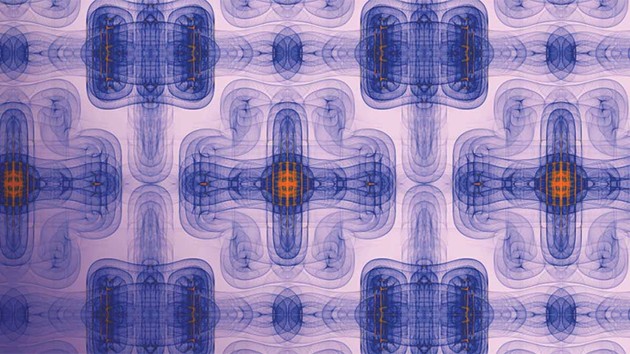 Topological semimetals
Dirac and Weyl topological semimetals have recently been realized. In this Focus we highlight the quantum phenomena at the macroscale that these materials allow to be studied, their possible technological use and the experimental challenges ahead.
-
Focus |
 Exciton–polariton devices
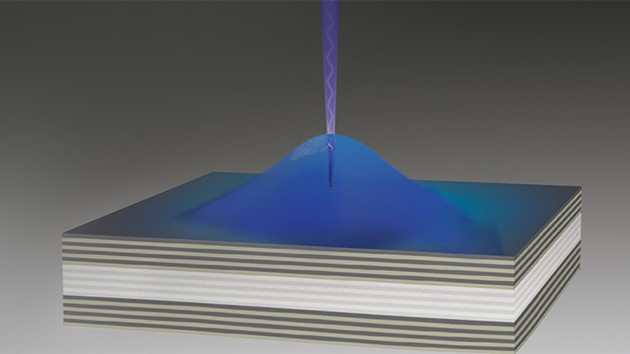
Since the proposal for lasing from a condensate of exciton–polaritons, the properties of these quasiparticles have been rigorously studied. This Focus explores the challenges towards the fabrication of practical devices as well as their potential for the demonstration of unique physical phenomena.
 Metal halide perovskites
