Thank you for visiting nature.com. You are using a browser version with limited support for CSS. To obtain the best experience, we recommend you use a more up to date browser (or turn off compatibility mode in Internet Explorer). In the meantime, to ensure continued support, we are displaying the site without styles and JavaScript.

Volume 24 Issue 9, September 2025
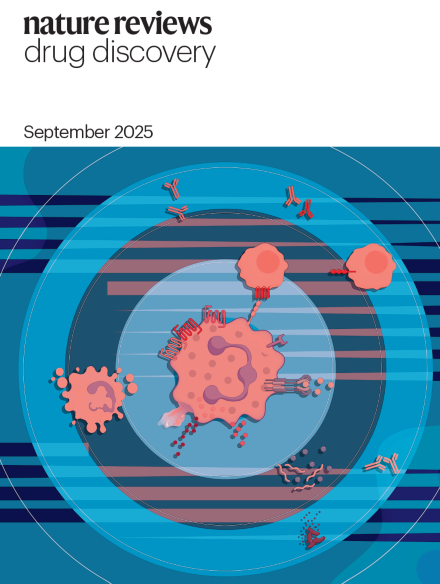
Targeting neutrophils in cancer p666.

Cover design: S. Harris

Comment

  • As biopharmaceutical companies face mounting pressure to accelerate development timelines and improve the speed and quality of regulatory submissions, many are actively exploring the potential of generative artificial intelligence (GenAI) to transform how regulatory work gets done. This article examines how leading organizations are beginning to apply GenAI to automate content creation, analyse complex data and streamline core regulatory activities — and the critical success factors for driving adoption at scale.

    • Jon Williams
    • Donna Boyce
    • Myrto Lee
    Comment

    Advertisement

Top of page ⤴

News & Analysis

Top of page ⤴

Research Highlights

Top of page ⤴

Reviews

  • Neutrophils are abundant in the tumour microenvironment and often correlate with poor prognosis. This Review explores neutrophil subtypes — including those with antitumour activity — their polarization potential and mechanisms influencing tumour progression. Therapeutic targets and signalling pathways are discussed, alongside clinical trials assessing neutrophil-targeted approaches on patient outcomes.

    • Jeff W. Kwak
    • A. McGarry Houghton
    Review Article
  • The gut microbiome is a key modulator of immunotherapy efficacy. This Review discusses clinical advances in microbiome profiling, recent trials of microbiome-based interventions and the challenges of translating these findings into the clinic. Future directions for optimizing microbiome-targeted therapies in oncology are outlined, including safety, efficacy and patient stratification. 

    • Arielle Elkrief
    • Reilly Pidgeon
    • Bertrand Routy
    Review Article
Top of page ⤴

Perspectives

  • New approach methodologies (NAMs) offer the promise of greater predictivity of potential safety risks of drug candidates, especially for newer types of therapeutics for which animal models alone have limited or no applicability for safety testing. This article identifies four categories of drug candidate for which NAMs are applicable and discusses progress in their use based on case studies from recent projects, as well as initiatives to promote the advancement and use of NAMs for more human-relevant safety assessment.

    • Mario Beilmann
    • Karissa Adkins
    • Terry van Vleet
    Perspective
Top of page ⤴

Search

Quick links