
Volcanic calderas
- Submission status
- Open
- Submission deadline
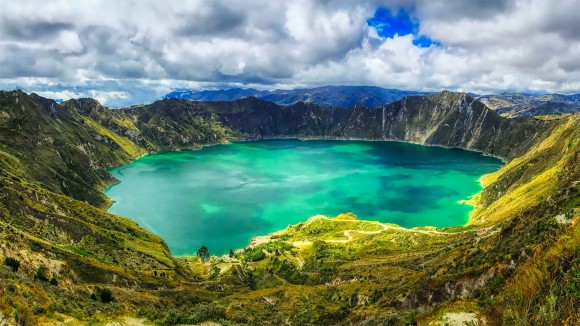
Caldera volcanic eruptions create geological hazards that affect many communities around the world. Geophysical, geochemical and remote sensing data have become essential for understanding the tectono-magmatic activity in modern active calderas and the complexity of their underlying systems. In addition, for calderas where geophysical and geochemical monitoring data are lacking, interdisciplinary studies of past caldera eruptions have improved understanding of the evolution of tectono-magmatic systems and allowed the scientific community to validate numerical models that can predict the potential for caldera-associated eruptions. Overall, the studies of volcanic calderas and the evolution of their magmatic systems provide insights for improving risk reduction and hazard management strategies in the communities surrounding them.
This cross-journal collection presents articles that advance our understanding of volcanic calderas and their associated risks and hazards. We welcome submissions from diverse disciplines such as seismology, geochemistry, petrology, numerical modelling and remote sensing, as well as advances in risk and hazard mitigation strategies.
Communications Earth and Environment is edited by both in-house professional editors and Editorial Board Members.
Nature Geoscience is edited by in-house professional editors.
Nature Communications is edited by in-house professional editors.
Scientific Reports is managed by in-house professional editors and edited by Editorial Board Members.
Our editors work closely together to ensure the quality of our published papers and consistency in author experience.
