
Hemorrhagic Fever Viruses
- Submission status
- Open
- Submission deadline

This Collection supports and amplifies research related to SDG3.
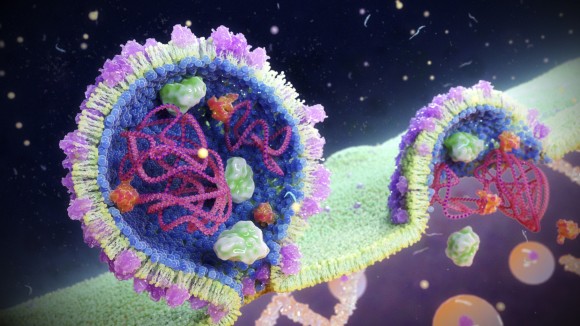
Viral hemorrhagic fever (VHF) viruses encompass some of the most deadly viruses known to man, and pose major public health threats throughout various parts of the world. Correspondingly, many of the viruses that fall into this group have to be handled under maximum biocontainment conditions (i.e. BSL4 or equivalent), and/or are among the priority infectious diseases currently considered to represent the greatest risk to public health by the WHO. VHF viruses include the filoviruses (e.g. Ebola and Marburg virus), a large number of arenaviruses (e.g. Lassa and Junín virus), the nairovirus Crimean-Congo Hemorrhagic Fever virus, hantaviruses (e.g. Hantaan virus), the phenuivirus Rift Valley fever virus, and the lesser-known peribunyavirus Ngari virus, as well as various flaviviruses (e.g. Omsk hemorrhagic fever virus, Kyasanur forest disease virus, Dengue virus, and Yellow fever virus).
Encouragingly, the last years have seen tremendous progress in our understanding of the biology of these viruses, and for some of these viruses this research has even resulted in countermeasures now being available for deployment during virus outbreaks. This collection invites original research on all aspects related to the study of viral hemorrhagic fever virus, including their molecular biology, virus-host interactions, pathogenesis, countermeasure development and testing, clinical aspects and virus ecology, as well as technical developments related to work on these viruses. This will be complemented by invited reviews on emerging topics regarding these viruses by experts in the field.
Editors
-
Thomas Hoenen, PhD
Friedrich-Loeffler-Institut, Germany
-
Allison Groseth, PhD
Friedrich-Loeffler-Institut, Germany
-
Lisa Oestereich, PhD
Bernard Nocht Institute for Tropical Medicine, Germany
Thomas Hoenen, PhD, Friedrich-Loeffler-Institut, Germany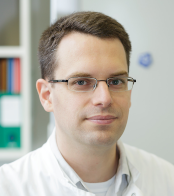
Thomas Hoenen is head of the Laboratory for Integrative Cell and Infection Biology at the Friedrich-Loeffler-Institut (FLI), as well as head of FLI’s biosafety level 4 (BSL4) laboratory. His main research interests are virus-host interactions of highly pathogenic viruses such as filoviruses (e.g. Ebola virus), with the goal to understand how proviral interactions contribute to the virus life cycle and could be leveraged as novel antiviral targets, and how virus-host interactions contribute to the outcome of infection. His main contributions to the field, which total over 100 peer-reviewed publications, were a detailed understanding of the nature und function of the viral replication factories of filoviruses, and the development of experimental systems that allow to model the complete life cycle of filoviruses without the need for a BSL4 laboratory. Dr. Hoenen obtained his PhD from the Philipps University in Marburg, Germany, in 2007, and subsequently worked as a PostDoc at the Philipps University, the Public Health Agency of Canada in Winnipeg, MB, Canada, and the National Institutes of Health in Hamilton, MT, USA, until joining the FLI in 2015. He has more than 20 years of experience working in BSL4 laboratories, and currently works together with Dr. Groseth and Dr. Oestereich on various hemorrhagic fever viruses as part of the newly founded Collaborative Research Center on Emerging Viruses, CRC 1648.
Allison Groseth, PhD, Friedrich-Loeffler-Institut, Germany
Allison Groseth is head of the Laboratory for Arenavirus Biology at the Friedrich-Loeffler-Institut (FLI). Her main research interest is the identification of aspects of virus biology and infection that contribute to the pathogenic potential of hemorrhagic fever viruses. Currently, her research is heavily focused on understanding the host response to infection with arenaviruses as well as the identification of host factors that support viral infection, both of which have the potential to reveal novel targets for antiviral development. Her main contributions to the field of hemorrhagic fever virus research have been the characterization of the roles of both the glycoproteins and robust viral RNA synthesis as pathogenicity factors for filoviruses, the identification of efficient monocyte infection as a key factor in highly pathogenic New World arenavirus infection, and the identification of novel mechanisms associated with the control of apoptosis regulation during arenavirus infection that not only lead to the generation of novel viral protein isoforms, but may have consequences for host response regulation. Dr. Groseth obtained her PhD from the University of Manitoba (Winnipeg, Canada), in 2006, and subsequently worked as a PostDoc at the Public Health Agency of Canada (Winnipeg, Canada), and the Philipps University Marburg (Marburg, Germany), before becoming a Research Fellow and later a Staff Scientist with the National Institutes of Health (Hamilton, MT, USA). She subsequently joined the FLI in 2015, first as a junior group leader, and then since 2020 as a laboratory head. She has more than 25 years of experience studying VHF pathogens and working in BSL4 laboratories around the world.
Lisa Oestereich, PhD, Bernard Nocht Institute for Tropical Medicine, Germany
Lisa Oestereich is leading the Junior Research Group Lassa Virus Immunology at the Bernhard Nocht Institute for Tropical Medicine (BNITM) and managing the BSL4 laboratory of the institute. Her research focuses on understanding the pathogenesis and immune responses induced during Lassa Virus infections in animal models and in humans. In different projects the group addresses major questions related to the virus-induced pathology in human Lassa Fever patients in Nigeria, the role of the immune system for pathophysiology and development of long-term immunity, virus persistence in humans and the natural host Mastomys natalensis as well as searching for novel drugs and treatment options. Her main contributions to the research field of hemorrhagic fever viruses have been the development of novel animal models for Arena- and Filoviruses, the identification of Favipiravir as a broad-spectrum antiviral drug against Bunya- and Filoviruses and the description of Lassa virus persistence and transmission in its natural reservoir host. Through collaborations with African partner institutions in Guinea and Nigeria she has contributed to the understanding of Ebola virus and Lassa virus persistence in human survivors and immune responses during acute disease and convalescence. Dr. Oestereich obtained her PhD from the University Bremen in collaboration with the BNITM and stayed for her PostDoc at the BNITM. Since 2019, she has been leading a Leibniz Junior Research Group and managing one of the BSL4 laboratories of the institute. She has more than 10 years of experience working with hemorrhagic fever viruses in BSL4 laboratories and field settings in Africa.
