Thank you for visiting nature.com. You are using a browser version with limited support for CSS. To obtain
the best experience, we recommend you use a more up to date browser (or turn off compatibility mode in
Internet Explorer). In the meantime, to ensure continued support, we are displaying the site without styles
and JavaScript.
Droughts are influenced by a combination of climatic, hydrological, and anthropogenic factors, including shifts in precipitation patterns, soil moisture levels, and land management practices. A comprehensive understanding of these drivers is critical for improving drought prediction, assessing impacts, and informing effective mitigation and adaptation strategies.
In this collection, we highlight research that examines the underlying causes and consequences of drought, with an emphasis on advancing predictive models and enhancing drought resilience. We include studies that utilize a range of methodologies, including observational data analysis, hydrological simulation, climate modeling, and machine learning techniques, to refine our understanding of drought dynamics and inform policy and decision-making.
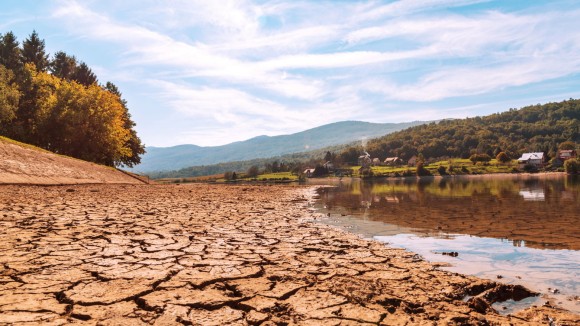
Rapid-onset droughts known as flash droughts can devastate ecosystems and agriculture. A new analysis shows that extreme heat considerably amplifies their severity and duration, posing severe compound risks to ecosystems and global food security.
Australia experiences meteorological droughts due to insufficient moisture transport and heavy precipitation, which are influenced by climate variability and land processes, and are expected to become longer and more frequent, according to a review of observational and model-based studies.
Flash droughts that are accompanied by extreme heat drive more severe and prolonged impacts on global ecosystems, according to analysis of global reanalysis data and satellite observations.
The record-breaking 2022–24 Amazon-drought was caused by prevailing atmospheric stability and extremely high temperatures driven by the transition from 2022–23 La Niña to 2023–24 El Niño, according to the Lagrangian moisture and heat uptake computation with database spanning 1994–2023.
Hydroclimatic variations significantly influenced the Indus Valley Civilization's rise and fall, with warmer, drier conditions during pre-Harappan to late-Harappan periods leading to human migration and settlement, according to analysis of paleoclimate and palaeohydrological simulations.
Glacier melt sustained water discharge from South America’s mountain basins during a recent severe drought, but summer runoff from glaciers could drop by 48% in future megadroughts, worsening water scarcity, according to analyses of past and projected events.
Correlations of positive and negative alpha-pinene adjust according to drought stress on plants, according to an analysis of atmospheric chemistry data from a tall-tower site in the Amazon rainforest.
Sudden seawater inflow during flow reversal at the Vise submarine karst spring in France forms a saltwater barrier that causes high hysteresis of the system and a prolonged duration of flow reversal, according to numerical simulations and time-series data.
Historical land use changes such as deforestation and crop expansion have increased the frequency, duration, and severity of droughts across more than half of the global land area since 1850, and more strongly in regions with greater activity, according to an analysis of climate model ensembles.
Drought impacts on green and blue water vary significantly across climate zones and vegetation types, with runoff generally more affected than evapotranspiration, according to analysis of evapotranspiration, runoff, and land cover datasets across diverse environmental conditions.
Nearly half of global vegetated areas are experiencing both greening and soil drying trends, mainly driven by vegetation transpiration, and the greening-driven soil drought will continue by 2100, according to an analysis of multi-source satellite products, reanalysis data, and Earth System Models.
North Atlantic sea surface temperature influences hydrology in the United Kingdom up to 1.5 years in advance via a teleconnection with the position of the North Atlantic Current, which can help with drought forecasting according to a statistical analysis of precipitation and streamflow indices.
During 1985–2018, over 15% of lakes experienced increasing drought frequency, with hotspots in the southern US and southeast Australia posing significant threats to water supplies, biodiversity, and ecological health, according to a global assessment of over 160,000 lakes using monthly lake area data.
An annually resolved 3476-year tree-ring record from the Tibetan Plateau reveals severe 20th century droughts and highlights the interplay between the Asian Monsoon and Westerlies. Droughts are often linked to the collapse of dynasties.
Nile’s river mega-dams can operate collaboratively to generate upstream sustainable hydropower and minimize downstream water deficit during drought events, according to an analysis that combines the water resources systems model and policy scenarios.
From 1981 to 2020, low-income regions experienced a faster increase in the frequency of compound drought-heatwaves events than high-income regions, and the increase is attributed to anthropogenic climate change, according to an analysis that uses climate models, drought index, and population data
Anthropogenic climate change is expected to significantly increase drought exposure for 1221 terrestrial vertebrates in the United States, with an average increase of 377% for annual drought and 579% for prolonged drought by 2050–2080, according to analysis of different climate scenarios to assess drought exposure across species and ecoregions.
An attribution analysis using observations, hydrological models and climate models suggests that both direct and lagged effects of climate warming contributed to Europe experiencing the highest observed water storage deficit in the satellite era during the widespread drought of 2022.
Speleothems from the Savanna region in Brazil documents the occurrence of an unprecedented long-term drought driven by anthropogenic forcing. Staring in the 1970´s the current drought is the most severe that has struck the region in the past 700 years.
Arid and short-vegetated regions face faster and more severe water stress and greater vulnerability to flash droughts than humid forests, according to an analysis of climate, leaf area index and gross primary productivity data over the period 2001-2020.
Carbon sink in young boreal forests is more vulnerable to drought than in mature forests due to the greater contribution and drought sensitivity of understorey relative to trees, according to carbon flux assessments of managed boreal forests in northern Sweden during the 2018 European summer drought.
Summer floods and droughts show a north-south dipole in East Asia centered near 30°N. Here, the authors show that the stratospheric Quasi-Biennial Oscillation plays an important role in this dipole and its prediction.
Extreme heat and drought typical of the end of the century could occur earlier and repeatedly over Europe, and are more likely when they coincide with a warm North Atlantic, according to 100 simulations with an Earth system model.
Steep river valleys in the Amazon lowlands exhibit more intense and frequent fog and low-level clouds in broader drought conditions and could contribute to forest ecosystems’ resilience to climate change, suggests an analysis of fog and low stratus frequency data.
The authors consider the future risks of warming and drying to water-sensitive anuran species. They show that increased aridity of anuran habitats and drought exposure under climate change, combined with warming, can substantially reduce anuran activity.
Limited comparative evidence exists on the impacts of climatic factors on internal migration. Here, using a harmonized census-based dataset, the authors find that drought and aridity substantially increase internal migration, with considerable heterogeneity across regions, age groups and education levels.
Building additional water infrastructure such as wells is a key strategy to mitigate the impacts of severe droughts, particularly in drylands. This study shows, however, that this infrastructure can lead to loss of resilience under climate change due to erosion of traditional practices.