Thank you for visiting nature.com. You are using a browser version with limited support for CSS. To obtain
the best experience, we recommend you use a more up to date browser (or turn off compatibility mode in
Internet Explorer). In the meantime, to ensure continued support, we are displaying the site without styles
and JavaScript.
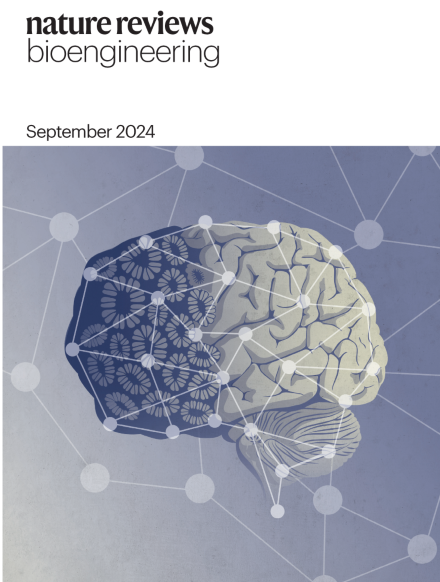
Human brain organoids can partly mimic the structure and function of the human brain and are being explored for the investigation of human brain development, biology and disease. With their increasing complexity and applications, ethical questions have arisen focused on how to classify, use and regulate these tissues. See Nathan A. Shlobin et al
Research on human brain organoids is progressing at speed. Therefore, an ethical and legal framework needs to be put in place to ensure their responsible use, while not constraining innovation.
Many scientific breakthroughs occur when researchers with different expertise come together to work collaboratively, an effort welcomed by the US National Institutes of Health (NIH). This Comment provides the perspective of two program officers from the National Institute of Diabetes, Digestive and Kidney Diseases (NIDDK) to help researchers with collaborative projects apply for NIH funding.
New insights into active versus passive nanoparticle tumour entry and exit mechanisms are enriching the understanding of tumour-targeted drug delivery. Here we align the principles of enhanced permeability and retention (EPR) and active transport and retention (ATR), and outline how their mechanistic features can be employed to improve the performance and clinical impact of cancer nanomedicines.
The Clinical Trials Transformation Initiative (CTTI) provides recommendations to unlock the full potential of digital health trials, including tools to develop digital biomarkers or endpoints, apply remote technology and interact with health authorities.
Cell engineering by synthetic biology typically relies on synthetic gene constructs that compete with the host cell for intracellular resources. This Review discusses how such resource competition can impact mammalian cell engineering and outlines strategies for how to mitigate cellular burden using circuit-centric and host-centric approaches.
Polysaccharides possess immune-activating or immune-regulatory functions and can thus be applied as immunomodulators. This Review discusses engineering approaches for the design of polysaccharides for vaccine, immunoadjuvant, immune-modulation and drug-delivery applications.
Photodynamic therapy allows the local destruction of diseased cells and tissues by light. This Review examines how photodynamic therapy and priming can be engineered for the treatment of localized, regional and distant cancer, from photosensitizer engineering to photonic devices and clinical translation.
Cells can be engineered to modify their function and behaviour for therapeutic and diagnostic applications. This Review discusses biological, genetic and materials-based engineering approaches for both mammalian and bacterial cells, outlining key design strategies and applications of engineered cell products.
Human brain organoids can partly mimic features of the human brain. This Perspective discusses key ethical considerations in human brain organoid research and introduces an ethical framework of mindful innovation to conceptualize and guide ethical considerations of human brain organoid research.