Thank you for visiting nature.com. You are using a browser version with limited support for CSS. To obtain
the best experience, we recommend you use a more up to date browser (or turn off compatibility mode in
Internet Explorer). In the meantime, to ensure continued support, we are displaying the site without styles
and JavaScript.
This study reports that the tree bark microbial community actively modulates fluxes of climate-active gases and volatile organic compounds, and may mediate global atmospheric gas cycling.
This study shows that microgravity modulates phage–host co-evolution and alters their mutational landscapes, facilitating adaptation to such a distinct environmental niche.
A study by Jin et al. shows that oral–gut translocation of prtC+ bacteria is implicated in the well-known link between gut microbiome dysbiosis and advanced liver disease in humans.
This Genome Watch discusses the great biosynthetic capacity that has been identified in marine environmental and host-associated microbiomes, along with approaches to facilitate research into these diverse and resource-rich microbial communities.
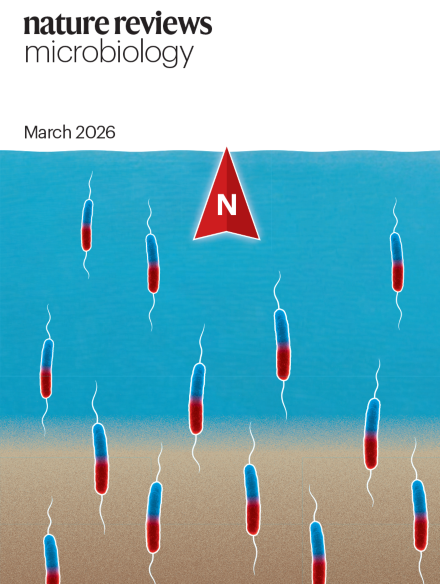
In this Review, Schüler and colleagues summarize our current knowledge of magnetosome formation and organization within the cell, and they explore their function, diversity and potential applications.
In this Review, Weingarth and colleagues discuss both recently discovered compounds and established envelope-targeting antibiotics, including compounds that target Gram-positive bacteria, more complex Gram-negative bacteria and mycobacterial pathogens, with a particular focus on their drug–target interactions.
Fusobacterium nucleatum is a commensal microorganism and opportunistic pathogen, with a pathogenic role in periodontal disease, inflammatory bowel disease and various cancers, most notably colorectal cancer. This Review discusses F. nucleatum and its ecological niches and virulence factors, links with disease, oncogenic mechanisms, and emerging diagnostic approaches and therapeutic strategies.
Clostridioides difficile infection is challenging to diagnose and treat and is associated with considerable mortality, morbidity and economic costs worldwide. In this Review, Chilton et al. discuss changes in global epidemiology, breakthroughs in pathogenesis and antibiotic resistance, the role of microbiota dysbiosis and the potential for microbiota-based therapeutics for Clostridioides difficile infection.