Thank you for visiting nature.com. You are using a browser version with limited support for CSS. To obtain
the best experience, we recommend you use a more up to date browser (or turn off compatibility mode in
Internet Explorer). In the meantime, to ensure continued support, we are displaying the site without styles
and JavaScript.
Advances in spatial omics, such as transcriptomics and proteomics, have provided vital insights into cartilage microenvironments, revealing cellular diversity, zonal organization and links between cartilage structure and function. Analysing cartilage using spatial omics could deepen the understanding of diseases such as osteoarthritis and guide the development of targeted, disease-modifying therapies.
Neutrophil extracellular traps might promote intraocular infiltration of effector CD4+ T cells by inducing endothelial cell senescence in autoimmune uveitis.
Two studies provide insights into the function of TASL in the pathogenesis of systemic lupus erythematosus and highlight the therapeutic potential of targeting this protein.
Findings show that the resolution of joint swelling in response to treatment with TNF inhibitors varies depending on the location of the joint in psoriatic arthritis.
In a phase III trial, the addition of obinutuzumab to standard therapy for lupus nephritis led to an increase in the proportion of patients with a complete renal response.
The first expert consensus recommendations for the treatment and diagnosis of adult sterile bone inflammation have been developed, in which the term ‘chronic non-bacterial osteitis’ is proposed as a disease definition. Will these recommendations pave the way for better diagnosis, management and treatment of this rare disease?
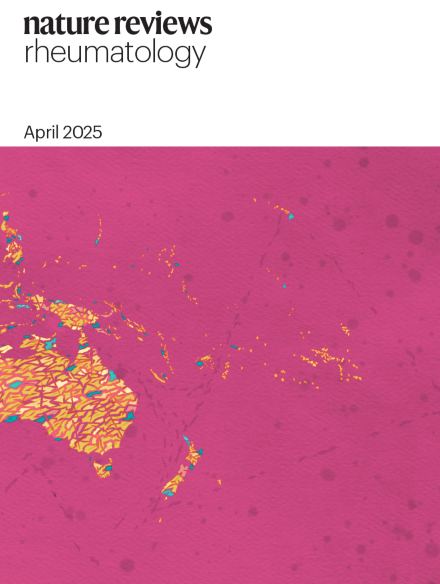
In this Review, the authors provide an overview of gout and hyperuricaemia in Indigenous peoples of the Pacific region, including discussion of genetic, clinical and cultural aspects and how to address the inequitable health outcomes and suboptimal gout management in these populations.
Stem and progenitor cells that contribute to tissue repair reside within various niches in the synovial joints of adult mammals. Understanding of the origins, identities and functions of these cells will guide the development of pro-regenerative therapeutic strategies.
This Review provides an update on the role of innate and adaptive immune cells in the pathogenesis of osteoarthritis. The authors discuss emerging therapeutics that target the immune system in osteoarthritis and the challenges that limit the movement towards personalized medicine.
In this Perspective, the authors propose that patients with psoriatic arthritis and an inadequate response to therapy can be classified into two distinct subgroups, characterized by persistent inflammatory and non-inflammatory phenotypes, and discuss potential mechanisms underlying these phenotypes, as well as considerations for treatment strategies and trial design.