- NEWS FEATURE
- Correction 05 February 2025
The new science of menopause: these emerging therapies could change women’s health
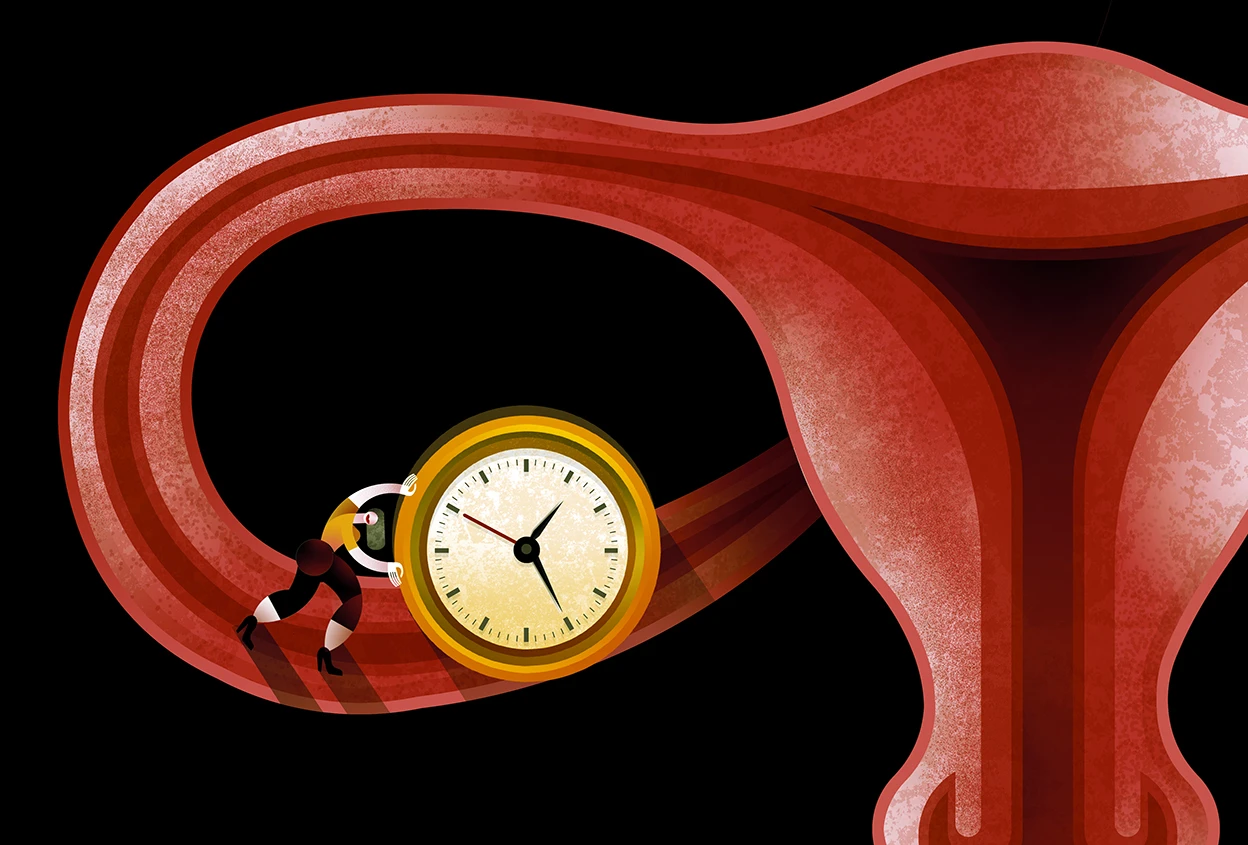
Illustration: Maria Corte
Access options
Access Nature and 54 other Nature Portfolio journals
Get Nature+, our best-value online-access subscription
$32.99 / 30 days
cancel any time
Subscribe to this journal
Receive 51 print issues and online access
$199.00 per year
only $3.90 per issue
Rent or buy this article
Prices vary by article type
from$1.95
to$39.95
Prices may be subject to local taxes which are calculated during checkout
Nature 637, 782-784 (2025)
doi: https://doi.org/10.1038/d41586-025-00069-4
Updates & Corrections
-
Correction 05 February 2025: An earlier version of this News feature misdescribed the role of ARPA-H in the Biden administration’s White House Initiative on women’s health research.
References
Rossouw, J. E. et al. JAMA 288, 321–333 (2002).
Manson, J. E. et al. JAMA 331, 1748–1760 (2024).
Taylor. S. & Davis, S. R. Lancet Diabetes Endocrinol. 13, 69–74 (2025).
Dou, X. et al. Aging Cell 16, 825–836 (2017).
Johnson, J. et al. Am. J. Obstet. Gynecol. 230, 426–426 (2024).
Allen, J. T. et al. Menopause 30, 1002–1005 (2023).
Yang, L. & Toriola, A. T. JAMA Health Forum 5, e243128 (2024).
 Menopause research is globally underfunded. It’s time to change that
 How menopause reshapes the brain
 Women’s health research lacks funding — these charts show how
 Menopausal chimpanzees deepen the mystery of why women stop reproducing