Thank you for visiting nature.com. You are using a browser version with limited support for CSS. To obtain
the best experience, we recommend you use a more up to date browser (or turn off compatibility mode in
Internet Explorer). In the meantime, to ensure continued support, we are displaying the site without styles
and JavaScript.
Chronic pain could be eased by uncoupling the sensory and emotional experiences
Researchers identify the neurons involved in the emotional distress associated with pain, and design a genetic approach that could soothe suffering without opioid drugs.
Monique L. Smith is in the Department of Neurobiology, School of Biological Sciences, and the Department of Neurosciences, School of Medicine, University of California, San Diego, La Jolla, California 92093 USA.
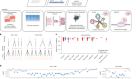
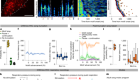
Opioid drugs are unmatched in their efficacy in managing pain. However, their clinical use is severely constrained by serious side effects: individuals can develop tolerance (requiring ever-higher doses), physical dependence, constipation, opioid-use disorder and life-threatening respiratory depression. To treat pain more safely, substantial efforts have been made to modify the chemical structures of opioids and discover druggable targets. However, pain management has only slightly improved in the past few decades, and great challenges remain in easing the suffering caused by chronic pain. Writing in Nature, Oswell et al.1 investigate alternative paths to alleviate the negative emotional experience of pain while keeping sensory processing intact.

 Read the paper: Mimicking opioid analgesia in cortical pain circuits
 Placebo effect involves unexpected brain regions
 Neural pathways for reward and relief promote fentanyl addiction