
Abstract
Regular exercise provides a variety of health benefits, including enhanced sleep quality and reduced symptoms of sleep disorders. The complex interaction between sleep and physical activity involves various physiological and psychological processes. Exercise has a positive effect on sleep, but factors such as age, sex, and fitness level, and specific exercise aspects such as intensity, duration, and timing play crucial roles. Understanding these dynamic interactions is essential to gaining insight into how exercise benefits sleep in both healthy individuals and those with sleep disorders. Given the positive effects of moderate exercise on sleep and its potential as a therapeutic option, this narrative review highlights the extensive benefits of exercise on sleep and underscores its important role in overall health and wellness.
Introduction
Exercise, structured physical activity, is essential for maintaining physical fitness, health, and wellness1. Encompassing aerobic, anaerobic, resistance training, high-intensity interval training, and stretching, exercise improves cardiovascular health, muscle strength, and injury prevention2. The benefits of exercise extend beyond physical fitness, positively influencing weight management, mental health, and overall quality of life3,4. Additionally, exercise has an important role in sleep regulation, with research consistently demonstrating its positive effects on sleep quality, duration, and disorders like insomnia and sleep apnea5,6,7.
Sleep quality is a primary indicator of overall sleep health, with disturbances often manifested through troubles initiating sleep, maintaining sleep, or experiencing frequent awakenings8,9. Insomnia, the most common sleep disorder, is marked by persistent dissatisfaction with sleep duration or quality, including challenges in falling asleep, multiple awakenings, and premature awakenings10. Prevalence rates of insomnia generally range from 10% to 30% but can reach 50% to 60% in certain populations11,12,13. This condition is notably more widespread among older adults, women, and those with physical or mental health issues. The consequences of inadequate sleep quality extend beyond diminished cognitive functions, including attention and memory, and adversely impact physical health, social interactions, and psychological well-being14,15.
Engaging in exercise enhances sleep quality through multiple mechanisms. It boosts melatonin production, which is essential for regulating sleep cycles, facilitates faster sleep onset, and improves sleep quality16. Research indeed suggests that while exercise can influence melatonin rhythms, its effects are highly dependent on factors such as exercise timing, intensity, and the presence of other zeitgebers, like light exposure and food intake. For instance, evening exercise has been shown to delay or suppress melatonin release, which may affect sleep onset and quality17,18. Exercise also plays a crucial role in reducing stress, which is a common barrier to initiating and maintaining sleep. Enhanced mood from regular exercise generates a positive cycle, encouraging continued exercise due to elevated feelings of well-being and reduced negative emotions19,20. Finally, exercise contributes to regulating body temperature, which is also crucial for sleep initiation. The post-exercise body temperature reduction promotes sleepiness, making it easier to fall asleep21.
Extensive research emphasizes a positive association between exercise and better sleep, with consistent exercise not only enhancing sleep quality but also increasing sleep duration22,23,24,25. Female adults with insomnia (<6.5 h habitual sleep duration) who commit to at least half an hour of daily exercise gain ~15 additional minutes of sleep compared with those who do not exercise26. Exercise is particularly beneficial for addressing sleep challenges such as insomnia, excessive daytime sleepiness, and sleep apnea24,26,27. Insomnia patients engaged in moderate-intensity aerobic exercise for 30 min 3 times weekly for 8 weeks exhibit improved sleep quality26,28.
This review focuses on the various benefits of exercise, its impact on sleep, and its relevance to sleep-related issues, highlighting the importance of exercise for promoting holistic health and well-being.
Exercise and its benefits
Exercise is a distinct subset of physical activity. Unlike other activities that expend energy, exercise is well-planned and structured, and incorporates frequency, intensity, and duration to achieve specific health benefits29. The main objective of exercise is to improve physical fitness, overall health, and well-being30. Exercise is beneficial for ameliorating the effects of aging, promoting muscle and cardiovascular development, enhancing weight loss or maintenance, boosting athletic skills, and encouraging recreation31. In general, there are 2 main types of exercise: aerobic exercise induces oxygen utilization by large muscle groups and strengthens cardiovascular function32,33, whereas anaerobic exercise, such as weight training and sprinting, primarily promotes muscle mass and strength33. Stretching exercises primarily focus on maintaining or improving the range of motion. While they can contribute to overall mobility, the evidence of their role in injury prevention is mixed and varies depending on the context, such as the type of activity and individual differences33.
Exercise may be classified as dynamic or static. Dynamic exercise, which involves joint movement, can have long-term benefits, such as lowering diastolic blood pressure and improving blood flow. In contrast, static exercise, which involves muscle activation without movement, can acutely increase systolic blood pressure during the exercise but may also offer long-term strength benefits34.
Weight and health regulation
The benefits of exercise have been recognized since ancient times and are broadly acknowledged. (Fig. 1). Exercise helps prevent excessive weight gain and aids in maintaining weight loss35. Engaging in physical activity burns calories, whereas weight gain occurs when calorie expenditure is lower than calorie intake36. Surplus energy is stored as fat and may lead to obesity due to excessive fat accumulation. Exercise enhances levels of high-density lipoprotein, or ‘good’ cholesterol, and lowers levels of harmful triglycerides37. This improvement in health markers significantly reduces the risk of developing cardiovascular diseases, depression, hypertension, diabetes, and other health issues38,39,40.
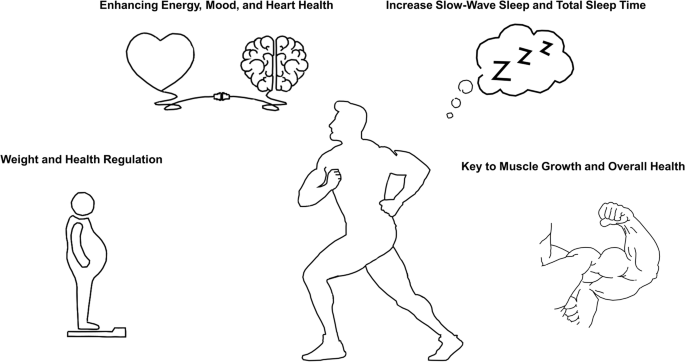
Exercise is widely recognized to regulate weight and health, enhance energy and mood, and improve sleep and heart health. It is key to muscle growth and overall well-being.
Enhancing energy, mood, and heart health
Regular exercise enhances muscle strength and boosts endurance41. It improves cardiovascular efficiency by facilitating the delivery of oxygen and nutrients to tissues, which provides more energy for daily tasks. Exercise and physical activity can also provide enjoyment, offering opportunities to relax, enjoy the outdoors, or engage in activities that bring joy, thereby promoting relaxation and reducing stress and tension42,43. Regular exercise and physical activity support growth and development, providing numerous benefits for physical, mental, and psychosocial well-being, and significantly enhancing overall health44. Furthermore, regular exercise decreases the resting heart rate and speeds up recovery after exertion, leading to a reduced risk of cardiovascular diseases. It increases capillary density in the heart, blood volume, and red blood cell count, and enhances both cardiac output and stroke volume45.
Key to muscle growth and overall health
Muscle hypertrophy improves ATP and enzyme efficiency and is characterized by increased muscle cell size and volume, often involves growth in type II (fast-twitch) fibers, which generally have lower mitochondrial function and oxidative capacity compared to type I (slow-twitch) fibers. While hypertrophy may improve strength and power, its effects on oxygen utilization and mitochondrial function are context-dependent and may not always result in enhanced oxidative capacity. It also increases myoglobin storage, which is crucial for oxygen transport in muscles46. Exercise also leads to enhanced synovial fluid production, improving joint mobility, bone density, ligament strength, and cartilage health47. It elevates hormone levels and increases the number of hormone receptors in cells, which enhances the metabolic rate, regulates blood sugar levels, and improves insulin sensitivity with weight training48. Additionally, exercise plays a crucial role in mental health by enhancing neural efficiency, promoting new brain cell growth, and improving brain oxygenation and waste removal49. Insufficient physical activity is inextricably linked to chronic illnesses such as heart disease, cancer, and diabetes, which are leading causes of mortality worldwide, highlighting the crucial role of exercise in promoting global health and preventing diseases50.
Exercise and sleep
A growing body of research suggests that increasing exercise is beneficial for improving mood, preventing pain, reducing weight, and boosting the quality of sleep in insomnia patients5,36,49,51. Although evidence shows that exercise affects sleep (Table 1), many aspects of these effects remain unclear. Notably, sleep loss is clearly well-correlated with exercise-induced injuries52. This suggests that moderate exercise habits and good sleep hygiene could be mutually beneficial. The impact of exercise on sleep is influenced by various elements, including personal attributes and the specifics of the exercise regimen. Personal attributes include factors such as age, sex, level of fitness, body mass index (BMI), and sleep patterns, while the exercise regimen details include such factors as acute or consistent exercise, aerobic or anaerobic, as well as intensity, duration, setting (indoors or outdoors, in warm or cool conditions), and timing of the exercise. These factors can have various effects on sleep53,54,55,56.
Impact of acute, regular exercise on sleep
Acute exercise marginally affects sleep architecture by increasing slow wave sleep (SWS), delaying the onset of rapid eye movement (REM) sleep, and reducing the total amount of REM sleep53,54,56. Exercising 4–8 h before bedtime reduces the sleep onset latency and wakefulness after sleep onset. Exercising more than 8 h before or less than 4 hours before bedtime, however, may have negative effects53,55,56. The negative findings, particularly regarding evening exercise, may not be entirely reliable, however, as the studies often involved sedentary women or were measured after extreme physical exertion, such as long-distance races, where exercise-induced stress may have significantly contributed to the disturbed sleep57,58. Contrary to common beliefs, evidence suggests that moderate and low-intensity exercising near bedtime is less likely to disrupt sleep in children and young adults who typically sleep well59,60. Objective measurements like polysomnography have demonstrated an increase in NREM sleep percentage after vigorous or moderate late-night exercise61,62.
Regular exercise offers a viable non-pharmacological approach to enhance sleep quality63. Consistent exercise is associated with deeper SWS, longer total sleep time, and reductions in REM sleep, sleep onset latency, and wakefulness after sleep onset among good sleepers53. These findings are supported by the results of a 3-week study involving 51 adolescents with a balanced sex distribution who engaged in 30 minutes of moderate-intensity exercise every weekday morning and exhibited enhanced sleep duration and efficiency, reduced sleep onset latency, and extended REM sleep latency compared with a non-exercising control group64. Furthermore, participants noted enhancements in their perceived quality of sleep, mood, and focus during the day. Additional research suggests that adolescents who are more physically active experience longer durations of sleep, less wakefulness after sleep onset, and greater sleep efficiency65,66. Over the last decade, researchers have explored the impact of regular exercise on older adults and individuals with sleep issues, revealing moderate improvements in sleep quality, latency, and reduced dependency on sleep medications67,68,69,70,71. Among the behavioral intervention trials for insomnia examined, only a few utilized objective measurements like polysomnography. In one such study, older adults with sleep issues following a 12-month exercise program experienced notable enhancements in sleep quality; a briefer 16-week regimen, however, only boosted subjective measures of sleep quality without affecting objective sleep metrics68,70. Research validates the dose-dependent effect of physical activity on the subjective quality of sleep among postmenopausal women72. Moreover, basic animal research suggests that chronic aerobic exercise significantly reduces fragmented sleep and enhances slow-wave activity during sleep, with effects lasting beyond the exercise period, indicating lasting benefits of exercise on the central nervous system. There remains a growing demand for in-depth research to better understand how exercise specifically affects sleep, taking into account both its direct effects and indirect factors such as the impact of environmental lighting, changes in diet, emotional state, influence of medications, and circadian rhythms. Stress also affects sleep73; exercise can reduce stress, which may in turn improve sleep. A comprehensive approach to studying the effects of exercise on sleep is essential due to the wide-ranging effects of exercise on various health aspects, including body composition, metabolic rate, heart health, blood sugar control, emotional well-being, and immune system function54,74.
Exercise, circadian rhythms, and sleep
The influence of exercise on human circadian rhythms is complex, affecting key physiological processes, sleep quality, and overall health. Consistent physical activity functions as a strong non-photic zeitgeber, assisting in the stabilization and alignment of circadian rhythms, thereby alleviating negative impacts from circadian disruptions. Exercise is a critical non-photic signal that modulates circadian rhythms, particularly through its interaction with the suprachiasmatic nucleus (SCN), the brain’s central circadian regulator75. It enhances the amplitude of circadian rhythms, improving the synchronization of physiological functions to external environmental cues75. Short-term evening exercise may delay the release of melatonin and raise core body temperature, but it has minimal effect on sleep quality17. In contrast, regular morning exercise has been linked to lower cortisol levels and better sleep quality over time17.
Exercise, body temperature, and sleep
Numerous studies have established a strong association between sleep and body temperature76,77, revealing that a 0.5–1 °C reduction in body temperature facilitates sleep onset, whereas a ~1.5–2.5 °C increase in body temperature can delay sleep onset78,79,80. Specifically, a decrease in temperature within the brain’s pre-optic area is thought to initiate sleep81. Exercise influences body temperature both during and after exercise, another pathway by which exercise could impact sleep. Exercise increases core, skin, and brain temperatures, which fluctuate based on the intensity and duration of the exercise and on environmental factors such as ambient temperature and humidity82,83. Cessation of exercise may thus dysregulate body temperature80, affecting sleep similarly to passive temperature changes. Acute exposure to heat just before sleep reportedly reduces total sleep time and SWS, often with a concurrent reduction in REM sleep82. On the other hand, warm water immersion, leading to a temperature increase of 1.5–2.5 °C, reduces sleep onset latency and boosts SWS the following night78,79. Running in warm conditions by wearing extra clothing as opposed to cool conditions specifically increased SWS through body cooling post-exercise84. Following the initial hyperthermia, the body activates thermoregulatory mechanisms like peripheral vasodilation to dissipate heat. The resulting temperature gradient between the core and skin surfaces plays a key role in sleep initiation85,86. A swift drop in the core body temperature after heat exposure facilitates sleep onset and promotes deeper sleep stages76,87. Consistent exercise, 1 h 3 times a week, promotes a steadier decline in body temperature, further improving sleep quality87.
Exercise, endocrine function, and sleep
Physical activity also impacts key hormonal systems, including the hypothalamic-pituitary-adrenal axis, the gonadal and somatotropic axes, and the sympathetic nervous system (SNS) axis. Changes in metabolism and hormone levels due to exercise significantly alter central neurotransmitters and immune system functions. While asleep, hypothalamic–pituitary–adrenal and SNS activities diminish, resulting in lower plasma cortisol, epinephrine, and norepinephrine levels, and a significant rise in growth hormone, prolactin, and melatonin levels88,89. Additionally, there is a notable rise in plasma thyroid-stimulating hormone in the evening and upon falling asleep, with levels declining towards the end of the sleep period90. Daytime exercise is reported to increase91,92, decrease93,94, or have no effect on nocturnal growth hormone levels92,93. Kern and colleagues92 reported that long-duration, moderate-intensity exercise during the day led to decreased growth hormone secretion and increased cortisol secretion during the first half of the night, and increased growth hormone levels and a smaller increase in cortisol secretion during the second half of the night. Although the total growth hormone levels remain unchanged, resistance exercise alters the secretion patterns by decreasing the burst mass and amplitude while increasing the frequency of bursts95. The effect of exercise on melatonin levels varies and is influenced by factors such as light exposure, timing of exercise, intensity, sex, and age, subsequently affecting sleep indirectly96,97.
Exercise, cardiac and autonomic functions, and sleep
Sleep is characterized by significant circadian fluctuations in heart rate and blood pressure due to reduced sympathetic activity and enhanced parasympathetic activity, particularly in SWS98. Heart rate variability provides a noninvasive window into autonomic nervous system function. This measurement is widely used to assess changes across sleep stages and to explore how sleep disorders such as insomnia and sleep-disordered breathing affect sleep and daytime functioning99. Chronic sleep deprivation disrupts these rhythms, leading to persistent SNS dominance, which results in a higher heart rate, elevated blood pressure, and an increased risk of cardiovascular and metabolic diseases99,100,101. Individuals with chronic insomnia exhibit an increased heart rate and decreased heart rate variability before sleep onset and in stage-2 SWS compared with controls, with minimal differences observed in stage-3 SWS. These findings indicate a key role of autonomic hyperarousal in primary insomnia102. Exercise activates the SNS103, and studies performed immediately after exercise demonstrate an increased heart rate due to reduced parasympathetic activity and heightened sympathetic activity104,105. This sympathovagal balance gradually normalizes within 24 hours post-exercise104. Based on meta-analyses, regular exercise enhances vagal modulation, leading to a reduced heart rate106.
Daytime exercise is associated with a higher heart rate during sleep57,61,107,108, while moderate to intense exercise, such as running a marathon, results in lower nocturnal heart rate variability, reflecting reduced parasympathetic activity108. Late-day exercise, on the other hand, has varied effects on heart rate variability during sleep, with some studies noting no change or changes only at the start of the night109,110, suggesting that early sleep heart rate increases may be due to minimal decreases in vagal activity and a rise in sympathetic activity61. Remarkably, 2 months of intensive training increases vagal activity and decreases sympathetic activity during sleep among sedentary individuals103, thereby enhancing vagal modulation, which is linked to a lower risk of cardiovascular events111. Conversely, overtraining leads to diminished parasympathetic activity and heightened sympathetic activity during sleep. This is accompanied by reduced heart rate variability, which, in patients with chronic fatigue syndrome, leads to poor sleep quality103,112,113. Definitive proof that alterations in heart rate and autonomic activity directly enhance sleep quality and quantity, however, is lacking. Research suggests that cardiac sympathetic activity remains relatively constant throughout SWS-REM cycles114 and that sleep quality is not adversely affected by increased exercise intensity or duration despite significant heart rate and heart rate variability changes110.
Exercise, immune-inflammatory response, and sleep
Sleep and the circadian rhythm are crucial in regulating immune functions, with evidence of a bidirectional relationship between sleep and the immune system96,115. Studies indicate that in the early stages of nighttime sleep, there is an increase in undifferentiated naive T cells and pro-inflammatory cytokines, including interleukin (IL)-6, tumor necrosis factor-alpha, and IL-12. During the day, natural killer cell activity and the secretion of anti-inflammatory cytokines, like IL-10, are increased. Sleep deprivation is associated with elevated cortisol levels and reduced levels of testosterone and growth hormone116, suggesting the potential protective role of exercise for those lacking sleep. There is growing evidence that exercise can mitigate some of the negative effects of sleep deprivation, particularly in relation to metabolic health, although it may not fully offset other detrimental impacts, such as mood disturbances117,118,119. Further studies are needed to examine this possibility as well as how the anti-inflammatory effects of exercise may counteract immunoinflammatory responses triggered by sleep deprivation or restriction.
Exercise, metabolic functions, and sleep
Over the past 4 decades, considerable attention has been focused on how sleep affects endocrine and metabolic functions, particularly the relationship between sleep deprivation, diabetes, and obesity120,121. How exercise influences metabolic functions during sleep, however, is still unclear116. Exercise may induce alterations in growth hormone and cortisol secretion, as mentioned above, potentially affecting glucose regulation. These alterations could result in increased glucose use during REM sleep and elevated glucose levels in the evening, potentially aligning with a reduction in insulin sensitivity122. There is a clear need for further research into the specific effects of exercise on metabolic functions and hormone secretion patterns during sleep.
Exercise, mood, and sleep
Beyond physiological adjustments, it is widely recognized that exercise enhances mood, significantly contributing to improved sleep quality123,124,125. Furthermore, sleep disorders often correlate with a higher risk of anxiety and depression126. Engaging in regular exercise is linked to reduced anxiety and its physiological manifestations, as well as a lower incidence of depression, thereby boosting the mental health of broad populations127. Additionally, consistent exercise decreases REM sleep, exerting a considerable antidepressant effect over time128. The antidepressant properties of exercise are attributed to increased levels of brain-derived neurotrophic factor and, indirectly, to better sleep quality116,123,124,127. The connections between immediate and long-term exercise effects and changes in sleep patterns require further investigation. In summary, various interlinked mechanisms may underlie the effects of exercise on sleep quality. Future studies are needed to investigate the impact of exercise on sleep duration and examine how the interactions influence SWS and REM sleep.
Exercise and sleep disorders
Sleep disorders, including insomnia, sleep apnea, restless leg syndrome (RLS), and hypersomnia, can significantly impact sleep quality and, consequently, athletic performance. RLS, characterized by an irresistible urge to move the limbs accompanied by discomfort, tends to worsen during rest and improve with activity, particularly in the evening or at night129. This condition is also associated with periodic leg movements during sleep129. A higher prevalence of RLS is observed among marathon runners compared to the general population130. Aerobic exercise effectively improves symptoms and sleep quality in patients with RLS and uremic RLS131,132,133, suggesting that exercise may offer potential benefits for a variety of sleep disorders (Table 2).
Exercise and insomnia
In many countries, 1 in 4 adults is affected by insomnia, 10% of whom suffer from severe symptoms134. Emotional stress from exercise competition and performance can potentially disrupt sleep, possibly leading to insomnia. This condition could then negatively affect an individual’s ability to exercise and perform well. For individuals struggling with insomnia, however, engaging in regular exercise is often recommended as a strategy to improve sleep quality5,26. Sleep quality more significantly influences aerobic exercise the following day than exercise affects sleep, especially among those with initially shorter total sleep durations26,135. This suggests that improving sleep could enhance exercise engagement, presenting a topic that warrants further exploration.
Common recommendations for treating insomnia include exercise and cognitive behavioral therapy, yet cognitive behavioral therapy for insomnia (CBT-I) is considered to be the first-line treatment for insomnia136,137. One study investigating the epidemiological impact of an intensive lifestyle modification program, including sports and stress management for 10 h weekly over 4 weeks in 2624 adults with insomnia reported a 64% reduction in insomnia symptoms138. Participants who maintained their coffee/tea consumption over the 4 weeks were more prone to sleep disorders and demonstrated increased emotionality. Another study assessing the effects of exercise training on sleep quality in middle-aged and older adults with sleep problems based on the Pittsburgh Sleep Quality Index found improved sleep quality scores, reduced sleep latency, and lower medication use in the exercise group compared with the control group70.
Several studies have defined the relationship between exercise and insomnia. An investigation into the combined effects of moderate-intensity aerobic exercise and sleep hygiene therapy on 22 insomnia patients noted improvements, including longer total sleep times and shorter periods of wakefulness139. Another study examining the effects of acute physical exercise in 48 patients with chronic primary insomnia found significant enhancements in sleep parameters only within the group that participated in moderate-intensity aerobic exercise28. The exercise program included different exercises, conducted in 3 sets of 10 repetitions each at 50% of the 1-repetition maximum, with each session lasting approximately 50 min140.
Significant improvements in sleep onset latency, wake time after sleep onset, and sleep efficiency are observed following moderate aerobic exercise, independent of when the exercise is performed. In a study involving 17 sedentary adults over 55 with insomnia, combining aerobic exercise with sleep hygiene improved various aspects of sleep quality compared with a control group141. The use of sedative drugs, especially hypnotics, should be approached with caution, however, especially before competition due to the potential side effects, including daytime sleepiness and confusion. Research in mice demonstrated that allosteric modulation of adenosine A2A receptors can induce sleep without affecting body temperature or cardiovascular function142,143,144. This suggests that regular exercise and the enhancement of adenosine A2AR signaling could be beneficial for individuals with insomnia145,146.
Exercise and sleep apnea
Sleep apnea affects 5–10% of adults, with a greater frequency and severity observed in males and overweight or obese individuals134. Sleep apnea is defined by symptoms such as non-restorative sleep, sleepiness, and intermittent hypoxemia, which can affect exercise capacity147 Conversely, the direct effect of exercise on sleep apnea symptoms is not clear. While exercise has a significant role in promoting weight loss148 and the benefits of weight loss for improving sleep apnea symptoms are well known149,150, disentangling the direct relationship between sleep apnea and exercise aside from weight considerations is challenging.
The complex relationships among obesity, cardiovascular health, inflammation, and sleepiness make it challenging to understand how exercise can prevent or mitigate sleep apnea syndrome. Studies revealing the positive effects of exercise on sleep apnea suggest that a combined approach of exercise, weight loss, and continuous positive airway pressure (CPAP) treatment could offer the most effective solution for many patients with obstructive sleep apnea (OSA)151,152. An epidemiological study of 1521 adults from the Wisconsin sleep cohort indicated that exercise is linked to a lower occurrence of sleep-disordered breathing153. The findings showed that not all exercise-sleep-disordered breathing associations could be explained by BMI adjustments, hinting at exercise’s potential to influence sleep-disordered breathing through mechanisms beyond weight loss.
Clinical studies demonstrated that exercise could reduce OSA severity based on the apnea–hypopnea index by up to 50%, independent of weight loss effects72,154, though not all studies found this improvement significant155. Chronic exercise demonstrated a significant weight-independent effect on the apnea–hypopnea index in a study of 42 subjects, with varying degrees of reduction in apnea–hypopnea index scores, demonstrating that while exercise training’s efficacy as a sole treatment for OSA may not match that of CPAP or surgery, its impact is comparable to other surgical treatments and similar to a 10% body weight reduction72. Exercise’s benefits include decreased sleepiness and enhanced daytime function for OSA patients156, although these improvements weren’t statistically significant. Further research is needed, especially on inflammatory pathways, to elucidate how exercise benefits OSA beyond weight loss.
Exercise for patients with sleep-related disorders
While exercise is a well-established non-pharmacological treatment for insomnia28,70,138,139,140 or sleep-disordered breathing153, caution is advised for patients with other sleep disorders due to their higher risk for sudden cardiac events157, coronary heart disease, and other cardiovascular problems158,159. Short periods of sleep can exacerbate these risks by inducing increased blood pressure160, systemic inflammation161,162, and endothelial dysfunction163,164, which is an early indicator of cardiovascular disease and is associated with exercise-induced myocardial ischemia165,166. Therefore, pre-exercise medical screening is essential for patients with poor sleep or sleep disorders167. For patients with coronary spastic angina, a graded program starting with moderate-intensity aerobic exercise is recommended and is more effective than resistance exercise in enhancing endothelial function and lowering the risk of a heart attack168,169,170. Regular moderate-intensity aerobic exercise training can further benefit these patients by reducing oxidative stress, inflammation, and insulin resistance, ultimately lowering the risk of heart attacks170.
Recommendations for future research, clinical practice, and public policy
Comprehensive longitudinal studies
There is a need for long-term studies to investigate how different types, intensities, and durations of physical exercise influence sleep patterns across diverse populations, including those with underlying health conditions. This will aid in identifying the most effective exercise interventions tailored to specific demographic groups.
Mechanistic exploration
Future foundational research should focus on elucidating the physiological mechanisms through which physical activity influences circadian rhythms and sleep quality. This could improve our understanding of how exercise affects sleep at the molecular and systemic levels, particularly in populations with chronic sleep disorders.
Guidelines for athletes
Clinical guidelines should emphasize sleep management in athletes, as sleep deprivation can impair cognitive function, increase perceived exertion, and elevate the risk of injury. Personalized sleep protocols and monitoring systems should be integrated into athlete training programs to optimize performance and recovery.
Public health campaigns. Policymakers should promote physical activity as a key non-pharmacological intervention for sleep improvement in public health initiatives. These campaigns should provide clear recommendations on the timing, frequency, and intensity of exercise that can best support sleep health across various age groups.
Individualized exercise prescriptions. Clinical practice should consider personalized exercise prescriptions that take into account factors such as age, sex, existing sleep disturbances, and overall health status. By tailoring exercise routines to individuals, healthcare providers can better support patients in managing sleep disorders and improving general well-being.
Concluding remarks
Sleep and exercise are interconnected through intricate and bidirectional relationships involving various physiological and psychological processes. Complying with practical guidelines, moderate aerobic exercise can be recommended as an effective non-pharmacological intervention for sleep disturbances. There is an urgent need for novel foundational studies to deepen our understanding of the sophisticated physiological effects and to elucidate the advantages of physical activity for enhancing sleep quality among both healthy individuals and those with medical conditions. Additionally, sleep management is frequently overlooked in athletes, leading to negative effects on cognitive abilities, perceived exertion, and the risk of exercise-related ailments. A more comprehensive understanding of the physiological effects of sleep deprivation is essential for improving athletic performance. Engaging in consistent physical exercise can lead to better sleep quality, shorter sleep onset times, and improved overall sleep. It is also beneficial in addressing insomnia. Activities of moderate intensity are typically the most beneficial, while engaging in vigorous exercises close to bedtime might interfere with sleep. The effectiveness of physical exercise on sleep can depend on various factors, including age, sex, the specific type of exercise, as well as its timing, duration, and frequency. Although more research is required to identify the best exercise routines and understand how physical activity contributes to better sleep, encouraging regular exercise remains an effective method for improving sleep health and enhancing overall well-being.
Data Availability
No datasets were generated or analysed during the current study.
References
Dasso, N. A. How is exercise different from physical activity? A concept analysis. Nurs. Forum 54, 45–52 (2019).
Rooney, D., Gilmartin, E. & Heron, N. Prescribing exercise and physical activity to treat and manage health conditions. Ulst. Med. J. 92, 9–15 (2023).
Garber, C. E. The health benefits of exercise in overweight and obese patients. Curr. Sports Med. Rep. 18, 287 (2019).
Kern, M. L. & Armstrong, P. Exercise, physical activity, and mental health. in Encyclopedia of Mental Health (Third Edition) (eds Friedman, H. S. & Markey, C. H.) 849–856 (Academic Press, Oxford, 2023). https://doi.org/10.1016/B978-0-323-91497-0.00237-X.
Dadgostar, H., Basharkhah, A., Ghalehbandi, M. F. & Kashaninasab, F. An investigation on the effect of exercise on insomnia symptoms. Int. J. Prev. Med. 14, 16 (2023).
Goldberg, M., Pairot de Fontenay, B., Blache, Y. & Debarnot, U. Effects of morning and evening physical exercise on subjective and objective sleep quality: an ecological study. J. Sleep. Res. 33, e13996 (2024).
Lee-Iannotti Joyce, K. & Parish, J. M. Exercise as a treatment for sleep apnea. J. Clin. Sleep Med. 16, 1005–1006 (2020).
Wunsch, K., Kasten, N. & Fuchs, R. The effect of physical activity on sleep quality, well-being, and affect in academic stress periods. Nat. Sci. Sleep. 9, 117–126 (2017).
Štefan, L., Sporiš, G., Krističević, T. & Knjaz, D. Associations between sleep quality and its domains and insufficient physical activity in a large sample of Croatian young adults: a cross-sectional study. BMJ Open 8, e021902 (2018).
Levenson, J. C., Kay, D. B. & Buysse, D. J. The pathophysiology of insomnia. Chest 147, 1179–1192 (2015).
Taylor, D. J. et al. Comorbidity of chronic insomnia with medical problems. Sleep 30, 213–218 (2007).
Buysse, D. J. et al. Prevalence, course, and comorbidity of insomnia and depression in young adults. Sleep 31, 473–480 (2008).
Bloomberg, M., Brocklebank, L., Hamer, M. & Steptoe, A. Joint associations of physical activity and sleep duration with cognitive ageing: longitudinal analysis of an English cohort study. Lancet Healthy Longev. 4, e345–e353 (2023).
Gobin, C. M., Banks, J. B., Fins, A. I. & Tartar, J. L. Poor sleep quality is associated with a negative cognitive bias and decreased sustained attention. J. Sleep. Res. 24, 535–542 (2015).
Ferreira, M. F., Bos, S. C. & Macedo, A. F. The impact of physical activity on objective sleep of people with insomnia. Psychiatry Res. 320, 115019 (2023).
Kruk, J., Aboul-Enein, B. H. & Duchnik, E. Exercise-induced oxidative stress and melatonin supplementation: current evidence. J. Physiol. Sci. 71, 27 (2021).
Kim, N., Ka, S. & Park, J. Effects of exercise timing and intensity on physiological circadian rhythm and sleep quality: a systematic review. Phys. Act. Nutr. 27, 52–63 (2023).
Lee, K., Hong, K.-S., Park, J. & Park, W. Readjustment of circadian clocks by exercise intervention is a potential therapeutic target for sleep disorders: a narrative review. Phys. Act. Nutr. 28, 35–42 (2024).
Magnan, R. E., Kwan, B. M. & Bryan, A. D. Effects of current physical activity on affective response to exercise: Physical and social–cognitive mechanisms. Psychol. Health 28, 418–433 (2013).
Wang, F. & Boros, S. The effect of physical activity on sleep quality: a systematic review. Eur. J. Physiother. 23, 11–18 (2021).
John Hopkins Medicine. Exercising for Better Sleep. https://www.hopkinsmedicine.org/health/wellness-and-prevention/exercising-for-better-sleep (2021).
Takács, J. & Török, L. The relationship between daily physical activity, subjective sleep quality, and mood in sedentary Hungarian adults: a longitudinal within-subjects study. Dev. Health Sci. 2, 79–85 (2019).
Rosa, C. C. et al. Effect of different sports practice on sleep quality and quality of life in children and adolescents: randomized clinical trial. Sports Med. Open 7, 83 (2021).
Xie, Y. et al. Effects of exercise on sleep quality and insomnia in adults: a systematic review and meta-analysis of randomized controlled trials. Front. Psychiatry 12, 664499 (2021).
Khazaie, H., Norouzi, E., Rezaie, L. & Safari-Faramani, R. Effect of physical activity on sleep quality in patients with major depression disorder: a systematic review and meta-analysis of randomized controlled trials. Curr. Psychol. 42, 28846–28856 (2023).
Baron, K. G., Reid, K. J. & Zee, P. C. Exercise to improve sleep in insomnia: exploration of the bidirectional effects. J. Clin. Sleep. Med. 09, 819–824 (2013).
Inoue, S. et al. Does habitual physical activity prevent insomnia? A cross-sectional and longitudinal study of elderly Japanese. J. Aging Phys. Act. 21, 119–139 (2013).
Passos, G. S. et al. Effect of acute physical exercise on patients with chronic primary insomnia. J. Clin. Sleep. Med. 6, 270–275 (2010).
Caspersen, C. J., Powell, K. E. & Christenson, G. M. Physical activity, exercise, and physical fitness: definitions and distinctions for health-related research. Public Health Rep. 100, 126–131 (1985).
Kylasov, A. & Gavrov, S. Diversity of Sport: non-destructive evaluation. in Encyclopedia of Life Support Systems 462–491 (UNESCO, 2011).
Mayo Clinic. 7 great reasons why exercise matters. Mayo Clinic https://www.mayoclinic.org/healthy-lifestyle/fitness/in-depth/exercise/art-20048389 (2018).
Wilmore, J. H. Aerobic exercise and endurance: improving fitness for health benefits. Phys. Sportsmed. 31, 45–51 (2003).
NHLBI,NIH. Your Guide to Physical Activity and Your Heart | NHLBI, NIH. https://www.nhlbi.nih.gov/resources/your-guide-physical-activity-and-your-heart (2006).
de Souza Nery, S. et al. Intra-arterial blood pressure response in hypertensive subjects during low- and high-intensity resistance exercise. Clinics (Sao Paulo) 65, 271–277 (2010).
Cuthbertson, D. J. & Dobbie, L. J. Role of exercise and physical activity in promoting weight loss and weight loss maintenance. in Clinical Obesity in Adults and Children 262–278 (John Wiley & Sons, Ltd., 2022). https://doi.org/10.1002/9781119695257.ch20.
Cox, C. E. Role of physical activity for weight loss and weight maintenance. Diab. Spectr. 30, 157–160 (2017).
Franczyk, B., Gluba-Brzózka, A., Ciałkowska-Rysz, A., Ławiński, J. & Rysz, J. The impact of aerobic exercise on HDL quantity and quality: a narrative review. Int. J. Mol. Sci. 24, 4653 (2023).
Lopes, S., Mesquita-Bastos, J., Alves, A. J. & Ribeiro, F. Exercise as a tool for hypertension and resistant hypertension management: current insights. Integr. Blood Press. Control 11, 65–71 (2018).
Nystoriak, M. A. & Bhatnagar, A. Cardiovascular effects and benefits of exercise. Front. Cardiovasc. Med. 5, 135 (2018).
Bryarly, M. et al. 295–299 (Academic Press, 2023). https://doi.org/10.1016/B978-0-323-85492-4.00071-5.
Kazior, Z. et al. Endurance exercise enhances the effect of strength training on muscle fiber size and protein expression of Akt and mTOR. PLoS ONE 11, e0149082 (2016).
Gladwell, V. F., Brown, D. K., Wood, C., Sandercock, G. R. & Barton, J. L. The great outdoors: how a green exercise environment can benefit all. Extrem. Physiol. Med. 2, 3 (2013).
Childs, E. & de Wit, H. Regular exercise is associated with emotional resilience to acute stress in healthy adults. Front. Physiol. 5, 161 (2014).
Harold, W. Kohl III & Heather, D. CookCommittee on Physical Activity and Physical Education in the School Environment; Food and Nutrition Board; Institute of Medicine. in Educating the Student Body: Taking Physical Activity and Physical Education to School (National Academies Press (US), 2013).
Reimers, A. K., Knapp, G. & Reimers, C.-D. Effects of exercise on the resting heart rate: a systematic review and meta-analysis of interventional studies. J. Clin. Med. 7, 503 (2018).
Reggiani, C. & Schiaffino, S. Muscle hypertrophy and muscle strength: dependent or independent variables? A provocative review. Eur. J. Transl. Myol. 30, 9311 (2020).
Di Rosa, M., Castrogiovanni, P. & Musumeci, G. The synovium theory: can exercise prevent knee osteoarthritis? The role of ‘Mechanokines’, a possible biological key. J. Funct. Morphol. Kinesiol 4, 11 (2019).
Kraemer, W. J. & Ratamess, N. A. Hormonal responses and adaptations to resistance exercise and training. Sports Med. 35, 339–361 (2005).
Sharma, A., Madaan, V. & Petty, F. D. Exercise for mental health. Prim. Care Companion J. Clin. Psychiatry 8, 106 (2006).
Booth, F. W., Roberts, C. K. & Laye, M. J. Lack of exercise is a major cause of chronic diseases. Compr. Physiol. 2, 1143–1211 (2012).
Lima, L. V., Abner, T. S. S. & Sluka, K. A. Does exercise increase or decrease pain? Central mechanisms underlying these two phenomena. J. Physiol. 595, 4141–4150 (2017).
Huang, K. & Ihm, J. Sleep and Injury Risk. Curr. Sports Med. Rep. 20, 286–290 (2021).
Kubitz, K. A., Landers, D. M., Petruzzello, S. J. & Han, M. The effects of acute and chronic exercise on sleep. A meta-analytic review. Sports Med. 21, 277–291 (1996).
Youngstedt, S. D., O’Connor, P. J. & Dishman, R. K. The effects of acute exercise on sleep: a quantitative synthesis. Sleep 20, 203–214 (1997).
Driver, H. S. & Taylor, S. R. Exercise and sleep. Sleep. Med. Rev. 4, 387–402 (2000).
Youngstedt, S. D. Effects of exercise on sleep. Clin. Sports Med. 24, 355–365 (2005).
Torsvall, L., Akerstedt, T. & Lindbeck, G. Effects on sleep stages and EEG power density of different degrees of exercise in fit subjects. Electroencephalogr. Clin. Neurophysiol. 57, 347–353 (1984).
Driver, H. S., Meintjes, A. F., Rogers, G. G. & Shapiro, C. M. Submaximal exercise effects on sleep patterns in young women before and after an aerobic training programme. Acta Physiol. Scand. Suppl. 574, 8–13 (1988).
Youngstedt, S. D., Kripke, D. F. & Elliott, J. A. Is sleep disturbed by vigorous late-night exercise? Med. Sci. Sports Exerc. 31, 864–869 (1999).
Buman, M. P., Phillips, B. A., Youngstedt, S. D., Kline, C. E. & Hirshkowitz, M. Does nighttime exercise really disturb sleep? Results from the 2013 National Sleep Foundation Sleep in America Poll. Sleep. Med. 15, 755–761 (2014).
Myllymäki, T. et al. Effects of vigorous late-night exercise on sleep quality and cardiac autonomic activity. J. Sleep. Res. 20, 146–153 (2011).
Flausino, N. H., Da Silva Prado, J. M., de Queiroz, S. S., Tufik, S. & de Mello, M. T. Physical exercise performed before bedtime improves the sleep pattern of healthy young good sleepers. Psychophysiology 49, 186–192 (2012).
Montgomery, P. & Dennis, J. A systematic review of non-pharmacological therapies for sleep problems in later life. Sleep. Med. Rev. 8, 47–62 (2004).
Kalak, N. et al. Daily morning running for 3 weeks improved sleep and psychological functioning in healthy adolescents compared with controls. J. Adolesc. Health 51, 615–622 (2012).
Brand, S., Beck, J., Gerber, M., Hatzinger, M. & Holsboer-Trachsler, E. Evidence of favorable sleep-EEG patterns in adolescent male vigorous football players compared to controls. World J. Biol. Psychiatry 11, 465–475 (2010).
Lang, C. et al. Increased self-reported and objectively assessed physical activity predict sleep quality among adolescents. Physiol. Behav. 120, 46–53 (2013).
Naylor, E. et al. Daily social and physical activity increases slow-wave sleep and daytime neuropsychological performance in the elderly. Sleep 23, 87–95 (2000).
Irwin, M. R., Olmstead, R. & Motivala, S. J. Improving sleep quality in older adults with moderate sleep complaints: a randomized controlled trial of Tai Chi Chih. Sleep 31, 1001–1008 (2008).
Buman, M. P., Hekler, E. B., Bliwise, D. L. & King, A. C. Exercise effects on night-to-night fluctuations in self-rated sleep among older adults with sleep complaints. J. Sleep. Res. 20, 28–37 (2011).
Yang, P.-Y., Ho, K.-H., Chen, H.-C. & Chien, M.-Y. Exercise training improves sleep quality in middle-aged and older adults with sleep problems: a systematic review. J. Physiother. 58, 157–163 (2012).
Oudegeest-Sander, M. H. et al. Impact of physical fitness and daily energy expenditure on sleep efficiency in young and older humans. Gerontology 59, 8–16 (2013).
Kline, C. E. et al. The effect of exercise training on obstructive sleep apnea and sleep quality: a randomized controlled trial. Sleep 34, 1631–1640 (2011).
Fujii, S., Kaushik, M. K., Zhou, X., Korkutata, M. & Lazarus, M. Acute social defeat stress increases sleep in mice. Front. Neurosci. 13, 322 (2019).
Pedersen, B. K. & Saltin, B. Evidence for prescribing exercise as therapy in chronic disease. Scand. J. Med. Sci. Sports 16, 3–63 (2006). Suppl 1.
Weinert, D. & Gubin, D. The impact of physical activity on the circadian system: benefits for health, performance and wellbeing. Appl. Sci. 12, 9220 (2022).
Gilbert, S. S., van den Heuvel, C. J., Ferguson, S. A. & Dawson, D. Thermoregulation as a sleep signalling system. Sleep. Med. Rev. 8, 81–93 (2004).
Lack, L. C., Gradisar, M., Van Someren, E. J. W., Wright, H. R. & Lushington, K. The relationship between insomnia and body temperatures. Sleep. Med. Rev. 12, 307–317 (2008).
Horne, J. A. & Shackell, B. S. Slow wave sleep elevations after body heating: proximity to sleep and effects of aspirin. Sleep 10, 383–392 (1987).
Jordan, J., Montgomery, I. & Trinder, J. The effect of afternoon body heating on body temperature and slow wave sleep. Psychophysiology 27, 560–566 (1990).
Edinger, J. D. et al. Aerobic fitness, acute exercise and sleep in older men. Sleep 16, 351–359 (1993).
Gong, H., Szymusiak, R., King, J., Steininger, T. & McGinty, D. Sleep-related c-Fos protein expression in the preoptic hypothalamus: effects of ambient warming. Am. J. Physiol. Regul. Integr. Comp. Physiol. 279, R2079–R2088 (2000).
Buguet, A. Sleep under extreme environments: effects of heat and cold exposure, altitude, hyperbaric pressure and microgravity in space. J. Neurol. Sci. 262, 145–152 (2007).
Nybo, L. Brain temperature and exercise performance. Exp. Physiol. 97, 333–339 (2012).
Horne, J. A. & Moore, V. J. Sleep EEG effects of exercise with and without additional body cooling. Electroencephalogr. Clin. Neurophysiol. 60, 33–38 (1985).
Kräuchi, K. The thermophysiological cascade leading to sleep initiation in relation to phase of entrainment. Sleep. Med. Rev. 11, 439–451 (2007).
Raymann, R. J. E. M., Swaab, D. F. & Van Someren, E. J. W. Skin deep: enhanced sleep depth by cutaneous temperature manipulation. Brain 131, 500–513 (2008).
Murphy, P. J. & Campbell, S. S. Nighttime drop in body temperature: a physiological trigger for sleep onset? Sleep 20, 505–511 (1997).
Born, J. & Fehm, H. L. Hypothalamus-pituitary-adrenal activity during human sleep: a coordinating role for the limbic hippocampal system. Exp. Clin. Endocrinol. Diab. 106, 153–163 (1998).
Reis, E. S. et al. Sleep and circadian rhythm regulate circulating complement factors and immunoregulatory properties of C5a. Brain Behav., Immun. 25, 1416–1426 (2011).
Brabant, G. et al. Physiological regulation of circadian and pulsatile thyrotropin secretion in normal man and woman. J. Clin. Endocrinol. Metab. 70, 403–409 (1990).
Adamson, L., Hunter, W. M., Ogunremi, O. O., Oswald, I. & Percy-Robb, I. W. Growth hormone increase during sleep after daytime exercise. J. Endocrinol. 62, 473–478 (1974).
Kern, W., Perras, B., Wodick, R., Fehm, H. L. & Born, J. Hormonal secretion during nighttime sleep indicating stress of daytime exercise. J. Appl. Physiol. (1985) 79, 1461–1468 (1995).
Zir, L. M., Smith, R. A. & Parker, D. C. Human growth hormone release in sleep: effect of daytime exercise. J. Clin. Endocrinol. Metab. 32, 662–665 (1971).
Hackney, A. C., Ness, R. J. & Schrieber, A. Effects of endurance exercise on nocturnal hormone concentrations in males. Chronobiol. Int. 6, 341–346 (1989).
Tuckow, A. P. et al. Nocturnal growth hormone secretory dynamics are altered after resistance exercise: deconvolution analysis of 12-hour immunofunctional and immunoreactive isoforms. Am. J. Physiol. Regul. Integr. Comp. Physiol. 291, R1749–R1755 (2006).
Moldofsky, H. Sleep and the immune system. Int. J. Immunopharmacol. 17, 649–654 (1995).
Buxton, O. M., L’Hermite-Balériaux, M., Hirschfeld, U. & Cauter, E. Acute and delayed effects of exercise on human melatonin secretion. J. Biol. Rhythms 12, 568–574 (1997).
Somers, V. K., Dyken, M. E., Mark, A. L. & Abboud, F. M. Sympathetic-nerve activity during sleep in normal subjects. N. Engl. J. Med. 328, 303–307 (1993).
Stein, P. K. & Pu, Y. Heart rate variability, sleep and sleep disorders. Sleep. Med. Rev. 16, 47–66 (2012).
Bonnet, M. H. & Arand, D. L. Heart rate variability: sleep stage, time of night, and arousal influences. Electroencephalogr. Clin. Neurophysiol. 102, 390–396 (1997).
Sauvet, F. et al. Effect of acute sleep deprivation on vascular function in healthy subjects. J. Appl. Physiol. (1985) 108, 68–75 (2010).
Farina, B. et al. Heart rate and heart rate variability modification in chronic insomnia patients. Behav. Sleep. Med. 12, 290–306 (2014).
Pichot, V. et al. Autonomic adaptations to intensive and overload training periods: a laboratory study. Med. Sci. Sports Exerc. 34, 1660–1666 (2002).
Pober, D. M., Braun, B. & Freedson, P. S. Effects of a single bout of exercise on resting heart rate variability. Med. Sci. Sports Exerc. 36, 1140–1148 (2004).
Seiler, S., Haugen, O. & Kuffel, E. Autonomic recovery after exercise in trained athletes: intensity and duration effects. Med. Sci. Sports Exerc. 39, 1366–1373 (2007).
Sandercock, G. R. H., Bromley, P. D. & Brodie, D. A. Effects of exercise on heart rate variability: inferences from meta-analysis. Med. Sci. Sports Exerc. 37, 433–439 (2005).
Mischler, I. et al. Prolonged daytime exercise repeated over 4 days increases sleeping heart rate and metabolic rate. Can. J. Appl. Physiol. 28, 616–629 (2003).
Hynynen, E., Vesterinen, V., Rusko, H. & Nummela, A. Effects of moderate and heavy endurance exercise on nocturnal HRV. Int. J. Sports Med. 31, 428–432 (2010).
Jones, H., George, K., Edwards, B. & Atkinson, G. Exercise intensity and blood pressure during sleep. Int. J. Sports Med. 30, 94–99 (2009).
Myllymäki, T. et al. Effects of exercise intensity and duration on nocturnal heart rate variability and sleep quality. Eur. J. Appl. Physiol. 112, 801–809 (2012).
Eguchi, K. et al. Ambulatory blood pressure is a better marker than clinic blood pressure in predicting cardiovascular events in patients with/without type 2 diabetes. Am. J. Hypertension 21, 443–450 (2008).
Pichot, V. et al. Relation between heart rate variability and training load in middle-distance runners. Med. Sci. Sports Exerc. 32, 1729–1736 (2000).
Burton, A. R., Rahman, K., Kadota, Y., Lloyd, A. & Vollmer-Conna, U. Reduced heart rate variability predicts poor sleep quality in a case-control study of chronic fatigue syndrome. Exp. Brain Res. 204, 71–78 (2010).
Burgess, H. J., Holmes, A. L. & Dawson, D. The relationship between slow-wave activity, body temperature, and cardiac activity during nighttime sleep. Sleep 24, 343–349 (2001).
Lange, T., Dimitrov, S. & Born, J. Effects of sleep and circadian rhythm on the human immune system. Ann. N. Y. Acad. Sci. 1193, 48–59 (2010).
Uchida, S. et al. Exercise effects on sleep physiology. Front. Neurol. 3, 48 (2012).
de Souza, J. F. T., Dáttilo, M., de Mello, M. T., Tufik, S. & Antunes, H. K. M. High-intensity interval training attenuates insulin resistance induced by sleep deprivation in healthy males. Front. Physiol. 8, 992 (2017).
Lin, W. et al. The effect of sleep restriction, with or without exercise, on skeletal muscle transcriptomic profiles in healthy young males. Front. Endocrinol. (Lausanne) 13, 863224 (2022).
Saner, N. J. et al. Exercise mitigates sleep-loss-induced changes in glucose tolerance, mitochondrial function, sarcoplasmic protein synthesis, and diurnal rhythms. Mol. Metab. 43, 101110 (2021).
Besedovsky, L., Lange, T. & Born, J. Sleep and immune function. Pflug. Arch. 463, 121–137 (2012).
Morselli, L. L., Guyon, A. & Spiegel, K. Sleep and metabolic function. Pflug. Arch. 463, 139–160 (2012).
Scheen, A. J., Byrne, M. M., Plat, L., Leproult, R. & Van Cauter, E. Relationships between sleep quality and glucose regulation in normal humans. Am. J. Physiol. 271, E261–E270 (1996).
Blumenthal, J. A. et al. Effects of exercise training on older patients with major depression. Arch. Intern. Med. 159, 2349–2356 (1999).
Dunn, A. L., Trivedi, M. H., Kampert, J. B., Clark, C. G. & Chambliss, H. O. Exercise treatment for depression: efficacy and dose response. Am. J. Prev. Med. 28, 1–8 (2005).
Mota-Pereira, J. et al. Moderate exercise improves depression parameters in treatment-resistant patients with major depressive disorder. J. Psychiatr. Res. 45, 1005–1011 (2011).
Bonnet, M. H. & Arand, D. L. Activity, arousal, and the MSLT in patients with insomnia. Sleep 23, 205–212 (2000).
Paluska, S. A. & Schwenk, T. L. Physical activity and mental health: current concepts. Sports Med. 29, 167–180 (2000).
Cartwright, R., Baehr, E., Kirkby, J., Pandi-Perumal, S. R. & Kabat, J. REM sleep reduction, mood regulation and remission in untreated depression. Psychiatry Res. 121, 159–167 (2003).
Mansur, A., Castillo, P. R., Rocha Cabrero, F. & Bokhari, S. R. A. Restless legs syndrome. in StatPearls (StatPearls Publishing, Treasure Island (FL), 2024).
Fagundes, S. B. R., Fagundes, D. J. L., Luna, A. A., Bacci, A. & Waisberg, M. Prevalence of restless legs syndrome in runners. Sleep. Med. 13, 771 (2012).
Aukerman, M. M. et al. Exercise and restless legs syndrome: a randomized controlled trial. J. Am. Board Fam. Med. 19, 487–493 (2006).
Giannaki, C. D. et al. A single-blind randomized controlled trial to evaluate the effect of 6 months of progressive aerobic exercise training in patients with uraemic restless legs syndrome. Nephrol. Dial. Transpl. 28, 2834–2840 (2013).
Çoban, Ö., Ün Yıldırım, N., Yaşa, M. E. & Sonkaya, A. R. Effects of different exercise programs on symptoms, sleep, and quality of life in patients with primary restless legs syndrome. Mov. Disord. Clin. Pract. 10, 1349–1359 (2023).
Leger, D., Bayon, V., Laaban, J. P. & Philip, P. Impact of sleep apnea on economics. Sleep. Med. Rev. 16, 455–462 (2012).
Baron, P. et al. Effect of aerobic exercise training on sleep and core temperature in middle-aged women with chronic insomnia: a randomized controlled trial. Int. J. Environ. Res. Public Health 20, 5452 (2023).
Riemann, D. et al. Insomnia disorder: state of the science and challenges for the future. J. Sleep. Res. 31, e13604 (2022).
Takano, Y., Ibata, R., Machida, N. & Okajima, I. Nonrestorative sleep and its association with insomnia severity, sleep debt, and social jetlag in adults: variations in relevant factors among age groups. Sleep Med. 121, 203–209 (2024).
Merrill, R. M., Aldana, S. G., Greenlaw, R. L., Diehl, H. A. & Salberg, A. The effects of an intensive lifestyle modification program on sleep and stress disorders. J. Nutr. Health Aging 11, 242–248 (2007).
Guilleminault, C. et al. Nondrug treatment trials in psychophysiologic insomnia. Arch. Intern. Med. 155, 838–844 (1995).
Passos, G. S. et al. Effects of moderate aerobic exercise training on chronic primary insomnia. Sleep Med. 12, 1018–1027 (2011).
Reid, K. J. et al. Aerobic exercise improves self-reported sleep and quality of life in older adults with insomnia. Sleep Med. 11, 934–940 (2010).
Korkutata, M. et al. Allosteric modulation of adenosine A2A receptors in mice induces slow-wave sleep without cardiovascular effects. Sleep Med. 40, e181 (2017).
Korkutata, M. et al. Enhancing endogenous adenosine A2A receptor signaling induces slow-wave sleep without affecting body temperature and cardiovascular function. Neuropharmacology 144, 122–132 (2019).
Korkutata, M. A potential treatment for insomnia by positive allosteric modulation of adenosine A2A receptors. Ph.D. thesis, University of Tsukuba, Tsukuba, Japan, DA08893 (2019).
Korkutata, M., Agrawal, L. & Lazarus, M. Allosteric modulation of adenosine A2A receptors as a new therapeutic avenue. Int. J. Mol. Sci. 23, 2101 (2022).
Korkutata, M. & Lazarus, M. Adenosine A2A receptors and sleep. Int. Rev. Neurobiol. 170, 155–178 (2023).
Slowik, J. M., Sankari, A. & Collen, J. F. Obstructive sleep apnea. in StatPearls (StatPearls Publishing, Treasure Island (FL), 2024).
Sethi, R. et al. The effect of a sleep and exercise programme on physical and mental health in patients with OSA. ERJ Open Res. 9, 52 (2023).
Peppard, P. E., Young, T., Palta, M., Dempsey, J. & Skatrud, J. Longitudinal study of moderate weight change and sleep-disordered breathing. J. Am. Med. Assoc. 284, 3015–3021 (2000).
Olagunju, A. et al. Impact of exercise training on obstructive sleep apnea: a systematic review and meta-analysis of randomized trials. J. Clin. Exerc. Physiol. 11, 80–90 (2022).
Chirinos, J. A. et al. CPAP, weight loss, or both for obstructive sleep apnea. N. Engl. J. Med. 370, 2265–2275 (2014).
López-Padrós, C. et al. Effectiveness of an intensive weight-loss program for severe OSA in patients undergoing CPAP treatment: a randomized controlled trial. J. Clin. Sleep. Med. 16, 503–514 (2020).
Awad, K. M., Malhotra, A., Barnet, J. H., Quan, S. F. & Peppard, P. E. Exercise is associated with a reduced incidence of sleep-disordered breathing. Am. J. Med. 125, 485–490 (2012).
Ueno, L. M. et al. Effects of exercise training in patients with chronic heart failure and sleep apnea. Sleep 32, 637–647 (2009).
Barnes, M., Goldsworthy, U. R., Cary, B. A. & Hill, C. J. A diet and exercise program to improve clinical outcomes in patients with obstructive sleep apnea-a feasibility study. J. Clin. Sleep. Med. 5, 409–415 (2009).
de Andrade, F. M. D. & Pedrosa, R. P. The role of physical exercise in obstructive sleep apnea. J. Bras. Pneumol. 42, 457–464 (2016).
Gami, A. S. et al. Obstructive sleep apnea and the risk of sudden cardiac death: a longitudinal study of 10,701 adults. J. Am. Coll. Cardiol. 62, 610–616 (2013).
Ayas, N. T. et al. A prospective study of sleep duration and coronary heart disease in women. Arch. Intern. Med. 163, 205–209 (2003).
Sabanayagam, C. & Shankar, A. Sleep duration and cardiovascular disease: results from the National Health Interview Survey. Sleep 33, 1037–1042 (2010).
Knutson, K. L. et al. Association between sleep and blood pressure in midlife: the CARDIA sleep study. Arch. Intern. Med. 169, 1055–1061 (2009).
Meier-Ewert, H. K. et al. Effect of sleep loss on C-reactive protein, an inflammatory marker of cardiovascular risk. J. Am. Coll. Cardiol. 43, 678–683 (2004).
Gangwisch, J. E. et al. Short sleep duration as a risk factor for hypertension: analyses of the first National Health and Nutrition Examination Survey. Hypertension 47, 833–839 (2006).
Weil, B. R. et al. Short sleep duration is associated with enhanced endothelin-1 vasoconstrictor tone. Can. J. Physiol. Pharm. 88, 777–781 (2010).
Behl, M. et al. Vascular endothelial function and self-reported sleep. Am. J. Med Sci. 347, 425–428 (2014).
Zeiher, A. M., Krause, T., Schächinger, V., Minners, J. & Moser, E. Impaired endothelium-dependent vasodilation of coronary resistance vessels is associated with exercise-induced myocardial ischemia. Circulation 91, 2345–2352 (1995).
Elherik, K., Khan, F., McLaren, M., Kennedy, G. & Belch, J. J. F. Circadian variation in vascular tone and endothelial cell function in normal males. Clin. Sci. (Lond.) 102, 547–552 (2002).
Laukkanen, J. A. et al. Exercise-induced silent myocardial ischemia and coronary morbidity and mortality in middle-aged men. J. Am. Coll. Cardiol. 38, 72–79 (2001).
Ignarro, L. J., Balestrieri, M. L. & Napoli, C. Nutrition, physical activity, and cardiovascular disease: an update. Cardiovasc Res. 73, 326–340 (2007).
Pahkala, K. et al. Association of physical activity with vascular endothelial function and intima-media thickness. Circulation 124, 1956–1963 (2011).
Morikawa, Y. et al. Aerobic interval exercise training in the afternoon reduces attacks of coronary spastic angina in conjunction with improvement in endothelial function, oxidative stress, and inflammation. Coron. Artery Dis. 24, 177–182 (2013).
Oral, O., Rezaee, Z., Thapa, P., Nomikos, G. & Enser, M. A comprehensive review of the metabolic and psychophysiological effect of regular exercise on healthy life. Glob. Sport Sci. https://doi.org/10.62836/gss.v3i1.170 (2024).
Šimunić-Briški, N. et al. Regular moderate physical exercise decreases Glycan Age index of biological age and reduces inflammatory potential of Immunoglobulin G. Glycoconj. J. 41, 67–76 (2024).
Kredlow, M. A., Capozzoli, M. C., Hearon, B. A., Calkins, A. W. & Otto, M. W. The effects of physical activity on sleep: a meta-analytic review. J. Behav. Med. 38, 427–449 (2015).
Djelic, M. et al. Effect of acute exercise on serum growth hormone and fatty acid levels in elite male water polo players. Arch. Biol. Sci. 66, 355–361 (2014).
Kurauti, M. A. et al. Acute exercise improves insulin clearance and increases the expression of insulin-degrading enzyme in the liver and skeletal muscle of swiss mice. PLoS ONE 11, e0160239 (2016).
Heiston, E. M. et al. Acute exercise decreases insulin-stimulated extracellular vesicles in conjunction with augmentation index in adults with obesity. J. Physiol. 601, 5033–5050 (2023).
Melancon, M. O., Lorrain, D. & Dionne, I. J. Sleep depth and continuity before and after chronic exercise in older men: electrophysiological evidence. Physiol. Behav. 140, 203–208 (2015).
Author information
Authors and Affiliations
Contributions
A.K. and M.K. were responsible for the literature survey and the initial drafting of the paper, while M.L. helped with the literature survey and paper writing. All authors significantly contributed to the paper’s discussion, content, and editing. The graphical illustrations within the paper were prepared by A.K. and M.K. All authors have reviewed and consented to the final version of the paper for publication.
Corresponding author
Ethics declarations
Competing interests
The authors declare no competing interests.
Additional information
Publisher’s note Springer Nature remains neutral with regard to jurisdictional claims in published maps and institutional affiliations.
Rights and permissions
Open Access This article is licensed under a Creative Commons Attribution-NonCommercial-NoDerivatives 4.0 International License, which permits any non-commercial use, sharing, distribution and reproduction in any medium or format, as long as you give appropriate credit to the original author(s) and the source, provide a link to the Creative Commons licence, and indicate if you modified the licensed material. You do not have permission under this licence to share adapted material derived from this article or parts of it. The images or other third party material in this article are included in the article’s Creative Commons licence, unless indicated otherwise in a credit line to the material. If material is not included in the article’s Creative Commons licence and your intended use is not permitted by statutory regulation or exceeds the permitted use, you will need to obtain permission directly from the copyright holder. To view a copy of this licence, visit http://creativecommons.org/licenses/by-nc-nd/4.0/.
About this article

Cite this article
Korkutata, A., Korkutata, M. & Lazarus, M. The impact of exercise on sleep and sleep disorders. npj Biol Timing Sleep 2, 5 (2025). https://doi.org/10.1038/s44323-024-00018-w
Received:
Accepted:
Published:
Version of record:
DOI: https://doi.org/10.1038/s44323-024-00018-w
This article is cited by
-
Restless nights, demanding days: assessment of the prevalence and associated factors of poor sleep quality among medical students in Mogadishu, Somalia
BMC Medical Education (2025)
-
Anxiety and sleep hygiene among college students, a moderated mediating model
BMC Public Health (2025)
-
Social media addiction as the central mediating variable to explore the mechanism between physical exercise and sleep quality
Scientific Reports (2025)
-
Comparison of Sleep Quality, Fatigue and Physical Performance Among Working and Non-working Females with Polycystic Ovary Syndrome: A Cross-Sectional Study
Sleep and Vigilance (2025)

