
Moving from Problem Statements to Solutions: Implementing and Scaling Digital Medicine in Low-Resourced Settings
- Submission status
- Open
- Submission deadline
This Collection supports and amplifies
research related to SDG3 and SDG10.
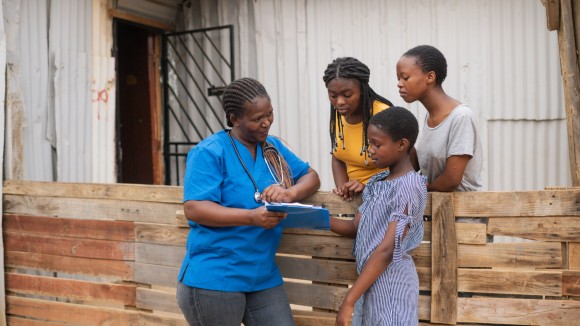
Despite the rapid growth of digital medicine technologies, many implementers of promising digital medicine products and services struggle to bridge a persistent implementation gap between proof of concept and real-world benefits in low-resourced settings. These technologies include AI-driven medical devices, telemedicine and virtual care models, wellness apps, and wearables.
For this collection, the editors use the term ‘low-resourced settings’ to describe contexts in any country where digital medicine technologies may be utilized, and there are limited health system resources (i.e., financial, human capital, physical, and digital infrastructure).
This collection assembles solution-oriented research, implementation science, and policy analyses that demonstrate how digital medicine within low-resourced settings could be made:
- clinically actionable, safe, and effective in a real-world setting;
- context-appropriate and cost-effective (i.e., approaches for moving digital medicine technologies appropriately from high-resource to low-resource settings and vice versa); and
- scalable within health system needs and realities (i.e., cognisant of digital public infrastructure, human resources, and capabilities).
This collection invites submissions from authors who can share real, in-the-field insights to move the current discourse beyond problem statements to practical pathways and tangible learnings for sustainable deployment, local ownership, and impactful scaling of digital medicine technologies.
The editors of this collection acknowledge that the terminology used to classify countries and their people implies a distinct way of viewing the world and is shaped by the political and social environment. As stated above, in this collection, the editors use the term ‘low-resourced settings’ to describe contexts in any country where digital medicine technologies may be utilized and are characterized by limited health system resources (i.e., financial, human capital, physical, and digital infrastructure). In the USA, for example, a low-resource setting could apply to hospitals with limited budgets that serve populations reliant on Medicaid. In sub-Saharan Africa, low-resource settings can be characterized as health systems that lack access to physical or digital infrastructure for delivering health services, and are often under-resourced in terms of clinicians or specialized medical services.
Editors
-
Kassandra Karpathakis, MPH
USA
-
Shubhanan Upadhyay, MBBS, BSc
Global Perspectives on Digital Health, France
