Thank you for visiting nature.com. You are using a browser version with limited support for CSS. To obtain
the best experience, we recommend you use a more up to date browser (or turn off compatibility mode in
Internet Explorer). In the meantime, to ensure continued support, we are displaying the site without styles
and JavaScript.
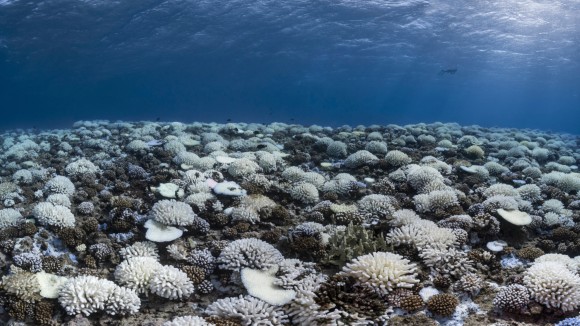
Marine heatwaves are recognised as a significant and growing threat to ecological systems worldwide. Impacts from marine heatwaves include widespread coral bleaching, habitat losses, food-web disruption, and harmful algal blooms. Beyond the event itself, impacts can be longer-lasting, such as altered species distributions, increased susceptibility to disease, and weakened resilience to future events. In the context of ongoing climate change, it is key to better understand these impacts, to protect and rehabilitate marine ecosystems.
With this cross-journal Collection, we invite manuscripts that highlight impacts of marine heatwaves on ecological systems. Communications Earth & Environment, Communications Sustainability, Nature Communications, npj Ocean Sustainability, and npj Biodiversity will consider original Articles, Reviews and Perspectives. Nature Reviews Earth & Environment will consider Reviews and Perspectives. Scientific Reports will consider original Articles.
We must integrate effective protection with scalable restoration to ensure resilient coastal ecosystems. We identify five challenges, including unequal ecosystem coverage, spatial protections that are weak or centered offshore, compartmentalized restoration efforts, and policies that are not fit for purpose, and propose actionable solutions for scaling effective marine conservation. Emphasizing underserved habitats like kelp forests and seagrasses, we call for integrated, equitable, and community-supported strategies that align with global agendas and promote future coastal ecosystems.
During marine heatwaves in the California Current, chlorophyll-a reduces at the surface but phytoplankton growth is strengthened at depth, according to combined nutrient observations and coupled physical-biogeochemical modelling.
A decade of BGC-Argo and plankton records shows North Pacific heatwaves reshape food webs and trap small particles in midwater, slowing deep-ocean carbon export. Impacts vary by event, underscoring the need for sustained ocean monitoring.
Marine heatwaves promote the development of a deep chlorophyll maximum, which reshapes subsurface chlorophyll and therefore vertical phytoplankton distributions, according to analyses of Biogeochemical Argo float data.
Marine heatwaves impact organisms’ developmental time, which alters phenology and creates trophic and environmental mismatches, according to a framework examines different scenarios for understanding relationship between temperature and developmental time.
Kelp forests could face up to 16 times more marine heatwave exposure by 2100. With less than 3% of kelp forests in highly restrictive marine protected areas, urgent conservation and climate adaptation actions are needed
Incorporating reef fish into a meta-community model of the Great Barrier Reef suggests that fish-protecting interventions, including marine protected areas, have prevented the reef from already passing a tipping-point transition to a state of continual outbreaks of crown-of-thorns starfish and reduced coral cover.
The authors evaluate heritable genetic variation in thermal tolerance in a common reef-building coral. They show widespread heritable genetic variation, which is strongly associated with marine heatwave-imposed selective pressure, suggesting adaptation to climate warming.
Marine heatwaves (MHWs) have become more intense and widespread globally, affecting species, ecosystems and people. After summarizing how and why MHWs are changing, this Review explores these impacts and their underlying mechanisms, highlights knowledge gaps and considers opportunities to mitigate the effects of MHWs.