
Evaluating the Real-World Clinical Performance of AI
- Submission status
- Open
- Submission deadline
As artificial intelligence (AI) continues to transform healthcare, its shift from controlled research environments to real-world clinical settings presents both immense promise and critical challenges. This collection in npj Digital Medicine showcases cutting-edge research that rigorously examines how AI systems perform in diverse, dynamic, and often unpredictable clinical contexts.
We invite contributions that explore the following areas:
- Clinical utility: Demonstrating how AI tools enhance diagnostic accuracy, inform treatment decisions, and improve patient outcomes in prospective or retrospective evaluations
- Safety and reliability: Assessing risks, unintended consequences, and robustness of AI systems in real-world deployment
- Equity and fairness: Evaluating performance across diverse populations to uncover and mitigate algorithmic bias
- Scalability and generalizability: Understanding how AI systems adapt across institutions, specialities, and care settings
- Workflow integration: Investigating how AI fits into clinical processes, team dynamics, and decision-making, and understanding barriers and facilitators to AI adoption in clinical workflows.
- Post-deployment monitoring and evaluation: Including model updating, performance decay, feedback loops, audits, prospective trials, and longitudinal studies of AI in practice over time
- Transparency and reproducibility: Promoting open methods, interpretable models, and replicable results to foster trust and accountability
- Patient-centered outcomes: Measuring impact of AI on care quality, experience, and health equity
- Human factors and clinician-AI interaction: including trust, interpretability, and decision support dynamics.
By spotlighting real-world evidence, this collection aims to bridge the gap between algorithmic innovation and clinical impact—ensuring that AI technologies not only work in theory but truly deliver value in clinical practice.
Editors
-
Wei-Qi Wei, MD, PhD
Vanderbilt University Medical Center, USA
-
Lequan Yu, PhD
The University of Hong Kong, HK, China
-
Dinh Nguyen, MD, MSHI
Kaiser Permanente, USA
Wei-Qi Wei, MD, PhD, Vanderbilt University Medical Center, USA
Dr. Wei-Qi Wei is a tenured associate professor of Biomedical Informatics and Director of the Precision Phenotyping Core at Vanderbilt University Medical Center. His research spans electronic health record (EHR) phenotyping, artificial intelligence, machine learning, natural language processing, pharmacogenomics, and translational genomics. Internationally recognized for pioneering high-throughput phenotyping methods, Dr. Wei develops scalable tools and frameworks that enable large-scale discovery across diverse clinical and genomic datasets. His work has advanced drug repurposing, individualized treatment prediction, and cross-institutional algorithm portability. He currently leads multiple NIH-funded projects, including several R01s and P50s, such as the eMERGE network and MPRINT. Dr. Wei’s phenotyping tools—such as PheMAP, Phecode, and MEDI—are widely adopted in research and clinical translation.
Lequan Yu, PhD, The University of Hong Kong, HK, China
Prof. Lequan Yu is an Assistant Professor in the School of Computing and Data Science at The University of Hong Kong and a former postdoctoral fellow at Stanford University. He received his Ph.D. from The Chinese University of Hong Kong in 2019 and his bachelor’s degree from Zhejiang University in 2015. His research focuses on developing advanced machine learning and computational methods for biomedical data analysis, particularly in medical image analysis. Dr. Yu has been named on the World's First List of Top 150 Chinese Young Scholars in Artificial Intelligence and ranked by Clarivate Analytics in the top 1% of the citation list. He has also won the MICCAI 2023&2024 Young Scientist Publication Impact Award Runner-Up, CUHK Young Scholars Thesis Award, and Best Paper Award of Medical Image Analysis-MICCAI in 2017. He serves as the area chair/senior PC member of MICCAI, IJCAI, AAAI, NeurIPS, and the regular reviewer for top-tier journals and conferences.
Dinh Nguyen, MD, MSHI, Kaiser Permanente, USA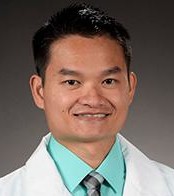
Dinh Nguyen is the Regional Physician Director of Business Services at Southern California Permanente Medical Group, where he leads a team of data scientists, data analysts, and informaticists to implement artificial intelligence solutions for digital healthcare transformation. With extensive expertise in clinical informatics, he has pioneered projects, such as custom natural language processing models for Electronic Health Record systems and digital platforms, to enhance care delivery and care navigation. His leadership is demonstrated through his role on the SCPMG Artificial Intelligence Advisory Council and his unwavering commitment to advancing healthcare through innovative technology.
