
Decision-making in Structured Groups: from animal societies to human governance
- Submission status
- Open
- Submission deadline
Across scientific domains, collectives of agents come together to solve complex problems that one agent alone could never solve. This emergent decision making takes multiple forms, from the complex sociality of animal societies to the formal governance of human groups.
Although some patterns are shared across computational agents, animals, and humans, they are often studied in different ways across different fields: animal behaviour, cognitive ecology, social cognition, network science, cultural evolution, social ontology, political science, and economics, to name a few. These fields often use their own language and methods, such that insights from one discipline might not be directly useful to related problems in a different discipline. In this Collection, we wish to synthesize current knowledge on decision-making in structured groups and highlight recent developments in a language accessible to all researchers. Our hope is to stimulate new dialogues and translational efforts, from experimental studies to mathematical models and conceptual frameworks, to fully capture the rich diversity of ways collectives solve complex problems in nature.
Editors
-
Laurent Hébert-Dufresne, PhD
University of Vermont, USA
-
Elizabeth A. Hobson, PhD
University of Cincinnati, USA
-
Tim Waring, PhD
University of Maine, USA
-
Andrew Berdahl, PhD
University of Washington, USA
Laurent Hébert-Dufresne, PhD, University of Vermont, USA
Dr. Hébert-Dufresne obtained his PhD in physics in from Université Laval in  Québec, Canada. He then branched out in different avenues of complex systems modeling, first as a James S. McDonnell Foundation Fellow at the Santa Fe Institute and later as a researcher at the Institute for Disease Modeling. Now at the Vermont Complex Systems Center, he leads the Laboratory for Structure and Dynamics whose research focuses on the interaction and coevolution of structure and dynamics. Recent examples include social networks interacting with the spread of diseases and ideas, the shape of forests interacting with forest fires, cultural adaptations emerging to answer societal challenges, and the structure of metabolic networks influencing interactions in microbial communities.
Elizabeth A. Hobson, PhD, University of Cincinnati, USA
Research in the Hobson Lab focuses on social information: what do animals  know about their social worlds, how do they come to know it, and what do they do with that information? To address these questions, we integrate aspects of ecology and evolution to determine how the combination of sociality and cognition affect the emergence of group social structures from a combination of individual-level social actions, cognitive abilities, and decisions about future interactions. Detecting the use of social information provides new insight into the connections between social decisions and cognitive processing, how they can be affected by ecological dynamics, and how they can lead to the evolution of complex sociality.
Tim Waring, PhD, University of Maine, USA
Dr. Tim Waring is an associate professor of applied cultural evolution at the University of Maine. He studies how  human cultural change can determine social and environmental outcomes and drive long-term human evolution. Waring’s work ranges from theoretical model development and fundamental research to applied science, and from individual behavioral choices to the planetary longevity of homo sapiens. He is driven by a fundamental question: how do human groups solve collective problems? More specifically, when does cultural evolution favor the emergence of group-level solutions to group-level problems? Waring has developed a theory which proposes that sustainable human systems evolve when the balance of competing evolutionary forces favors group-level cultural adaptation in a multilevel social system. His theory has been simulated and applied to case studies around the world. Waring builds evolutionary models of social and cultural change to learn how beneficial behaviors and institutions arise and persist, and tests theoretical predictions of human behavior with behavioral and social learning experiments. Dr. Waring is also a pioneer in the development of an applied science of cultural evolution for beneficial social change, and leads a global applied research network on the topic. Current projects include understanding the patterns and processes driving long-term human evolution, the role of group-level cultural evolution in social-ecological change, the evolution of co-operative organizations, and cultural adaptation to climate change.
Andrew Berdahl, PhD, University of Washington, USA
Andrew began as a physicist (BSc, Waterloo and MSc, Calgary) before moving to ecology (PhD, Princeton) and 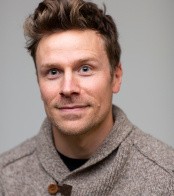 complex systems (postdoc, Santa Fe Institute). Now at the University of Washington, Andrew studies movement ecology and collective behaviour, including schooling, flocking, herding. More specifically, he explores how group-level behaviours emerge from interactions between individual group members and how the resulting group-level behaviours alter ecological and evolutionary processes. Andrew combines theoretical models and numerical simulations with empirical, lab- and field-based approaches to establish a deeper understanding of these phenomena.
