
Managing landscapes after land abandonment: afforestation, rewilding and restoration
- Submission status
- Open
- Submission deadline

This Collection supports and amplifies research related to SDG 3, SDG 13, SDG 15.
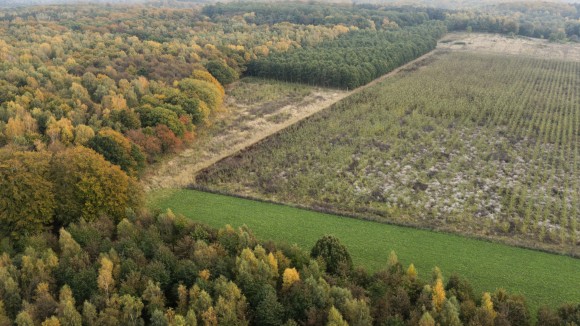
Across Europe and beyond, large areas of traditionally farmed landscapes are being abandoned due to biophysical constraints, low farm viability from marginal returns, and demographic change – all of which act to reshape ecosystems and rural societies in different and uneven ways. While land abandonment can create wildfire hazards (e.g. from fuel accumulation) and biodiversity loss (e.g. competition from invasive species), it can also create opportunities for large‑scale ecological recovery, new natural habitats, species returns, connectivity, and restorative landscapes benefiting human health and wellbeing. This special issue will interrogate and critically assess the choices that follow abandonment be that to afforest, rewild, restore, reconnect—and the trade‑offs they entail for biodiversity, wildness, naturalness, ecosystem processes, climate resilience, and communities.
We invite contributions that bridge theory and practice as well as provide a retrospective view of previous Nature publications on this topic. New works will be commissioned and existing authors of existing articles invited to review and update their works considering recent developments. Foundational works have already clarified rewilding as nature‑led functional restoration aimed at reinstating trophic interactions, reference ecosystems, and landscape connectivity, with participatory governance and adaptive monitoring at its core. The IUCNs ten guiding principles and ‘Guidelines for Rewilding’ already provide international policy and practice with a framework for implementation across pathways of passive recovery, active restoration, and planned afforestation. These will be used to provide a structure for invited contributions.
Key themes include:
- Decision frameworks after abandonment. When should passive rewilding be favored over active restoration or afforestation? How do risks (e.g., fire, invasive species) and opportunities (e.g., cores, corridors, keystone species) vary with context?
- Functional integrity and trophic recovery. Evidence on keystone species, ecosystem engineers, and disturbance regimes; designing for self‑regulation and reduced human control.
- Landscape planning at scale. Cores, connectivity, and coexistence across mixed ownerships; leveraging abandonment to stitch resilient networks.
- Monitoring and adaptive management. Reference systems, opportunity mapping, and socio‑ecological metrics that track trajectories and inform course corrections.
- Societal dimensions. Governance, rights‑based approaches, indigenous and local knowledge, livelihoods, and financing models that enable equitable transformations.
- Climate and natural capital. How afforestation, rewilding, and restoration differ in carbon storage, risk, and resilience; aligning with NbS and global biodiversity goals.
We particularly welcome syntheses, comparative case studies, and policy analyses that operationalize the rewilding principles articulated in Carver et al. (2021) including nature‑led recovery, landscape‑scale planning, evidence‑based adaptivity, systems thinking, and place‑based participation. These contributions will be set against the empirical geography of abandonment risk established by the EU Joint Research Centre, ensuring our debates are grounded in where and why abandonment occurs.
Article types: Retrospectives, Research Articles, Methods & Metrics (e.g., opportunity mapping, monitoring frameworks), Policy Forums, and Perspectives.
Target audiences include ecologists, restoration practitioners, rural sociologists, planners, and decision‑makers.
By assembling cutting‑edge science and practice, this issue will provide a one-stop synthesis for managing post‑abandonment landscapes, clarifying when and how afforestation, rewilding, and restoration can best advance biodiversity recovery, climate resilience, and socio‑ecological justice.
This is a joint Collection across npj Biodiversity, Nature Communications, Communications Earth & Environment, Communications Sustainability and Scientific Reports. Please see the relevant journal webpages to check which article types the journals consider.
Editors
-
Steve Carver, PhD
University of Leeds, United Kingdom
-
Ian Convery, PhD
University of Cumbria, United Kingdom
This Collection is open for submissions from all authors – and not by invitation only – on the condition that the manuscripts fall within the scope of the Collection and of npj Biodiversity, Nature Communications, Communications Earth & Environment, Communications Sustainability and Scientific Reports more generally.
All manuscripts will be considered for publication according to the editorial policies of the specific journal through which they were submitted. See npj Biodiversity, Nature Communications, Communications Earth & Environment, Communications Sustainability and Scientific Reports editorial policies pages for more information. Visit Nature portfolio’s Collections guidelines for more details.
When submitting your manuscript to npj Biodiversity, Nature Communications, Communications Earth & Environment, Communications Sustainability or Scientific Reports via our online submission system, please choose the appropriate Collection title from the drop-down menu on the submission form. Please be sure to express your interest in the Collection in your cover letter. Please only submit to one journal, but note authors have the option to transfer to another participating journal following the editors’ recommendation.
This Collection has not been supported by sponsorship.
