
Variational, Nonequilibrium, and Optimization Principles of the Coevolution of Structure and Dynamics in Complex Systems
- Submission status
- Open
- Submission deadline
Complex systems fascinate because of the way dynamic microscopic interactions give rise to striking, often unexpected macroscopic structures: convection cells in fluids, patterns in ecosystems, networks in societies, and organization in biology. What unites these diverse examples is the deep link between how the agents in systems move and what structure emerges. While diverse approaches have been proposed, in addition, a unifying language may lie in variational principles and optimal control in stochastic and dissipative regimes which can offer a powerful language for understanding this interplay.
Action principles are among the most unifying ideas in science: from Lagrangian mechanics to quantum field theory, they describe how nature selects pathways. The stochastic-dissipative extensions of the principle of least action in the form of path integrals, such as by Onsager-Machlup and more recent versions provide a natural framework for describing how agents and processes, obeying fundamental physical laws, select the most probable and efficient pathways under constraints. These pathways not only govern system dynamics but also generate—and are constrained by—emergent structures. Feedback between dynamics and structure thus shapes evolution, with frozen accidents and historical contingencies balanced against tendencies toward action-efficient configurations. If dynamics select the most probable, efficient pathways, then structure itself may be seen as the lasting imprint of such pathways. Can such principles also help explain the emergence of complexity?
This Collection aims to gather theoretical, computational, and empirical contributions that advance the use of variational principles to explain and predict structure–dynamics interplay in complex systems. By doing so, we hope to move toward general non-equilibrium thermodynamics capable of grounding complexity science in physics while connecting to diverse domains of application. Contributions are welcome across disciplines, from mathematics and physics to biology, engineering, and social sciences. Themes may include, but are not limited to:
- Stochastic and dissipative formulations of variational principles.
- Path integrals and optimal control.
- Structure formation in non-equilibrium thermodynamics.
- Agent-based simulations and computational models.
- Empirical case studies from physical, chemical, biological, or social systems.
- Comparative perspectives with non-variational approaches.
The aim is to advance a physics-grounded framework for understanding how complex structures emerge and persist under dynamic constraints. The objective of this Collection is to foster dialogue among researchers working on different manifestations of the same fundamental questions: How do dynamics give rise to structure, how structure determines dynamics, and how can variational principles provide the key to understanding this process across scales and systems? Can variational pathways explain the emergence of complex structures from dynamics across nature and society?

Editors
-
Georgi Y. Georgiev, PhD
Assumption University, USA
-
Antoine Allard, PhD
Université Laval, Canada
-
Laurent Hébert-Dufresne, PhD
University of Vermont, USA
Georgi Y. Georgiev, PhD, Assumption University and Worcester Polytechnic Institute, USA
Dr. Georgi Y. Georgiev is a Professor of Physics at Assumption University and Worcester 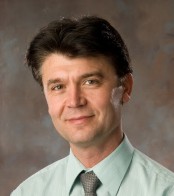 Polytechnic Institute. He earned his PhD in Physics from Tufts University, Medford, MA, and did postdoctoral research at Northeastern University in Boston, MA. His main interest is in the driving principles and mechanisms behind the arrow of time towards self-organization in Cosmic Evolution, which includes self-organizational processes in Physical, Chemical, Biological, and Social complex systems and networks. His research focuses on the physics of complex systems, exploring the role of variational principles in self-organization, the stochastic and dissipative principle of least action, path integrals, Maxum Caliber, and the Maximum Entropy Production Principle. Dr. Georgiev has developed a new model that considers the mechanism, driving force, and attractor of self-organization, based on variational principles and feedback loops between the characteristics of complex systems. He has published extensively in these areas, and he has been an organizer of Conferences on Complex Systems. He is an Executive Committee Member of the Complex Systems Society – North Eastern Chapter in the USA, Editor-in-Chief of Northeastern Journal of Complex Systems, Editor of the Wiley journal Complexity, and a Co-Director of Evo-Devo-Institute.
Antoine Allard, PhD, Université Laval, Canada
Dr. Antoine Allard is an Associate Professor of Physics at Université Laval (Québec, Canada) 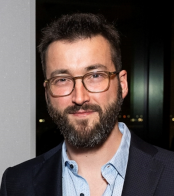 where he co-leads the Dynamica Research Lab on the structure and the dynamics of complex systems. His research combines statistical mechanics, graph theory, nonlinear dynamics, and geometry to develop mathematical models of complex networks and to study the structure/function relationship specific to complex systems. His work finds applications in neuroscience, epidemiology, computer science, and ecology.
Laurent Hébert-Dufresne, PhD, University of Vermont, USA
Dr. Hébert-Dufresne obtained his PhD in physics in from Université Laval in Québec, Canada. He then branched out in different avenues of complex systems modeling, first as a  James S. McDonnell Foundation Fellow at the Santa Fe Institute and later as a researcher at the Institute for Disease Modeling. Now at the Vermont Complex Systems Center, he leads the Laboratory for Structure and Dynamics whose research focuses on the interaction and coevolution of structure and dynamics. Recent examples include social networks interacting with the spread of diseases and ideas, the shape of forests interacting with forest fires, cultural adaptations emerging to answer societal challenges, and the structure of metabolic networks influencing interactions in microbial communities.
