
Focus |
Collections
-
-
Focus |
 Soft materials for robotics
Research have provided soft materials with advanced functionalities such as sensing, stimuli response and locomotion.
Image: Contributor: Yuichiro Chino / Getty Images. -
Focus |
 Emissions control and capture
Many technological processes involve the emission of compounds that can cause medical or environmental harm.
Image: redbrickstock.com / Alamy Stock Photo -
Focus |
 Multicellular constructs
Multicellular constructs such as organoids and embryoids have been widely utilized as model systems to understand development, physiology and pathology.
Image: Jessica M. Vanslambrouck and Ker Sin Tan -
Focus |
 2D Quantum Materials
2D materials are a promising platform for realizing tunable quantum states.
Image: Alamy stock photo -
Focus |
 Zeolite catalysts
Zeolites are microporous materials that are of industrial importance for various catalytic applications.
Image: Ella Marushchenko -
Focus |
 Conducting polymers
The Nobel Prize in Chemistry 2000 was awarded to Shirakawa, MacDiarmid and Heeger for the discovery of conducting polymers.
Image: Image: Andriy Onufriyenko / Getty -
Focus |
 DNA-guided assemblies
DNA is now an established structural linker for nanomaterials assemblies and crystals.
Image: Contributor: sakkmesterke / Alamy Stock Photo -
Focus |
 Magnetic Interactions
Magnetism continues to be a rich source of scientific inquiry, with associated technological implications.
Image: Yon Marsh / Alamy Stock Photo -
Focus |
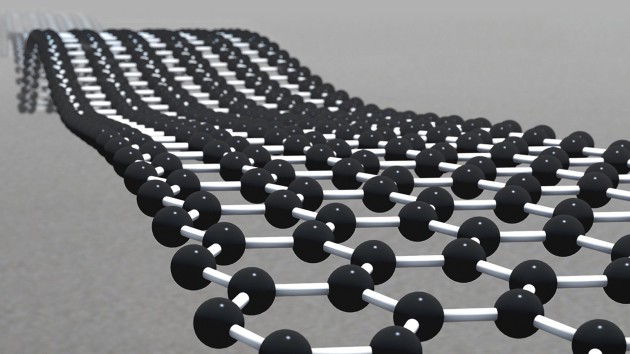 2D materials from lab to Industry
Following the prosperity of academic research on 2D materials, the field is trying to identify and overcome the challenges for commercializing the lab discoveries.
Image: ROBERT BROOK/SCIENCE PHOTO LIBRARY -
Focus |
 Machine Learning in Medicine
Machine learning has had a significant impact in many areas of science and technology, including life science and medical research.
-
Focus |
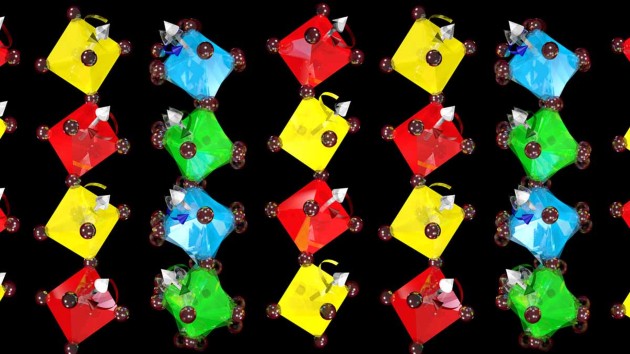 Multiferroics and applications
Multiferroics possess more than one form of order parameter, such as magnetization or electric polarization.
Image: John Heron, University of Michigan
 New Horizons in Spintronics
