
About the Editors
Editors-in-Chief
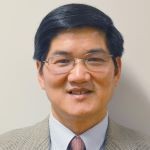 Long-Qing Chen, PhD
Distinguished Professor of Materials Science and Engineering
Pennsylvania State University
PA, USA
Prof. Chen's research focuses on applying computer simulations to understand the thermodynamics and kinetics of phase transformations and mesoscale microstructure evolution. He has developed and applied phase-field models to a range of materials and processes, including ferroelectric phase transitions and ferroic domain structure development, electrode microstructure in solid oxide fuel cells and batteries, microstructure development in additively manufactured materials and growth of two-dimensional materials. Professor Chen graduated from Zhejiang University, followed by postgraduate studies at Stony Brook University and Massachusetts Institute of Technology.
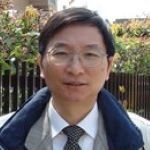 Lidong Chen, PhD
Prof. of Materials Science
Shanghai Institute of Ceramics, CAS
Shanghai, China
Prof. Chen previously served as Chief Engineer at Riken Corporation and at the Japan National Aerospace Laboratory. He then worked at the Institute for Materials Research, Tohoku University, as Research Associate and Associate Professor. He joined Shanghai Institute of Ceramics, Chinese Academy of Sciences (SICCAS) as a Professor in 2001, under the 'Hundreds Talent Project' from Chinese Academy of Sciences. Currently he is the Director of the State Key Lab of High Performance Ceramics and Superfine Microstructures, and served as Deputy President of SICCAS from 2004 to 2013. Prof. Chen's research focuses on inorganic materials and composites.
Deputy Editors
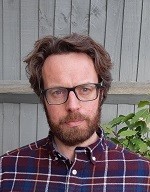 Keith T Butler, PhD
Associate Professor
University College London
London, UK
Keith Butler is associate professor for materials theory and simulation at University College London, with a strong interest in the application of machine learning for materials characterization and discovery. Dr Butler’s research group focusses on developing and applying new machine learning methods for analysing materials data and developing workflows for functional materials design. Recently his research has focussed on several aspects of machine learning for materials science, including interpretable machine leaning, generative models, physics informed machine learning and uncertainty quantification. Dr. Butler leads/contributes to several open source packages for machine learning in materials science and is a keen advocate of open, reproducible software.
Managing Editor
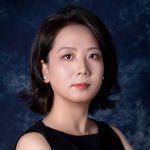 Ronghua Guo, PhD
Ronghua obtained her PhD degree in Geology from Nanjing University in 2021. During her PhD, she focused on the sedimentary provenance analysis with different detrital heavy minerals from modern river sands in the South Tibetan Plateau. She joined Springer Nature as an Editorial Submission Advisor in October 2021 and now serves as a Managing Editor for 4 titles in the npj Series. She is now based in the Springer Nature Nanjing office.
Associate Editors
 Andy Sode Anker, PhD
Technical University of Denmark
Denmark
Andy develops autonomous laboratories for materials synthesis on demand. His research focus is highly interdisciplinary, spanning automated/robotic materials synthesis, structure characterisation (often scattering-based), various forms of machine learning, and atomistic simulations. He particularly has experimental expertise in total scattering with pair distribution function data analysis as well as developing machine learning models to analyse the data.
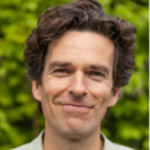 Gabriel Bester, PhD
Departments of Chemistry and Physics
University of Hamburg,Germany
Gabriel Bester is a theoretical physicist and a full professor at the University of Hamburg. He earned his Ph.D. at the Max-Planck-Institute for Metals Research, specializing in the quantification of bond energies. Subsequently, he spent seven years at the National Renewable Energy Lab (NREL) as a senior scientist in the group of Alex Zunger. He led an independent research group at the Max-Planck Institute for Solid State Research between 2007 and 2014 before joining the University of Hamburg. His research interests include the development of numerical methods for nanoscopic systems with a focus on excited state properties. Keywords: DFT, Exciton, Configuration Interaction (CI), Nanostructures, Phonons, Vibrational Properties, Pseudopotentials, Force Fields, Ultrafast Dynamics, TDDFT, 2D Materials, TMDC, Electronic Correlation, Entangled Photons, Single Photon Sources, Piezoelectricity, Semiconductors, SK Dots, Colloidal Quantum Dots.
 Kamal Choudhary, PhD
Research Scientist, Material Measurement Laboratory
National Institute of Standards and Technology
MD, USA
Kamal Choudhary is a research scientist in the Materials measurement laboratory at the National Institute of Standards and Technology (NIST), Maryland, USA and Theiss Research, La Jolla, CA, USA. He received his PhD from University of Florida in 2015 and then joined NIST. His research interests are focused on atomistic materials design using classical, quantum, and machine learning methods. In particular, he has developed the JARVIS database and tools (https://jarvis.nist.gov/) that hosts publicly available datasets for millions of material properties. He has published more than 50 research articles in various reputed journals and is an active member of TMS, APS, and MRS societies. Keywords: Density functional theory, Machine learning, Molecular dynamics, Large language models, Graph neural networks.
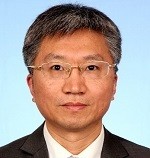 Chun-Gang Duan PhD
Prof., Director Key Laboratory of Polar Materials and Devices
East China Normal University
Shanghai, China
Prof. Chun-Gang Duan earned his Ph.D. degree in theoretical physics from the Institute of Physics, Beijing, Chinese Academy of Sciences in 1998, then worked for the University of Nebraska until 2007. In 2008, he joined East China Normal University as full professor. Currently, Prof Duan is the director of key lab of polar materials and devices, Ministry of Education, China. His group studies multiferroics, magnetoelectric, energy conversion and neuromophic computing materials. Keywords: Multiferroic‚ Magnetoelectric‚ Ferroelectric‚ Ferromagnetic‚ Spintronic materials; Nano-sized structure: Ultrathin films‚ Nanotubes‚ Interfaces; Transport properties of magnetic and ferroelectric tunnel junctions; Molecular dynamics and Monte-Carlo simulations.
 Bryan Goldsmith, PhD
University of Michigan
Ann Arbor, MI, USA
Prof. Goldsmith's overarching research goals are to use first-principles computational modeling and data science tools to understand and design catalysts and materials for sustainable chemical conversion, pollution reduction, and energy generation/storage. Current major topics of interest are: machine learning for materials, electrocatalysis, redox chemistry (e.g., organic and inorganic redox flow batteries), and nanocluster and single atom dynamics.
 Sai Gautam Gopalakrishnan, PhD
Indian Institute of Science
Bengaluru, India
Sai Gautam Gopalakrishnan is an associate professor of materials engineering at the Indian Institute of Science, Bengaluru, India. Sai obtained his PhD in Materials Science and Engineering at the Massachusetts Institute of Technology and was a post-doctoral fellow in Mechanical and Aerospace Engineering at Princeton University. Sai's group works on discovery and optimisation of materials for energy applications using first-principles computations and machine learning techniques.
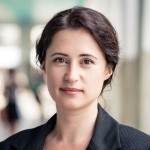 Ganna Gryn'ova, PhD
University of Birmingham
Birmingham, UK
Ganna (Anya) Gryn'ova is an Associate Professor of Computational Chemistry at the University of Birmingham. Her research group "Computational Carbon Chemistry" uses theoretical and computational chemistry, physics, and materials science in combination with chemical machine learning to explore and exploit diverse functional organic and hybrid materials and molecules for applications in catalysis, environmental remediation, and renewable energy. Keywords: Computational Chemistry, Machine Learning, 2D Materials, Functional Organic Materials, Non-Covalent Interactions, Chemical Topology.
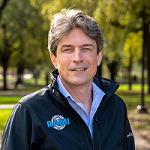 Geoffroy Hautier, PhD
Trustee Professor of Materials Science and NanoEngineering
Rice University
Houston, TX, USA
Prof. Hautier's research focuses on computational materials discovery and design. His group has been using and developing ab initio high-throughput and big data approaches for various fields from opto-electronics to quantum information science. He received his PhD in Materials Science and Engineering from the Massachusetts Institute of Technology in 2011 followed by faculty position at UCLouvain in Belgium and Dartmouth in the US. Since summer 2025, Prof. Hautier is the Trustee Professor of Materials Science and NanoEngineering at Rice University. He is also one of the early developers and co-principle investigators of the Materials Project, a freely accessible high-throughput computational database. Keywords: Computational materials design; ab initio computing; High-throughput computing; Machine learning; opto-electronic properties of materials; Materials for energy production and storage; Transparent conducting oxides; Thermoelectrics; photovoltaics; High entropy alloys; materials for quantum information science.
 Jianjun Hu, PhD
University of South Carolina
United States
Dr. Jianjun Hu is a Professor in the Department of Computer Science & Engineering at the University of South Carolina. His research interests include machine learning, deep learning, evolutionary computation, AI for science, AI for materials discovery, and bioinformatics. Prof. Hu earned a Ph.D. in Computer Science from Michigan State University in 2004 and was a postdoctoral fellow at Purdue University and the University of Southern California. Keywords: Machine Learning, Deep Learning, AI for Science, Crystal structure prediction, materials discovery, inverse materials design.
 Katherine Inzani, PhD
University of Nottingham
United Kingdom
Katherine Inzani is an Associate Professor in the School of Chemistry at the University of Nottingham. Her group uses theory and computation to solve materials challenges at the intersection of chemistry, physics and engineering. Dr Inzani's research is focussed on the design of advanced functional materials in the fields of quantum information science, dark matter detection, ferroelectrics and more. She holds an EPSRC Quantum Technology Career Development Fellowship (2022-2027) as part of the UK National Quantum Technologies Programme. She obtained her PhD in Materials Science and Engineering at NTNU Norwegian University of Science and Technology in 2016, followed by a postdoctoral fellowship position at Lawrence Berkeley National Lab.
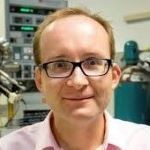
Sergei V. Kalinin, PhD
Director, Institute for Functional Imaging of Materials
Oak Ridge National Laboratory
TN, USA
In addition to his role at Oak Ridge National Library, Dr Kalinin is a Theme leader for Electronic and Ionic Functionality on the Nanoscale. He holds a joint faculty position at the Bredesen Center at the University of Tennessee-Knoxville and adjunct faculty position at Pennsylvania State University. His areas of research have involved application of big data, deep data and smart data for materials science, as well as coupling between electromechanical, electrical and transport phenomena on the nanoscale.Keywords: Automated experiment in electron and scanning probe microscopy, Automated laboratories, Bayesian optimization workflow in experimental sciences, Automated materials synthesis
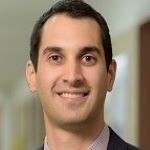
Sinan Keten, PhD
Associate Prof. of Mechanical Engineering & Civil and Environmental Engineering
Northwestern University
IL, USA
Prof. Keten's research expertise is on computational materials science and mechanics, focusing on polymer nanocomposites and biomolecular materials. He is the recipient of numerous awards and honors including the US Presidential Early Career Award for Scientists and Engineers, Office of Naval Research Young Investigator Program and Director of Research Early Career Awards. Professor Keten is a Fellow of the American Physical Society and has received recognitions from the American Society of Mechanical Engineers and the Materials Research Society. Keywords: Polymers, Protein based materials, Mechanics, Molecular dynamics, Coarse graining, Machine learning
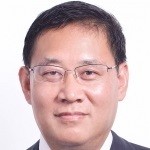 Jianjun Liu, PhD
Professor
Shanghai Institute of Ceramics, CAS
Shanghai, China
Prof. Liu’s research interesting focuses on atom-level material design by various computational methods including classical, quantum, and machine-learning techniques. His research group has made significant effort in developing and utilizing computational electrochemical methods and machine-learning models to gain insights into physical mechanisms and control material structures, particularly for electrochemical materials such as electrocatalysis and batteries. He earned his Ph. D. degree in physical chemistry from Jilin University, followed by enriching postdoctoral experiences at Emory University and Southern Illinois University. In 2011, he joined Shanghai Institute of Ceramics, Chinese Academy of Sciences (SICCAS). Keywords:First-principles material simulation, Data-driven material design, High-throughput calculation and experimentation, AI-driven material laboratories
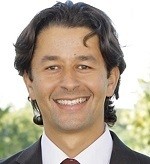 Samir Lounis, PhD
Professor of theoretical physics
Martin-Luther University Halle-Wittenberg, Germany
Prof. Samir Lounis is expert in the theoretical description of static and dynamical spintronics phenomena at the nanoscale. He is head of head of the group “Solid State Quantum Theory”, where strong efforts are made in developing various theoretical concepts and methods based on multiple-scattering theory density functional theory (DFT), time-dependent DFT (TD-DFT) and many-body perturbation theory (MBPT). Of particular interest are electronic, magnetic and transport properties with a particular focus on dynamical/excitation effects. Keywords: Density functional theory, time-dependent density functional and many-body perturbation theory, Topological magnetism & superconductivity, Adatom qubits and topological qubits, Method development, Magnetodynamics, Nanophysics.
 Neepa Maitra, PhD
Department of Physics
Rutgers University
NJ, USA
Prof. Matira completed her PhD at Harvard University where her thesis was on semiclassical methods. She completed her postdoc at UC Berkeley before entering the field of density functional theory with a postdoc. Previously she was part of the Hunter College CUNY faculty before joining Rutgers-Newark. At Rutgers, her group conducts research in theoretical chemical physics; in particular, time-dependent density functional theory, the exact factorization approach to correlated quantum subsystems, coupled electron-ion dynamics, and polaritonic chemistry. Keywords: TDDFT, Electronic excitations and dynamics, Non-adiabatic dynamics, Coupled electron-nuclear systems, Polaritonic systems.
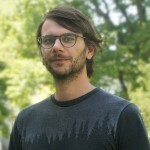 Johannes Margraf, PhD
University of Bayreuth
Bayreuth, Germany
Prof. Margraf uses electronic structure methods and machine learning to understand and predict chemical phenomena, such as the nature of complex reaction networks or the properties of new molecules and materials. A major driver of this work is the desire to build accurate, data-efficient models which do not require enourmous reference datasets for training. Ideally, these methods should then be applicable to any problem of chemical interest, not just to those problems for which "big data" happens to be available.
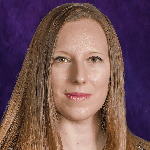 Noa Marom, PhD
Associate Professor of Materials Science and Engineering
Carnegie Mellon University
PA, USA
Noa Marom combines first principles simulations within density functional theory (DFT) and many-body perturbation theory with machine learning and optimization algorithms to predict the structure and properties of materials. This includes molecular crystals and interfaces between inorganic, organic, and organic-inorganic materials for various energy and technology applications. Keywords: Electronic structure, DFT, GW+BSE, Machine learning, Electronic magnetic and optical properties, Structure prediction, Organic materials, Inorganic materials, Interfaces
 Reinhard Maurer, PhD
University of Warwick
Coventry, CV4 7AL, UK
Reinhard Maurer works on the Chemistry and Physics of Surfaces and Interfaces. He employs theory, computational simulation, and machine learning methods with a focus on hybrid organic-inorganic interfaces, dynamics at surfaces, light-matter interaction at surfaces, theoretical spectroscopy, and atomistic materials discovery.
 Jan Minár, PhD
University of West Bohemia
Czech Republic
Prof. Minár leads the Quantum and Advanced Materials team at NTC. His research focuses on the electronic structure of solids and low-dimensional systems, electron spectroscopy (ARPES, SARPES), and the development of first-principles methods for strongly correlated and quantum materials. He also contributes to advancing theoretical tools for understanding magnetic and electronic properties of complex materials.
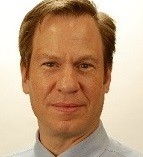 Dane Morgan, PhD
Prof. of Engineering
University of Wisconsin-Madison
WI, USA
 Jörg Neugebauer, PhD
Director, Computational Materials Design Department
Max-Planck-Institut für Eisenforschung GmbH
Düsseldorf, Germany
 Shyue Ping Ong, PhD
National University of Singapore
Singapore
Prof Shyue Ping Ong is the Provost's Chair Professor in Materials Science and Engineering at the National University of Singapore. He leads the Materialyze.AI lab, a materials informatics research group focused on the integration of materials science with data science and artificial intelligence to accelerate the discovery and design of materials. He is widely recognized as one of the pioneers of foundation potentials, i.e., machine learning interatomic potentials with comprehensive coverage of the periodic table that has broad applications in materials discovery and design. Prof Ong is also the founder and lead developer of pymatgen, one of the most popular open-source libraries for materials analysis, and a core contributor to the Materials Project, a public platform that provides computed properties of tens of thousands of inorganic compounds. Ong earned his PhD in Materials Science and Engineering from the Massachusetts Institute of Technology in 2011, and an MEng and BA in Electrical and Information Science from the University of Cambridge in 1999. He has authored more than 180 peer-reviewed publications, and has been recognized as a Clarivate Highly Cited Researcher since 2021. He is also a recipient of the prestigious US Department of Energy Early Career Research Program and the Office of Naval Research Young Investigator Program awards.
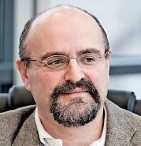 Prof. Stefano Sanvito
Chair, Condensed Matter Theory, Director, CRANN
Trinity College
Dublin, Ireland
 Kasper Tolborg, PhD
Aalborg University
Denmark
Kasper Tolborg is an Assistant Professor in Materials Chemistry at Aalborg University. He received his PhD from Aarhus University in 2020 followed by a postdoctoral fellowship at Imperial College London. Kasper's research focus on combining computational chemistry and machine learning methods to accelerate the design of energy materials, including battery materials, piezoelectrics and ferroelectrics. He is particularly interested in the effects of entropy and disorder on materials properties and stability, and in developing computational methods to tackle these effects.
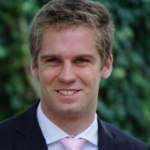 Matthew Witman, PhD
Senior Member of the Technical Staff, Energy Nanomaterials Department
Sandia Natioonal Laboratories
Livermore, CA
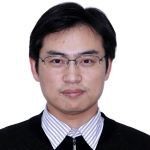
Hongming Weng, PhD
Key Laboratory of Condensed Matter Theory and Computation
Institute of Physics, Chinese Academy of Sciences
Beijing, China
 Tiannan Yang, PhD
School of Mechanical Engineering, Shanghai Jiao Tong University
Shanghai, China
Tiannan Yang's research focuses on theory and computation models of the microstructure evolution and multifunctional properties of functional materials. He received his PhD from the Pennsylvania State University and his Bachelor's degree from Tsinghua University. His areas of research include the thermodynamics, dynamical phenomena, and multiphysics of functional oxides and polymers (especially dielectrics and ferroelectrics). Keywords: Phase-field models, Dielectric, Ferroelectric, Mesoscale material structure, Dynamical phenomena.
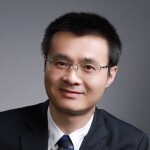 Yurong Yang, PhD
Nanjing University
China
Prof. Yang is a Professor at Nanjing University. He previously served as a Research Assistant Professor and a Research Associate Professor in the University of Arkansas, Fayetteville. His research focuses on computational materials science. By utilizing and developing first-principles, Monte Carlo, and molecular dynamics, he investigates ferroelectric, magnetic and multiferroic materials, and explores the design of related functional devices.
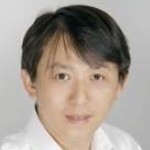 Sulin Zhang, PhD
Pennsylvania State University
University Park, PA, USA
Professor Sulin Zhang’s research explores the mechanics of active-matter systems — materials like battery electrodes and biological tissues that metabolize energy, evolve dynamically, and exhibit emergent behaviors. By integrating multiscale modeling, in-situ experiments, and irreversible thermodynamics, Zhang’s research elucidates how these systems deform and self-organize under mechanical, electrical, and chemical stimuli, enabling breakthroughs in smart materials, energy technologies, mechanobiology, and nanomedicine.
 Shijun Zhao, PhD
City University of Hong Kong
Hong Kong
Dr. Zhao's current research focuses on chemically disordered materials (high-entropy materials) through a combination of computational materials science and machine learning techniques. Specifically, his group aims to understand surface effects, defect thermodynamics, and defect evolution in chemically disordered materials under deformation or irradiation conditions. For this purpose, different simulation techniques at different scales are concurrently or sequentially employed.
Advisory Editor
Manel Mondelo-Martell, PhD
Manel is a Senior Editor at Nature Communications, where he handles manuscripts on theoretical, computational, and physical chemistry, including machine learning applications and developments. He specialised in Theoretical Chemistry at the University of Barcelona and completed his PhD in Nanoscience, simulating the quantum dynamics of hydrogen confined in carbon nanotubes. Afterward, he worked on the theoretical simulation of photoionization and optimal control of chiral molecules at the University of Kassel and the Free University of Berlin. He then obtained a Humboldt Postdoctoral Fellowship to study exciton dynamics in semiconducting polymers at Goethe University Frankfurt. Manel joined Nature Communications in September 2022 and is based in the Berlin office.
Editorial Board Members
Igor Abrikosov, Linkoping University, Sweden
Jim Belak, Lawrence Livermore National Laboratory, USA
Gerdbrand Ceder, UC Berkeley, USA
Ying-Hao Chu, National Chiao Tung University, Taiwan, China
Stefano Curtarolo, Duke University, USA
Ismaila Dabo, Pennsylvania State University, USA
Shaoming Dong, Shanghai Institute of Ceramics, CAS, China
Wenhui Duan, Tsinghua University, China
Giulia Galli, University of Chicago, USA
Rafael Gómez-Bombarelli, MIT, USA
Steve Granick, IBS Center for Soft and Living Matter and UNIST, South Korea
Robin Grimes, Imperial College London, United Kingdom
Yousung Jung, KAIST, South Korea
Marisol Koslowski, Purdue University, USA
Jiangyu Li, University of Washington, USA
Jian Lu, City University of Hong Kong, China
Yanmin Ma, Jilin University, China
David L. McDowell, Georgia Institute of Technology, USA
Bryce Meredig, Citrine Informatics, USA
Yifei Mo, University of Maryland, USA
Tetsuo Mohri, Tohoku University, Japan
Kasra Momeni, Associate Professor, Department of Mechanical Engineering, The University of Alabama, Tuscaloosa, AL, USA
Cewen Nan, Tsinghua University, China
Tamio Oguchi, Osaka University, Japan
Monica Olvera de la Cruz, Northwestern University, USA
Shyue Ping Ong, University of California San Diego, USA
Xiaoqing Pan, The Henry Samueli School of Engineering University of California, Irvine, USA
Jim Pfaendtner, University of Washington, USA
Thomas Proffen, Oak Ridge National Laboratory, USA
Yue Qi, Brown University, USA
Dierk Raabe, Max-Planck-Institut für Eisenforschung GmbH, Germany
Rampi Ramprasad, Georgia Institute of Technology, USA
James Rondinelli, Northwestern University, USA
Darrell Schlom, Cornell University, USA
James Sethian, UC Berkeley, USA
Ingo Steinbach, Ruhr-Universität Bochum, Germany
Alejandro H. Strachan, Purdue University, USA
Jing Sun, Shanghai Institute of Ceramics, CAS, China
Ichiro Takeuchi, University of Maryland, USA
Isao Tanaka, Kyoto University, Japan
Katsuyo Thornton, University of Michigan, USA
Koji Tsuda, University of Tokyo, Japan
Priya Vashishta, University of Southern California, USA
Aron Walsh, Imperial College London, UK
Yunzhi Wang, Ohio State, USA
Francois Willaime, CEA-Saclay, France
Chris Wolverton, Northwestern University, USA
Yang Xiang, Hong Kong University of Science and Technology, Hong Kong, China
Sulin Zhang, Pennsylvania State University, USA
Wenqing Zhang, Shanghai University, China
Yuhong Zhao, North University of China /University of Science and Technology Beijing, China
Maxim Ziatdinov, Oak Ridge National Laboratory, USA
Interested in joining the journal team?
If you are interested in joining the journal as an Editorial Board Member or Associate Editor, please complete this form. Associate Editors are part of the editorial team that handle manuscripts, while Editorial Board Members are regular reviewers and are consulted for ad hoc advice. We will contact you if your expertise meets the needs of the journal.
Nature Portfolio journals are committed to promoting practices that support diversity, equity and inclusion in science communication and publishing, and we strongly encourage gender, race, ethnic, geographic, career stage and other diversity in our journal teams. Our in-house staff will use your information only for the purposes of identifying new editorial team or board members. Please contact the journal by email if you would like to remove your information from these records.
Please note that we are not able to respond to all applicants.
