
About the Editors
Editor-in-Chief
 Thomas Elmqvist, PhD
Professor of Natural Resource Management
Stockholm University
Stockholm, Sweden
Thomas Elmqvist has a long history of research on several dimensions of global urbanization processes, including analysing linkages between sustainable urbanization, resilience and transformations. He has lead several international projects, such as "Cities and Biodiversity project" developed together with several UN bodies focusing on global urbanization and how this may influence land use change, biodiversity and ecosystem services. Recently he also led the Future Earth global project "Urban Planet."
Learn more about Thomas in our brief Q&A.
Deputy Editors
 Julie Goodness, PhD
Sustainability scientist
Cape Town, South Africa
Dr. Julie Goodness is a sustainable development practitioner and researcher with a concerted focus on African contexts. Her passion lies in exploring how thoughtfully crafted programmes and projects can support people to live healthier, happier lives connected to landscapes of ecological integrity. She is particularly interested in the dynamics of people and nature in cities. She holds a PhD in Sustainability Science from the Stockholm Resilience Centre and an MESc from Yale University's School of Forestry and Environmental Studies.
Associate Editors
 Pippin Anderson, PhD
Senior Lecturer, Dept. of Environmental and Geographical Science
University of Cape Town
Cape Town, South Africa
Pippin M.L. Anderson is a plant ecologist who is interested in socially-informed ecologies and in recent years has focused her research on the ecology in and of cities. Her research is informed by her geography and primarily looks at the ecology of African cities and biodiversity in cities.
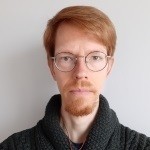 Erik Andersson, PhD
Professor, Ecosystems and Environment Research Programme
University of Helsinki, Stockholm University and North-West University
Helsinki, Finland
Prof. Erik Andersson at University of Helsinki is an expert in sustainability science, systems and resilience thinking, ecosystem service assessments and green infrastructure planning. His interests range from sustainable urbanization and biodiversity conservation to collective governance arrangements and human-nature relations.

Vanesa Castan Broto, Ir, MSc, EngD
Professor of Climate Urbanism, Urban Institute
University of Sheffield
Sheffield, UK
Professor Castan Broto's research focuses on: the governance of climate change action in rapidly growing urban areas; the place-based characteristics of sustainability transitions; and the how climate action impacts urban inequality, in the context of climate urbanism.
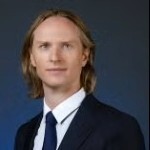 Sybil Derrible, PhD
University of Illinois Chicago
United States
Sybil Derrible is Professor of Urban Engineering and Director of the Complex and Sustainable Urban Networks (CSUN) Laboratory at the University of Illinois Chicago (UIC). He is a world-renowned scholar on infrastructure. He is the recipient of a US National Science Foundation (NSF) CAREER Award and a Walter L. Huber Civil Engineering Research Prize from the American Society of Civil Engineers (ASCE). He was also an invited participant to the National Academy of Engineering (NAE) Grainger Foundations Frontiers of Engineering Symposium in 2023. He has published over one hundred publications, and he is the author of the popular science book "The Infrastructure Book: How Cities Work and Power Our Lives" (Prometheus Books, 2025) and the textbook "Urban Engineering for Sustainability" (MIT Press, 2019). He lives in Chicago (Illinois).
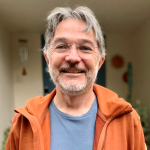 Luis Zambrano, PhD
Universidad Nacional Autónoma de México
Mexico
Luis Zambrano is an ecologist who focuses on restoring blue and green spaces in urban areas. He primarily studies how to improve the habitat quality through species interactions and the ecosystem services in cities. He also works on social interactions and the spatial dynamics in land use change policies for conservation and water management.
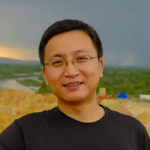 Tao Liu, PhD
College of Urban and Environmental Sciences
Peking University
Beijing, China
Tao Liu is an expert in migration and urbanisation. He draws on theoretical insights and methodological tools from geography, demography and economics to explore the spatial processes and social and spatial impacts of migration including onward and return migration. He is an advocate for translating knowledge into city-making, actively involving in urban-rural planning, spatial governance, and policy assessment at both national and local levels.
 Timon McPhearson, PhD
Director, Urban Systems Lab, Professor of Urban Ecology
The New School
NY, USA
Dr. Timon McPhearson is an urban ecologist with expertise in urban ecosystem services, nature-based solutions and resilience to climate change in cities. He is also an Associate Research Fellow at Stockholm Resilience Centre and Senior Research Fellow at the Cary Institute of Ecosystem Studies. As an IPCC Lead Author he focuses on developing pathways for urban adaptation and resilient futures in cities. In 2019 he was awarded the Sustainability Science Award and the Innovation in Sustainability Science Award by the Ecological Society of America.
 Tuyeni Mwampamba, PhD
Africa Science Director
The Nature Conservancy, Africa Program
Arusha, Tanzania
I am a forest ecologist who has become increasingly more interdisciplinary in my approaches. I am interested in the multi-dimensionality of sustainability as a concept, a pursuit and an outcome in the forestry sector, primarily, particularly outside of protected areas. I am intrigued by how people (and societies) relate to nature, their understanding of nature works, and how this ultimately affects their day-to-day decisions including whether to engage (and how) in pro-environment initiatives. I have studied how these relations play out in rural, peri-urban and urban settings in Mexico and East Africa.
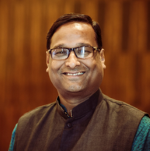 Anjal Prakash, PhD
Research Director and Adjunct Associate Professor, Bharti Institute of Public Policy
Indian School of Business
India
Dr. Anjal Prakash is Research Director and Adjunct Associate Professor at Bharti Institute of Public Policy, Indian School of Business (ISB), Hyderabad, India. He has two decades of experience in working on water and climate issues focusing on policy research, advocacy, capacity building, knowledge management, networking and implementation of large-scale and multi-country climate change and development projects in South Asia. His work focuses on urban resilience, gender, and social inclusion issues covering South Asia. Anjal was the coordinating lead author for the IPCC Special Report on the Ocean and Cryosphere in a Changing Climate (SROCC). He has also been a lead author in the chapter on cities, settlements and key infrastructure and cross chapter paper on mountains in the Working Group II of IPCC’s 6th Assessment Report. In 2019, he was nominated as a member of the Gender Task Group of IPCC to develop a framework of goals and actions to improve gender balance and address gender-related issues within the IPCC. Anjal has authored and co-edited several books and journals related to water, environment and climate issues. He is on the editorial board of the Environment and Urbanization ASIA published by Sage and the Journal of Integrative Environmental Sciences published by Routledge. He is also associate editor of Current Research in Environmental Sustainability, a journal by Elsevier, which publishes original papers covering all aspects of environmental sustainability, and PLOS Climate, another open-access publisher. Anjal obtained an advanced degree in social sciences (1997) from Tata Institute and Social Sciences in Mumbai, India and a PhD (2005) in Social/ Environmental Sciences from Wageningen University and Research, The Netherlands.
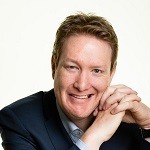 Christopher Raymond, PhD
Professor, Ecosystems and Environment Program and Department of Economics and Management
Helsinki Institute of Sustainability Science (HELSUS), University of Helsinki
Helsinki, Finland
Professor Raymond is an interdisciplinary sustainability scientist with research interests in senses of place; assessment of the multiple values of nature; the conservation of biodiversity; and participatory mapping theory and practice. He leads the Human-Nature Transformations Research Group at the University of Helsinki and multiple projects relating to the assessment of the co-benefits and costs of nature-based solutions, including issues of environmental justice and social inclusion. He is also actively engaged in research seeking to unlock trade-offs to societal transformation toward sustainability, drawing upon a socio-ecological-technological systems theoretical perspective. Professor Raymond is also a Coordinating Lead Author of the IPBES Values Assessment (Chapter 2, Concepts) and founding member of the Participatory Mapping Institute (PMAP).
 Patricia (Paty) Romero-Lankao, PhD
Canada Excellence Research Chair, Professor
University of Toronto Scarborough, Canada
Paty Romero-Lankao is a Canadian Excellence in Research Chair of the Network for Equity in Sustainability Transitions (CERC NEST). She has examined how people and decision-makers adopt or fail to adopt climate actions and how these shape inequities in sustainability and resilience. She is committed to re-imagining how cities can approach climate change through equitable, inclusive, and robust approaches to research. Paty led the social and policy approaches to the Los Angeles LA100 Equity Strategies; she builds on this high social impact project, involving a community-informed analysis of equity strategies for the CERC NEST to shed light on how to transition to 100% clean, sustainable and resilient cities while centring on justice and the needs and aspirations of underserved populations.
 Qiujie Shi, DPhil
University of Bristol
United Kingdoms
Qiujie is an urban geographer from China whose research examines the forces shaping urban transformations amid the country’s transition from high‑speed to high‑quality development. Her work has evolved over time—from studying state-regulated migration that supported rapid urbanisation, to analysing state-facilitated global city formation that positions China’s megacities as key coordinators in the global economy. More recently, she has focused on state-funded urban environmental amenity projects that reflect the nation’s vision for high‑quality development. Through her investigation of emerging demographic, economic, and spatial changes in urban China, Qiujie seeks to deepen understanding of the Chinese state’s evolving approach to urbanisation—why its strategies shift and what broader goals they aim to achieve. She is committed to producing research grounded in rigorous empirical evidence and guided by a reflexive theoretical lens, with the goal of using the insights from urban China to broaden and enrich traditionally Western‑centric perspectives in urban studies.
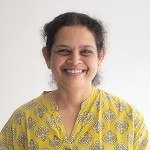 Suneetha M Subramanian, PhD
Biodiversity and Society Programme
UNU-IAS
Tokyo, Japan
Suneetha M Subramanian is a Research Fellow with the United Nations University-Institute for the Advanced Study of Sustainability . She has more than 20 years of experience in international and sub-national research, capacity building and advocacy activities relating to biodiversity and human well-being with a specific focus on equity, traditional knowledge, linking policy goals to local priorities and community well-being, socio-ecological resilience, mainstreaming biodiversity and joint implementation of policies and actions on Health and Biodiversity at the community level.
 Xiaoling Zhang, PhD
Professor, Institute for Climate and Carbon Neutrality;
Department of Real Estate and Construction, Faculty of Architecture,
The University of Hong Kong
Hong Kong, China
Xiaoling Zhang's research focuses on sustainability science and resource management, and political economics of environmental studies and energy studies. She also works predominantly with macro-level dynamics in sustainable urbanization, regional and neighborhood change, land use change, urban socio-spatial restructuring, informal and formal policy regime, governance and the interactions between them. In addition, Dr Zhang is one of the special recognition diplomas' awardees for the 35th World Cultural Council.
Advisory Editor
 Charles Axelsson
Charles handles quantitative and qualitative environmental social science including urban systems and transportation at Nature Communications. He has a BSc in Geography, an MSc in Environmental Technology, and a PhD in the Science and Management of Climate Change from Universita Ca’ Foscari Venezia’s department of Economics. His doctoral research was on urban policy adaptations to flooding under climate change, where he assessed policies and stakeholder participation. He is based in the New York office.
For publishing related queries, please contact the publisher Meng Wang at meng.wang@nature.com
Editorial Board Members
Rimjhim Aggarwal, PhD, Arizona State University, USA
Xuemei Bai, PhD, Australian National University, Australia
Osman Balaban, PhD, Middle East Technical University, Turkey
Eugenie L. Birch, PhD, University of Pennsylvania, USA
Harriet Bulkeley, PhD, Durham University, UK
Andrea Antonio Caragliu, PhD, Polytechnic University of Milan, Italy
Cesar Casiano Flores, PhD, Public Governance Institute, KU Leuven and Universidad Iberoamericana-Puebla, Leuven, Belgium and Puebla, Mexico
Jago Dodson,PhD, RMIT University, Australia
Richard Dawson, PhD, Newcastle University, UK
Martin De Jong, PhD, Delft University of Technology, Netherlands
Theodore Endreny, PhD, SUNY College of Environmental Science and Forestry, USA
Billie Giles-Corti, PhD, RMIT University, Australia
Gro Sandkjær Hanssen, PhD, Oslo Metropolitan University, Norway
Chunyang He, PhD, Beijing Normal University, China
Ralph Horne, PhD, RMIT University, Australia
Steffen Lehmann, PhD, University of Nevada, Las Vegas, USA
Gang Liu, PhD, College of Urban and Environmental Sciences, Peking University, China
Marcelo Miguez, PhD, Federal University of Rio de Janeiro, Brazil
Mark R. Montgomery, PhD, Stony Brook University, USA
Susan Parnell, PhD, University of Bristol, UK
Zarina Patel, PhD, University of Cape Town, South Africa
João Porto de Albuquerque, PhD, University of Glasgow, UK
Seeram Ramakrishna, PhD, National University of Singapore, Singapore
Anu Ramaswami, Princeton University, USA
Rob Raven, PhD, Monash University, Australia
Aromar Revi, PhD, Indian Institute for Human Settlements, India
Lauren Rickards, PhD, La Trobe University, Australia
Karen Seto, PhD, Yale University, USA
David Simon, PhD, Chalmers University of Technology, Sweden
Deborah Sunter, PhD, Tufts University, USA
Puay Yok Tan, PhD, National University of Singapore, Singapore
Azime Tezer, PhD, Istanbul Technical University, Turkey
Josefin Wangel, PhD, Swedish University of Agricultural Sciences, Sweden
Interested in joining the journal team?
If you are interested in joining the journal as an Editorial Board Member or Associate Editor, please complete this form. Associate Editors are part of the editorial team that handle manuscripts, while Editorial Board Members are regular reviewers and are consulted for ad hoc advice. We will contact you if your expertise meets the needs of the journal.
Nature Portfolio journals are committed to promoting practices that support diversity, equity and inclusion in science communication and publishing, and we strongly encourage gender, race, ethnic, geographic, career stage and other diversity in our journal teams. Our in-house staff will use your information only for the purposes of identifying new editorial team or board members. Please contact the journal by email if you would like to remove your information from these records.
Please note that we are not able to respond to all applicants.
